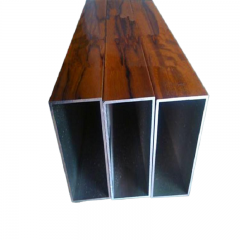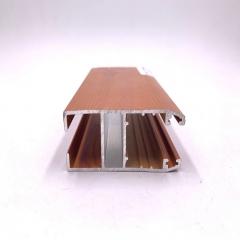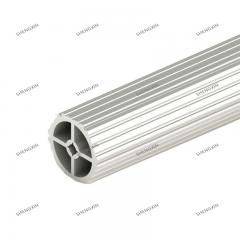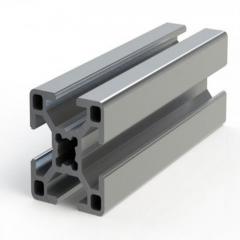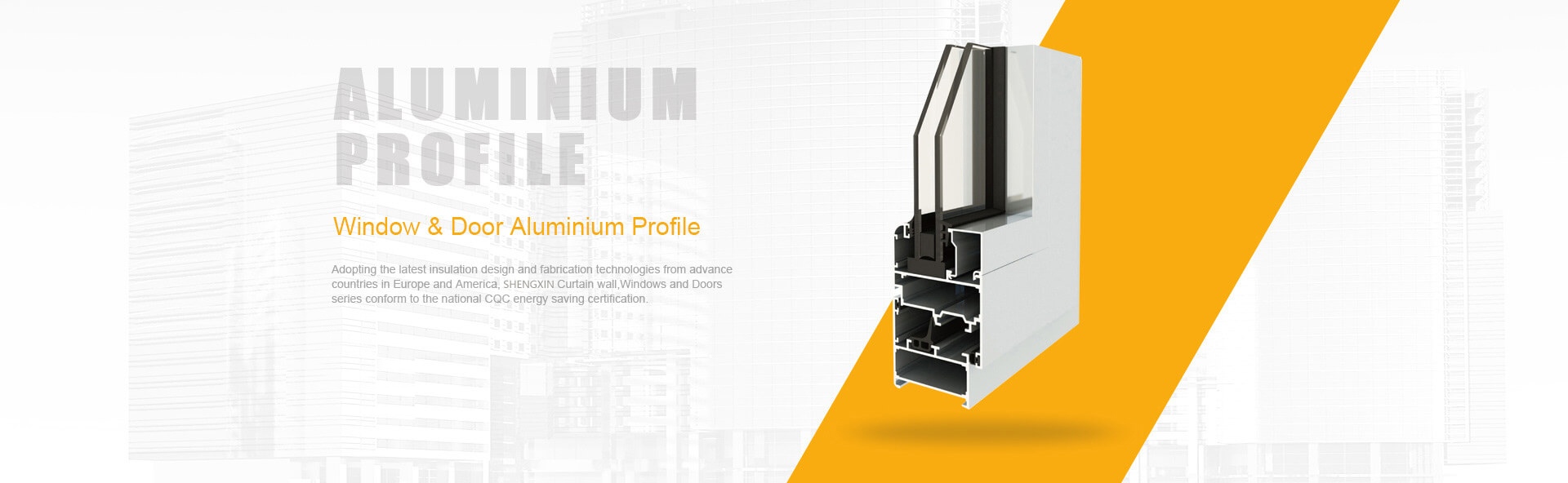
Have you ever wondered what keeps your solar panels securely in place for decades? The answer lies in aluminum solar frame extrusions - the rigid border structures that surround and protect every photovoltaic module you see on rooftops and ground installations worldwide.
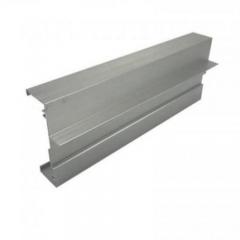
Simply put, a solar panel frame is an extruded aluminum profile that seals and secures the critical components of a solar panel, including the photovoltaic cells, glass cover, and back sheet. Think of it as the structural backbone that holds everything together while defending against the elements. Without a quality frame, even the most advanced solar cells would fail prematurely.
These extruded profiles serve four essential functions in every PV system:
Why do manufacturers overwhelmingly choose aluminum for solar module frames? The answer comes down to a unique combination of properties that no other material matches.
Aluminum is lightweight yet remarkably strong. This balance of low density with impressive strength makes it ideal for large-scale solar installations where you need structural integrity without adding unnecessary bulk. Imagine installing hundreds of panels - every pound saved translates to easier handling and reduced mounting structure requirements.
Corrosion resistance is another critical factor. Solar panels face harsh environmental conditions daily, from driving rain to intense UV radiation. Aluminum naturally forms a thin oxide layer that protects it from rust and corrosion, ensuring frames remain functional for over 25 years with minimal maintenance - even in coastal or humid regions where other metals would quickly deteriorate.
You'll also appreciate aluminum's excellent thermal conductivity. This property helps dissipate excess heat from solar panels, keeping module temperatures optimal for maximum energy production. When panels overheat, their efficiency drops significantly, so proper heat management directly impacts your system's output.
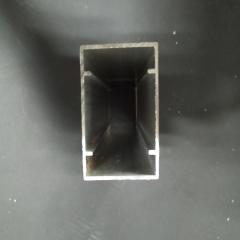
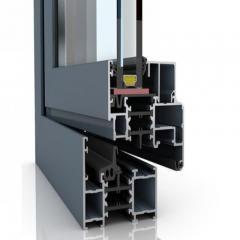
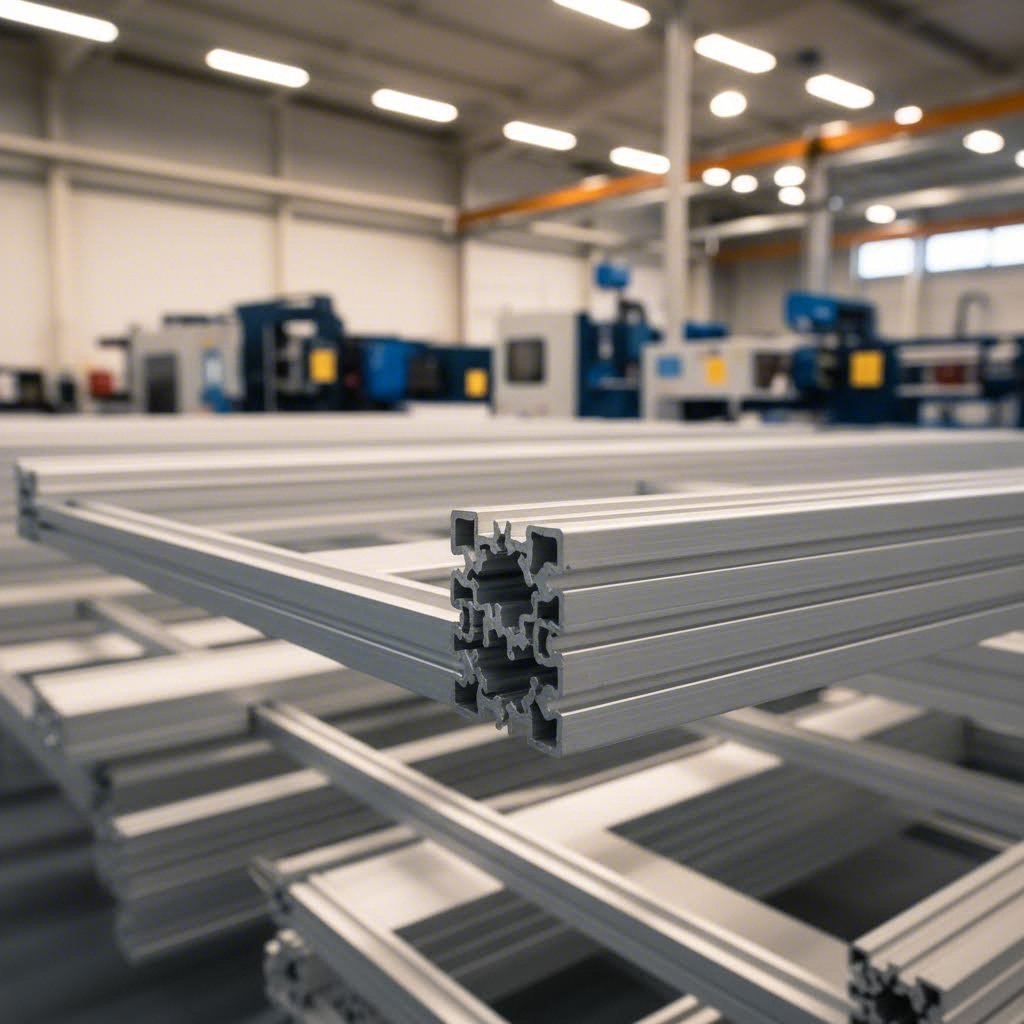
The extrusion process is what transforms raw aluminum into the precise profiles that frame your PV panels. During extrusion, heated aluminum billets are forced through specially designed dies to create hollow profiles with exact cross-sections. This manufacturing method allows for complex shapes that integrate mounting channels, sealing grooves, and corner-key slots into a single piece.
After extrusion, profiles undergo cutting to exact dimensions, punching for mounting holes, and surface treatment to enhance durability. The result is a pv panel frame that fits the solar module structure perfectly while providing decades of reliable performance.
Frame quality directly determines how long your solar investment will last. A well-designed aluminum frame protects against mechanical loads from wind and snow, maintains watertight seals around the glass, and provides stable mounting points that won't loosen over time. When you're evaluating solar panels, never overlook the frame - it's the foundation that makes everything else possible.
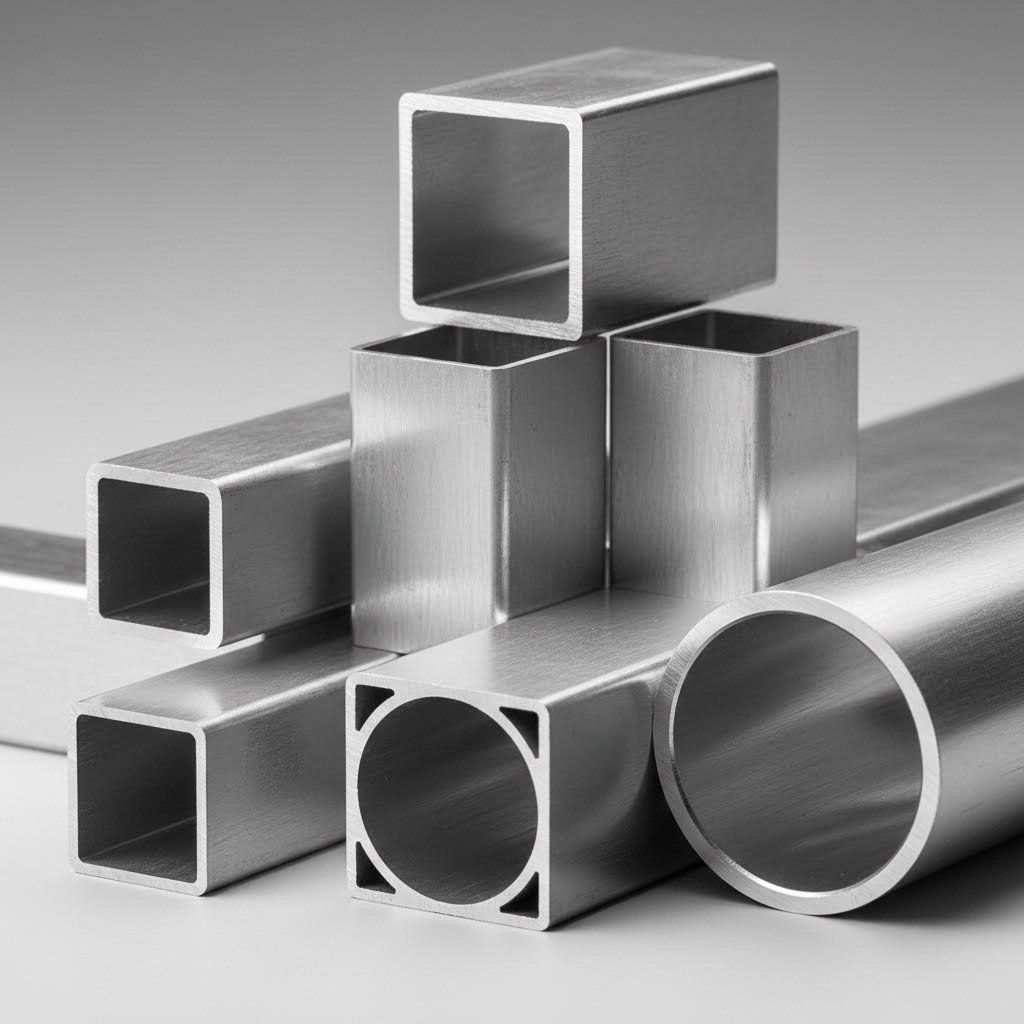
Not all aluminum is created equal. When it comes to solar panel frame material, the specific alloy you choose determines whether your installation thrives for decades or fails prematurely. The 6000 series aluminum alloys dominate this market - but why? Understanding the technical reasons behind alloy selection will help you make smarter decisions for your next project.
The 6000 series alloys contain magnesium and silicon as their primary alloying elements. This combination creates heat-treatable materials with excellent extrudability, good corrosion resistance, and moderate-to-high strength. These properties make them ideal for producing the complex profiles required in solar panel aluminium frame manufacturing.
Walk through any solar farm or examine rooftop installations, and you'll find 6063 aluminum framing the vast majority of panels. This isn't coincidental - it's the result of careful engineering considerations.
6063 aluminum offers what engineers call exceptional extrudability. This means the material flows smoothly through extrusion dies, allowing manufacturers to create intricate frame profiles with tight tolerances and excellent surface finishes. You'll notice this quality in the crisp edges and consistent dimensions of well-made extruded aluminum panels.
The alloy also delivers outstanding corrosion resistance right out of the extrusion press. When exposed to air, 6063 aluminum quickly forms a protective oxide layer that shields the underlying metal from environmental attack. This natural defense mechanism is why solar frames maintain their integrity through years of rain, humidity, and temperature swings.
What about strength? Here's where temper designations become important. The T5 and T6 tempers represent different heat treatment processes that significantly affect mechanical properties:
For most residential and commercial solar installations, 6063-T5 provides sufficient strength while offering easier fabrication. However, when panels face higher mechanical loads or require exceptional structural integrity, manufacturers specify 6063-T6 temper.
Sounds complex? Let's break down why specific mechanical properties actually matter when your solar frames face real-world conditions.
Tensile strength determines how much pulling force the frame can withstand before failing. During high winds, mounting brackets exert significant tension on frame profiles. A frame with inadequate tensile strength might crack or deform, compromising the entire panel assembly.
Yield strength tells you when permanent deformation begins. Solar frames must resist snow loads and mechanical stress without bending out of shape. Once aluminum yields, it doesn't spring back - the damage is permanent. Higher yield strength means better resistance to these stresses.
Corrosion resistance becomes critical over your system's 25-year expected lifespan. Even small amounts of corrosion can weaken mounting points and create entry paths for moisture. The 6000 series alloys excel here because their magnesium-silicon composition resists pitting and intergranular corrosion that plague other aluminum families.
Weldability matters during frame assembly and field repairs. Some alloys crack easily when welded, but 6063 accepts welding with proper techniques - an important consideration for custom fabrication.
| Property | 6063 | 6061 | 6005 |
|---|---|---|---|
| Tensile Strength (T6) | 33 ksi (228 MPa) | 45 ksi (310 MPa) | 38 ksi (262 MPa) |
| Yield Strength (T6) | 31 ksi (214 MPa) | 40 ksi (276 MPa) | 35 ksi (241 MPa) |
| Corrosion Resistance | Excellent | Good | Very Good |
| Extrudability | Excellent | Moderate | Good |
| Weldability | Very Good | Good | Good |
| Typical Solar Applications | Panel frames, residential mounts | Heavy-duty structural supports | Ground mount rails, tracker systems |
So when should you consider alternatives to 6063? Projects requiring maximum structural strength - like large ground-mounted arrays or tracker systems with long spans - often specify 6005-T6 or 6061-T6 alloys. These deliver significantly higher strength values, though they sacrifice some extrudability and require more careful corrosion protection.
The bottom line? 6063 aluminum dominates solar frame manufacturing because it strikes the optimal balance between strength, corrosion resistance, extrudability, and cost. Understanding these trade-offs helps you evaluate whether a manufacturer has selected appropriate materials for your specific installation environment and loading conditions.
Ever wondered how a solid block of aluminum transforms into the precisely shaped solar panel frames you see protecting photovoltaic modules? The answer lies in a fascinating manufacturing process that combines extreme heat, tremendous pressure, and engineering precision. Understanding this process helps you evaluate frame quality and recognize why manufacturing methods directly impact your solar investment's longevity.
The journey begins with an aluminum billet - a cylindrical log of 6063 alloy typically weighing between 15 and 50 pounds. This raw material must undergo several carefully controlled steps before becoming a functional frame component.
Two primary extrusion methods shape these billets into usable profiles:
Direct extrusion is the most common approach for solar panel frames aluminum production. Picture a massive hydraulic press forcing heated aluminum through a stationary die - similar to squeezing toothpaste through a tube. The billet sits in a heated container while a powerful ram pushes it forward, forcing metal through the die opening at pressures exceeding 100,000 PSI. As the aluminum emerges from the die, it retains exactly the same cross-sectional shape, creating continuous lengths of identical profile.
Indirect extrusion reverses this arrangement. Here, the die moves toward the stationary billet, reducing friction between the aluminum and container walls. This method produces more consistent material flow and better surface finishes - qualities that matter when frames require tight sealing against moisture intrusion.
The complete manufacturing sequence involves these critical steps:
Die design is where engineering expertise truly matters. The die determines every aspect of your solar panel frame design - from the depth of mounting channels to the thickness of corner sections. A well-engineered die creates profiles with uniform wall thickness, precise channel dimensions, and consistent corner geometry that maintains strength at critical stress points.
Why does dimensional precision matter so much? Imagine assembling thousands of solar panels where frames vary by even a millimeter. Gaskets won't seal properly, mounting clamps won't grip consistently, and water infiltration becomes inevitable.
The extrusion process offers extremely tight dimensional tolerances, meaning every meter of profile is nearly identical in shape and size. This consistency ensures perfect fits for gaskets, cell-holding channels, and mounting hardware across your entire installation. When tolerances drift, problems multiply - gaps appear in weather seals, corner joints weaken, and long-term reliability suffers.
Standard sectional sizes have evolved to match specific panel requirements:
| Frame Section Size | Typical Panel Wattage | Recommended Applications |
|---|---|---|
| 25x25mm | Up to 200W | Residential rooftop, low wind zones |
| 25x30mm | 200-350W | Standard residential and light commercial |
| 30x30mm | 300-450W | Commercial rooftop, moderate load environments |
| 35x35mm | 400-550W | Ground mount systems, high wind/snow regions |
| 40x40mm | 500W+ utility-scale | Heavy-duty ground mount, tracker systems, extreme load conditions |
Selecting the right section size involves balancing structural requirements against material costs. A 25x25mm frame works perfectly for a 150W residential panel in mild climates, but would fail under heavy snow loads expected in northern regions. Conversely, specifying 40x40mm frames for low-wattage residential panels wastes material and increases shipping weight unnecessarily.
Corner strength deserves special attention. During extrusion, die geometry determines how material flows into corner sections - areas that experience concentrated stress during wind loading and thermal expansion. Quality manufacturers design dies that produce slightly thicker corner walls and radiused transitions that distribute loads effectively.
Mounting channel accuracy also stems directly from die precision. These channels must accept standardized clamps and brackets without excessive play or binding. When channels run slightly oversized, clamps can't grip securely. When undersized, installation becomes difficult and may damage the anodized surface coating.
The uniformity achieved through proper extrusion control enables the automated manufacturing processes that keep solar energy affordable. Components can be cut, punched, and assembled using high-speed CNC machinery with minimal human intervention - but only when incoming profiles meet strict dimensional specifications. This manufacturing precision ultimately translates to faster installation, lower labor costs, and more reliable long-term performance from your solar array.
You've selected the right aluminum alloy and ensured precise extrusion tolerances - but your solar frame still isn't ready for outdoor deployment. Why? Because raw aluminum, despite its natural corrosion resistance, needs additional protection to survive 25+ years of relentless environmental exposure. The surface treatment you choose can mean the difference between a frame that lasts decades and one that degrades within years.
Think about what your aluminum solar panel frame faces daily: UV radiation, driving rain, temperature swings, salt spray in coastal areas, and abrasive sand in desert installations. Each environment attacks metal surfaces differently, and the right protective finish creates a barrier that shields your investment from these forces.
When specifying surface treatments for a solar frame, you'll encounter five primary options. Each offers distinct advantages depending on your installation environment and budget.
Mill finish represents untreated extruded aluminum with only its natural oxide layer for protection. While acceptable for indoor applications, mill finish frames lack adequate protection for outdoor solar installations. The thin natural oxide layer - measuring just 2-3 nanometers - can't withstand years of weather exposure.
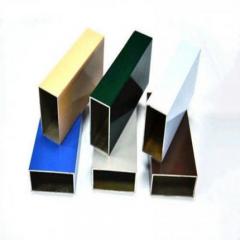
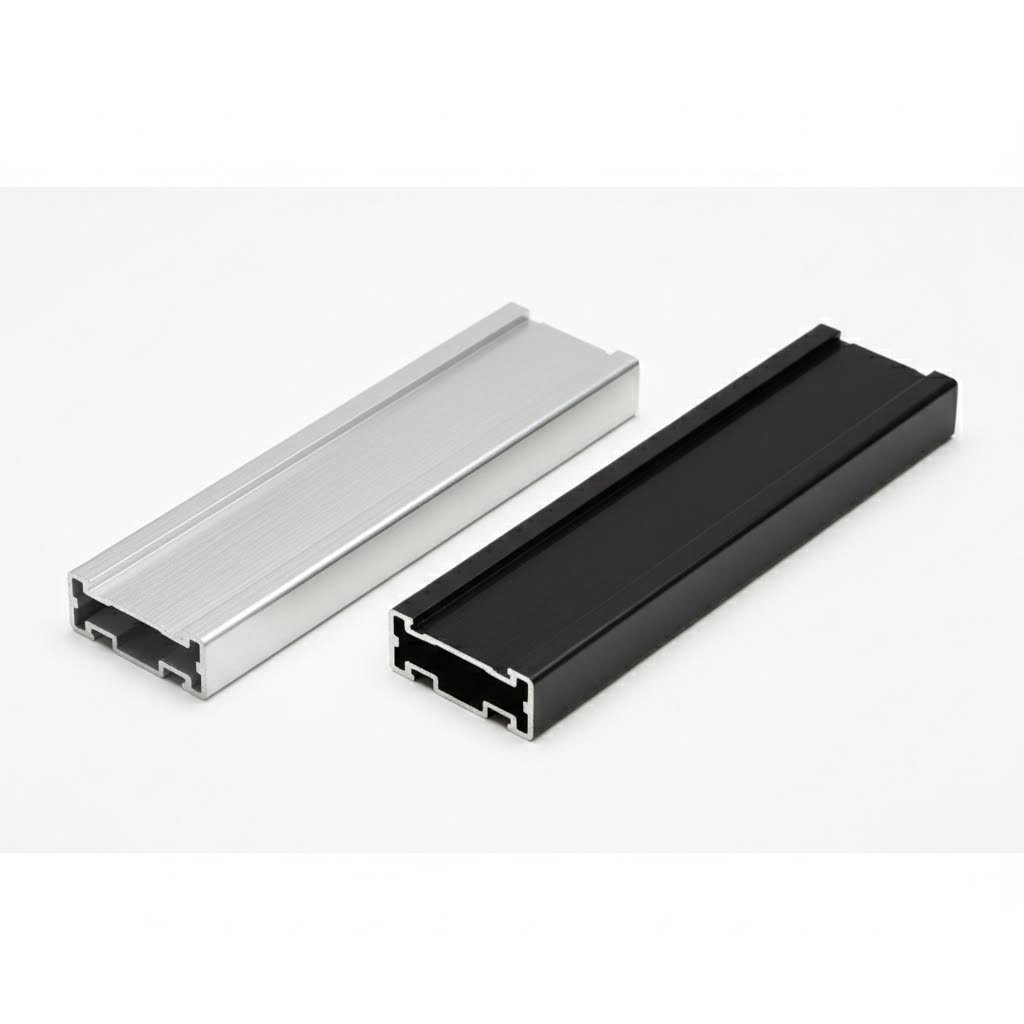
Clear anodizing is the industry standard for most aluminum frame for solar panel applications. This electrochemical process thickens the natural oxide layer to 10-25 microns, creating a hard, durable surface that resists scratching and corrosion. The treatment becomes part of the aluminum itself rather than sitting on top like paint, so it won't peel, chip, or flake. You'll recognize anodized frames by their slightly matte silver appearance.
Colored anodizing uses dyes absorbed into the porous anodic layer before sealing. Black anodized frames have gained popularity for residential installations where aesthetics matter. However, darker colors may experience slight fading after extended UV exposure - something to consider for visible rooftop arrays.
Powder coating applies dry polymer powder electrostatically, then cures it under heat to form a thick protective film. This method offers virtually unlimited color options and excellent impact resistance. However, powder coatings sit on the aluminum surface rather than integrating with it, making them potentially vulnerable to chipping at corners and mounting points where mechanical stress concentrates.
PVDF coating (polyvinylidene fluoride) represents the premium option for extreme environments. This fluoropolymer finish delivers exceptional UV stability and chemical resistance, maintaining color and gloss for decades. PVDF-coated frames command higher prices but offer peace of mind for coastal, industrial, or high-altitude installations where standard treatments might fall short.
How do you know if a surface treatment will actually protect your frames? Salt spray testing provides the answer. This accelerated corrosion test exposes coated samples to a continuous salt fog environment, simulating years of coastal exposure in just weeks.
According to the U.S. Department of Energy, marine environments and areas with airborne corrosive agents present unique challenges for solar PV systems. Metal components including module frames are particularly vulnerable to oxidation, galvanic corrosion, and crevice corrosion when proper protection isn't specified.
For frames intended for coastal installations, look for salt spray test ratings of at least 1,000 hours without visible corrosion. Premium anodized or PVDF-coated frames may achieve 2,000+ hours - critical for installations within 500 meters of saltwater where airborne chlorides attack unprotected metal aggressively.
Desert environments present different challenges. Extreme temperature cycling - sometimes exceeding 50°C daily swings - stresses surface treatments through repeated expansion and contraction. Abrasive sand carried by wind acts like sandpaper against frame surfaces. Here, hardness matters as much as corrosion resistance. Anodized finishes excel because their hardness (up to 70 Rockwell C) resists abrasion far better than softer powder coatings.
| Surface Treatment | Corrosion Resistance | UV Stability | Cost Factor | Recommended Environments |
|---|---|---|---|---|
| Mill Finish | Poor | Moderate | 1.0x (baseline) | Indoor/protected only |
| Clear Anodizing | Very Good | Excellent | 1.2-1.4x | Standard outdoor, inland areas |
| Colored Anodizing | Very Good | Good to Very Good | 1.3-1.5x | Residential rooftop, aesthetic priority |
| Powder Coating | Good to Very Good | Good | 1.4-1.6x | Commercial, color-matched applications |
| PVDF Coating | Excellent | Excellent | 1.8-2.2x | Coastal, industrial, extreme UV exposure |
Surface treatment selection directly impacts your ability to honor 25-year performance warranties. Panel manufacturers understand that frame degradation leads to moisture intrusion, cell corrosion, and premature failure. That's why quality manufacturers specify minimum anodizing thickness (typically 15 microns or greater) and salt spray performance requirements in their frame specifications.
When evaluating frames for challenging environments, don't just accept "anodized" as sufficient information. Ask for specific thickness measurements, salt spray test results, and documentation of the anodizing process quality. These details reveal whether a supplier cuts corners that could compromise your installation's long-term performance - a critical consideration as we examine how different mounting systems place varying demands on frame profiles.
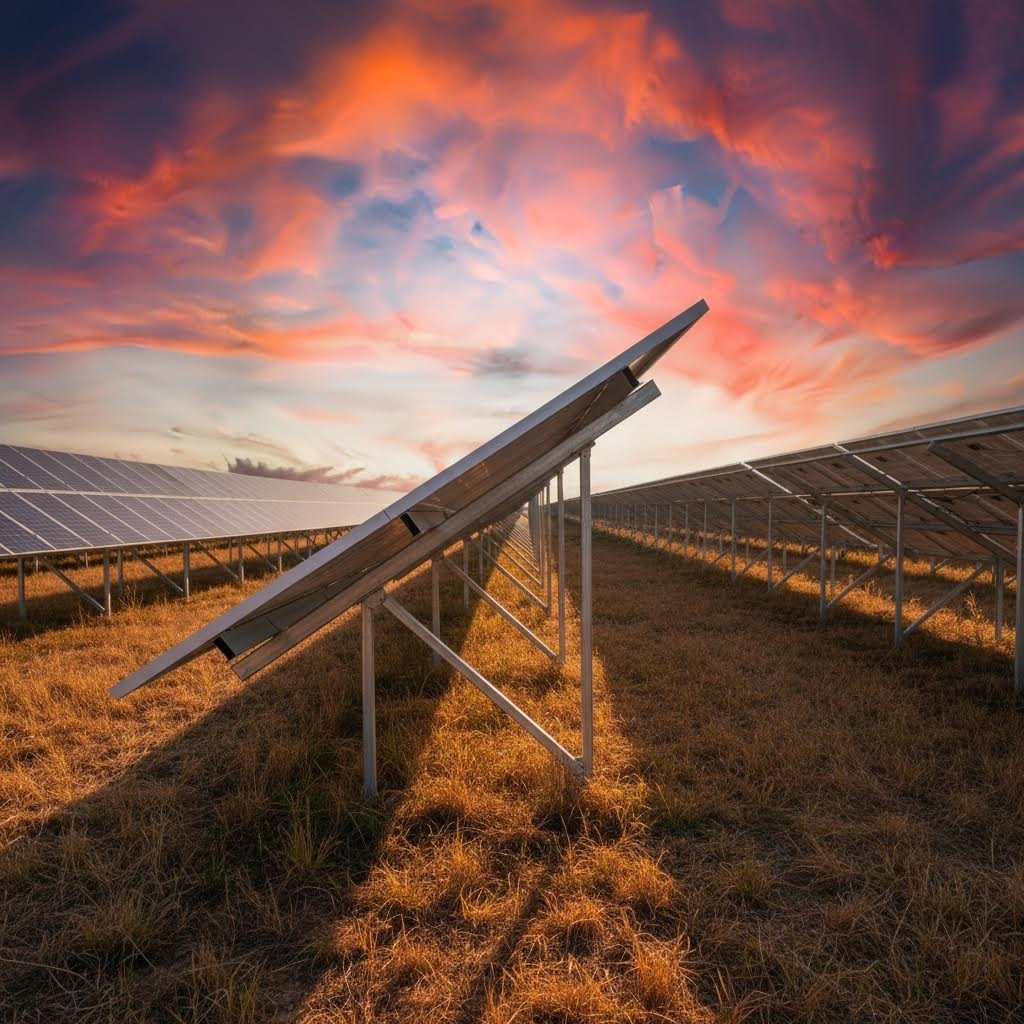
Here's a question most solar panel catalogs won't answer: which aluminum frame profile actually works best for your specific installation? The truth is, a frame that performs flawlessly on a residential rooftop might fail catastrophically in a ground-mounted array facing heavy snow loads. Understanding how to match solar power frames to mounting applications separates successful long-term installations from costly premature failures.
Different mounting environments place dramatically different stresses on frame structures. Wind creates uplift forces that try to tear panels from their mounts. Snow accumulates as static weight that can bend or crack undersized profiles. Seismic activity introduces dynamic lateral forces that stress corner joints and mounting connections. Your aluminium frame solar panel selection must account for all these factors - not just the panel wattage.
Ground-mounted solar arrays face the harshest structural demands of any installation type. Without a building structure to provide wind shelter, these systems experience full exposure to wind loads from every direction. According to engineering analysis based on ASCE 7 standards, wind creates both positive pressure (pushing) and negative pressure (lifting) on tilted solar panels - and ground mounts see the highest values of both.
For ground-mounted installations, frame profile selection typically starts at 35x35mm sections and increases to 40x40mm or larger for utility-scale projects. Why the heavier profiles? The answer lies in load path engineering. Forces transfer from panel frames through mounting clamps to rails, then down to driven piles or concrete foundations. Every component in this chain must handle calculated loads without failure - and the frame is where it all begins.
Key considerations for ground mount frame selection include:
Tracker systems present even greater challenges. Single-axis trackers rotate panels throughout the day to follow the sun, introducing mechanical wear on frame connections and creating varying load orientations. The frame must maintain structural integrity through thousands of daily movement cycles over a 25-year lifespan. Most tracker manufacturers specify 6005-T6 alloy frames with reinforced corner sections specifically for these demanding applications.
Residential rooftop installations benefit from the building structure's wind-sheltering effect. Surrounding walls, parapets, and the roof itself disrupt airflow, reducing the peak wind pressures panels experience compared to open ground mounts. This protection allows lighter frame profiles - typically 25x25mm to 30x30mm sections - for most residential solar panel frame kit applications.
However, don't assume all rooftop installations are identical. Critical factors that influence frame requirements include:
Commercial flat roof installations occupy a middle ground. While the building provides some wind protection, large unobstructed roof areas can experience significant turbulence at panel edges. As engineering guidance notes, PV panels can alter snow accumulation patterns, creating obstructions that lead to drifts - a critical consideration for older buildings not designed for such load concentrations. Frame profiles of 30x30mm to 35x35mm typically address these commercial requirements.
Carport installations combine challenges from both ground and rooftop scenarios. These structures often feature long unsupported spans that amplify vibration and deflection under wind loading. The elevated position eliminates ground-level wind sheltering while the open sides allow air to flow beneath panels, creating complex pressure differentials.
For carport solar arrays, consider these factors:
The interaction between wind load, snow load, and seismic requirements creates a complex matrix for frame selection. High-wind coastal regions might need 35x35mm frames even for residential installations. Heavy-snow mountain locations require frames sized for the combined weight of panels plus maximum expected snow accumulation. Seismic zones demand frames with reinforced corner connections capable of handling lateral acceleration forces.
Rather than selecting frames based solely on panel wattage, experienced installers evaluate the complete environmental loading picture. They calculate design wind speeds from local codes, determine ground snow load values from building authorities, and assess seismic design categories for their specific location. Only then can they specify frame profiles that will deliver reliable 25-year performance - the kind of engineering rigor that separates professional installations from systems destined for early failure.
You've carefully selected the right alloy, verified manufacturing tolerances, and specified appropriate surface treatments - but how do you know your aluminum solar frame extrusions will actually perform as promised for 25 years? The answer lies in understanding the testing standards and certifications that separate reliable frames from those destined for early failure. Without proper certification, you're essentially gambling with your solar investment.
Solar frame quality isn't subjective. International standards establish rigorous testing protocols that simulate decades of environmental stress in controlled laboratory conditions. These certifications provide documented proof that frames can withstand the mechanical loads, temperature extremes, and corrosive environments they'll face throughout their operational lifetime.
Three primary standards govern solar panel and frame performance. Understanding what each covers helps you evaluate whether a supplier's certifications actually matter for your application.
IEC 61215 serves as the global benchmark for crystalline silicon PV module design qualification. While this standard covers the complete module, its mechanical load testing directly validates frame performance. According to industry analysis, IEC 61215 is effective in reducing early failures - or "infant mortality" - of PV modules by confirming the design is sound enough to withstand common environmental challenges.
The core structural validation within IEC 61215 is the static mechanical load test. During this procedure, modules experience uniform pressure of 2400 Pascals (Pa) for standard tests and up to 5400 Pa for enhanced tests - applied to both front and back surfaces. To pass, modules must show no major visual defects, and power degradation must remain within strict predefined limits.
IEC 61730 focuses specifically on safety qualification, addressing both electrical safety and mechanical integrity. This standard ensures that frame construction won't create hazards during normal operation or under fault conditions. Testing laboratories evaluate PV panels to IEC/UL 61730 requirements covering fire resistance, impact testing, and environmental durability under various UV, temperature, and humidity conditions.
UL 1703 is the North American safety standard for flat-plate photovoltaic modules and panels themselves. It establishes requirements for electrical safety, fire resistance, and mechanical strength specific to the US and Canadian markets. While UL 1703 focuses on the complete module, frame construction directly impacts compliance with mechanical and fire safety provisions.
Beyond module-level standards, UL 2703 evaluates the solar array as an integrated system - including how frames interact with mounting hardware. This standard covers racking systems, clamping devices, and the modules they support, ensuring all components work together safely. As engineering experts note, UL 2703 certification addresses electrical safety, fire safety, and mechanical strength at the system level - critical because component interactions can introduce stress points not apparent when testing parts individually.
What actually happens during PV frame quality testing? Understanding these procedures helps you appreciate why certified frames command premium prices - and why cutting corners on certification creates unacceptable risks.
Mechanical load testing applies static and dynamic forces that simulate wind and snow loads. Standard tests apply 2400 Pa uniformly across the module surface - equivalent to approximately 50 pounds per square foot. Enhanced testing pushes this to 5400 Pa for modules destined for high-load environments. Frames must maintain structural integrity without cracking, permanent deformation, or separation from the glass laminate.
Thermal cycling subjects modules to repeated temperature swings between -40°C and +85°C. This test reveals weaknesses in frame-to-glass adhesion and corner joint integrity. Poor-quality frames may crack at corners or allow sealant failure after hundreds of thermal cycles - problems that wouldn't appear in simple visual inspection.
Humidity freeze testing combines moisture exposure with freezing conditions. Modules undergo high humidity at elevated temperatures, then rapid cooling to sub-zero conditions. This cycle stresses frame seals and reveals potential moisture intrusion paths that could lead to cell corrosion over years of outdoor exposure.
Salt mist corrosion testing validates frame durability in coastal environments. Following IEC 61701 protocols, frames experience continuous salt fog exposure that simulates years of seaside installation in just weeks. Independent testing laboratories verify that quality frames can achieve the highest land-based corrosivity category (C5) - essential for installations within proximity to saltwater.
When evaluating an aluminum frames supplier, verify these essential certifications:
That last point deserves special attention. ISO 9001:2015 certification doesn't test product performance directly - instead, it audits the manufacturing systems that produce consistent quality. A certified manufacturer maintains documented procedures, tracks quality metrics, and implements continuous improvement processes. This systematic approach means every batch of frames meets the same specifications, not just the samples submitted for product certification.
The relationship between solar frame certification and real-world performance is direct: certified frames have proven they can handle the stresses your installation will face. Uncertified frames represent unknown risks that could manifest as warranty claims, safety hazards, or complete system failures years after installation. When you're committing to a 25-year investment, documented proof of performance isn't optional - it's essential for protecting both your project and the people who depend on it.
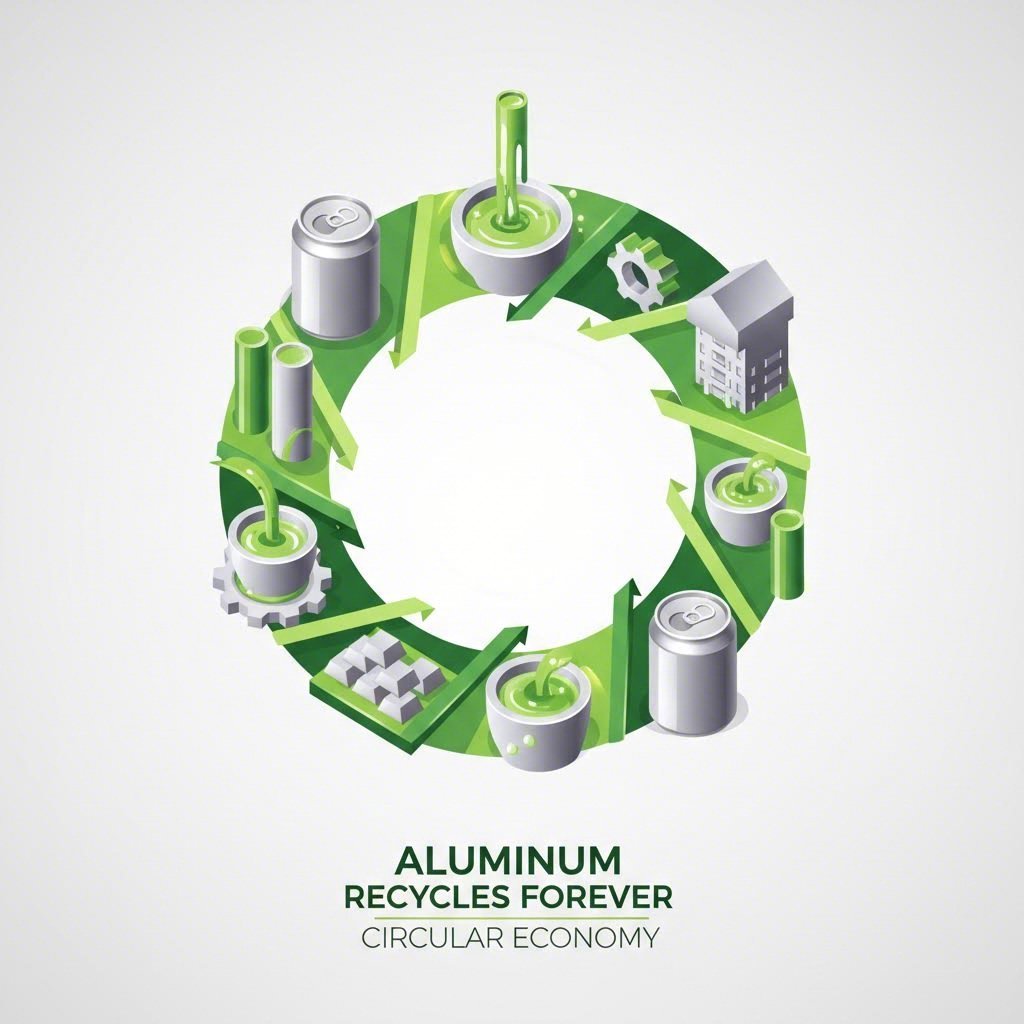
Solar energy is inherently sustainable - but what about the components that make it possible? When you consider the full environmental picture, aluminum solar frame extrusions emerge as one of the most eco-friendly choices in the entire photovoltaic supply chain. Unlike materials that become waste after a single use, aluminum offers something remarkable: true circularity that supports both environmental goals and long-term value recovery.
The sustainability story of sustainable solar frames extends far beyond their 25-year service life. Understanding how aluminum contributes to circular manufacturing helps you make informed decisions that align with ESG objectives while maximizing the environmental return on your solar investment.
Here's what makes aluminum truly exceptional: it can be recycled infinitely without losing its essential properties. Unlike plastics that degrade with each recycling cycle or steel that requires virgin material additions, aluminum maintains its strength, corrosion resistance, and formability through countless recycling loops. This characteristic makes recyclable aluminum solar panel frames among the most sustainable components in any PV system.
Consider the scale of opportunity. According to research published in peer-reviewed journals, end-of-life solar panels are expected to reach 1.7-8 million tons by 2030, potentially growing to 60-77 million tons by 2050. Within these panels, aluminum frames represent approximately 10% of total weight - creating an enormous stream of valuable, recoverable material.
The recycling process for aluminum frames is remarkably straightforward compared to other panel components. While recovering silicon and silver requires complex chemical treatments, aluminum frames can be mechanically separated and melted down using established recycling infrastructure. Research confirms that separating aluminum frames is easy, making them the most readily recycled component in end-of-life solar panels.
What happens to recycled aluminum? It re-enters manufacturing streams as secondary aluminum ingots, suitable for producing new frame extrusions, building materials, automotive components, or countless other applications. This closed-loop potential means the green solar panel components protecting your installation today could become frames for future solar arrays - or any number of other aluminum products.
The economic value recovery is equally compelling. Aluminum frames contribute significantly to the total recoverable value from decommissioned panels. As recycling infrastructure expands and processing technologies improve, this value proposition strengthens further - creating financial incentives that align with environmental benefits.
The energy savings from aluminum recycling represent one of the most dramatic sustainability advantages of any industrial material. According to the International Aluminium Institute, producing aluminum from recycled scrap requires just 5% of the energy needed for primary production from bauxite ore.
Recycling aluminum from solar panel frames uses 95% less energy than producing new aluminum from raw bauxite, avoiding the environmental impacts of mining, transporting, and refining new materials.
This staggering efficiency difference translates directly to carbon footprint reductions. Primary aluminum production consumed approximately 186 gigajoules per tonne globally in 2019, while recycled aluminum required only 8.3 gigajoules per tonne. When you specify eco-friendly solar frame material with recycled content, you're leveraging this massive energy advantage.
For projects with explicit ESG requirements, sourcing decisions matter. Choosing suppliers who incorporate recycled aluminum content or who maintain sustainability certifications demonstrates commitment to environmental responsibility throughout the supply chain. Many progressive manufacturers now track and report recycled content percentages, carbon intensity metrics, and environmental management system certifications.
The broader environmental benefits extend beyond energy savings. Reduced primary aluminum production means less bauxite mining, fewer refining emissions, and decreased demand for the electricity-intensive smelting process. Each tonne of recycled aluminum prevents approximately 9 tonnes of CO2 equivalent emissions compared to primary production - a meaningful contribution when multiplied across millions of solar installations worldwide.
As your solar array reaches its end of life decades from now, the aluminum frames will retain nearly their full material value. Unlike components that degrade or become hazardous waste, these frames represent recoverable assets that can be processed through existing infrastructure and returned to productive use. This cradle-to-cradle potential exemplifies true sustainability - ensuring that today's solar investments support tomorrow's circular economy while delivering clean energy throughout their operational lifetime.
You've mastered alloy selection, understood manufacturing processes, and evaluated certification requirements - but how do you actually turn this knowledge into a successful procurement? Sourcing custom solar frame extrusion profiles requires more than finding the lowest price. It demands clear specifications, thorough supplier evaluation, and understanding the complete project lifecycle from die development through mass production.
The difference between a smooth procurement process and months of frustrating delays often comes down to one thing: how well you communicate your requirements upfront. A vague RFQ (Request for Quote) leads to mismatched quotes, unexpected costs, and suppliers who can't actually deliver what you need. Let's break down exactly what you need to specify and how to evaluate potential solar frame manufacturer partners.
Imagine sending out an RFQ that simply says "aluminum solar frames, 1000 pieces." You'd receive quotes ranging from budget offerings with minimal documentation to premium products with full certification packages - making meaningful comparison impossible. A detailed specification eliminates this confusion and ensures every solar panel frame supplier quotes against identical requirements.
Your RFQ should include these essential specifications:
According to industry best practices for aluminum extrusion RFQs, including annual usage estimates helps suppliers optimize pricing and production planning. A clear, detailed specification minimizes back-and-forth communication and ensures you receive accurate, comparable proposals from multiple aluminum extrusion for solar panels suppliers.
Not all extruders offer the same capabilities - and understanding these differences prevents costly surprises mid-project. When evaluating a potential solar panel frame supplier, dig deeper than their product catalog to assess their complete manufacturing ecosystem.
Die development expertise matters more than many buyers realize. The extrusion die determines every aspect of your profile's geometry, and poor die design leads to dimensional inconsistencies, surface defects, and premature die failure. Quality manufacturers employ experienced die designers who can optimize your profile for extrudability while maintaining structural requirements. They'll identify potential issues - like unbalanced material flow or problematic thin sections - before cutting steel.
As industry experts explain, tooling lead time typically ranges from 2-4 weeks depending on profile complexity. The die must then be tested to verify the extrusion matches specifications before production begins. Factor this timeline into your project planning - rushing die development often results in quality problems that cost far more than the time saved.
Minimum order quantities (MOQ) vary significantly between suppliers and directly impact project economics. Larger presses require higher MOQs to justify setup time and material waste during production startup. The profile's shape, size, and weight also influence which press can produce it - and consequently, the minimum viable order.
Understanding why MOQs exist helps you negotiate effectively. According to manufacturing analysis, MOQs account for overhead costs including die preparation, quality checks during first-run validation, and potential die adjustments needed to achieve tolerances. Suppliers with multiple press sizes can often accommodate smaller orders by matching your profile to appropriate equipment.
Deep processing capabilities dramatically streamline your supply chain. Imagine sourcing raw extrusions from one supplier, sending them to another for cutting and drilling, then to a third for anodizing - each handoff adds cost, lead time, and quality risk. Manufacturers offering comprehensive in-house capabilities eliminate these complications.
Look for suppliers equipped with:
For example, Shengxin Aluminium's deep processing services demonstrate what end-to-end capability looks like in practice. With 35 extrusion presses ranging from 600T to 5500T capacity, they can match profiles to optimal equipment for both quality and MOQ flexibility. Their integrated CNC machining, precision cutting, drilling, and bending operations - combined with multiple surface treatment options including anodizing and powder coating - enable complete frame production from die development through finished, ready-to-install components. This vertical integration eliminates the coordination headaches and quality variability that plague multi-supplier approaches.
Quality documentation requirements should be non-negotiable for any serious solar project. At minimum, require:
When comparing potential suppliers, create a systematic evaluation matrix. Beyond pricing, assess die development support, realistic lead times for your volumes, processing capabilities that match your secondary operation needs, and documentation standards that satisfy your quality requirements. The lowest quote means nothing if the supplier can't actually deliver certified, dimensionally accurate frames when you need them.
Successful solar frame procurement ultimately comes down to partnership. The best suppliers offer technical support during specification development, proactive communication during production, and responsive problem-solving when issues arise. Investing time upfront to find the right aluminum extrusion partner pays dividends throughout your project - and across future orders as your solar installations scale.
6063-T5 and 6063-T6 aluminum alloys dominate solar frame manufacturing due to their exceptional extrudability, excellent corrosion resistance, and optimal balance of strength and formability. 6063-T6 offers approximately 22% higher tensile strength than T5 temper, making it ideal for installations with higher mechanical load requirements. For heavy-duty applications like tracker systems, 6005-T6 or 6061-T6 alloys provide superior structural strength.
Aluminum extrusions serve multiple critical functions in solar installations. They form the protective frames surrounding PV modules, provide structural support for cells and glass, create standardized mounting interfaces for rooftop and ground installations, and offer environmental sealing against moisture and debris. Beyond panel frames, aluminum extrusions are used in mounting rails, carport structures, and tracker system components throughout the solar industry.
Clear anodizing is the industry standard for most installations, creating a 10-25 micron protective layer that resists scratching and corrosion. For coastal environments, specify frames with 1,000+ hour salt spray test ratings. PVDF coating offers premium protection for extreme UV exposure and industrial environments, while powder coating provides unlimited color options for aesthetic applications. Always verify surface treatment specifications match your installation environment.
Quality solar frame suppliers should demonstrate compliance with IEC 61215 for mechanical load testing, IEC 61730 for safety qualification, and UL 1703 for North American markets. ISO 9001:2015 manufacturing certification ensures consistent quality across production batches. For coastal installations, IEC 61701 salt mist testing is essential. Always request material test certificates, dimensional inspection reports, and surface treatment verification documentation.
Include detailed RFQ specifications covering profile dimensions with tolerances, exact alloy and temper requirements, surface treatment type and thickness, cut lengths, secondary machining operations, and testing certifications needed. Provide annual volume estimates to help suppliers optimize pricing. Evaluate suppliers based on die development expertise, minimum order quantities, in-house processing capabilities including CNC machining and surface treatment, and quality documentation standards.



 บริการออนไลน์
 0086 136 3563 2360
 sales@sxalu.com
 +86 136 3563 2360
 ไทย
ไทย English
 français
 Deutsch
 русский
 español
 português
 العربية
 Việt
Việt Українська