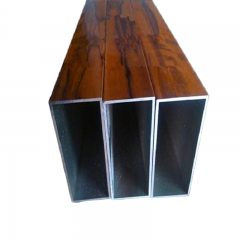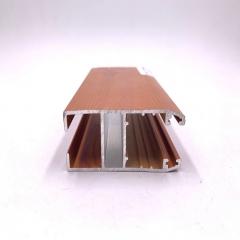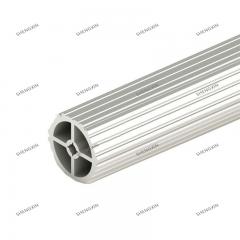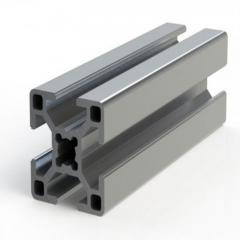
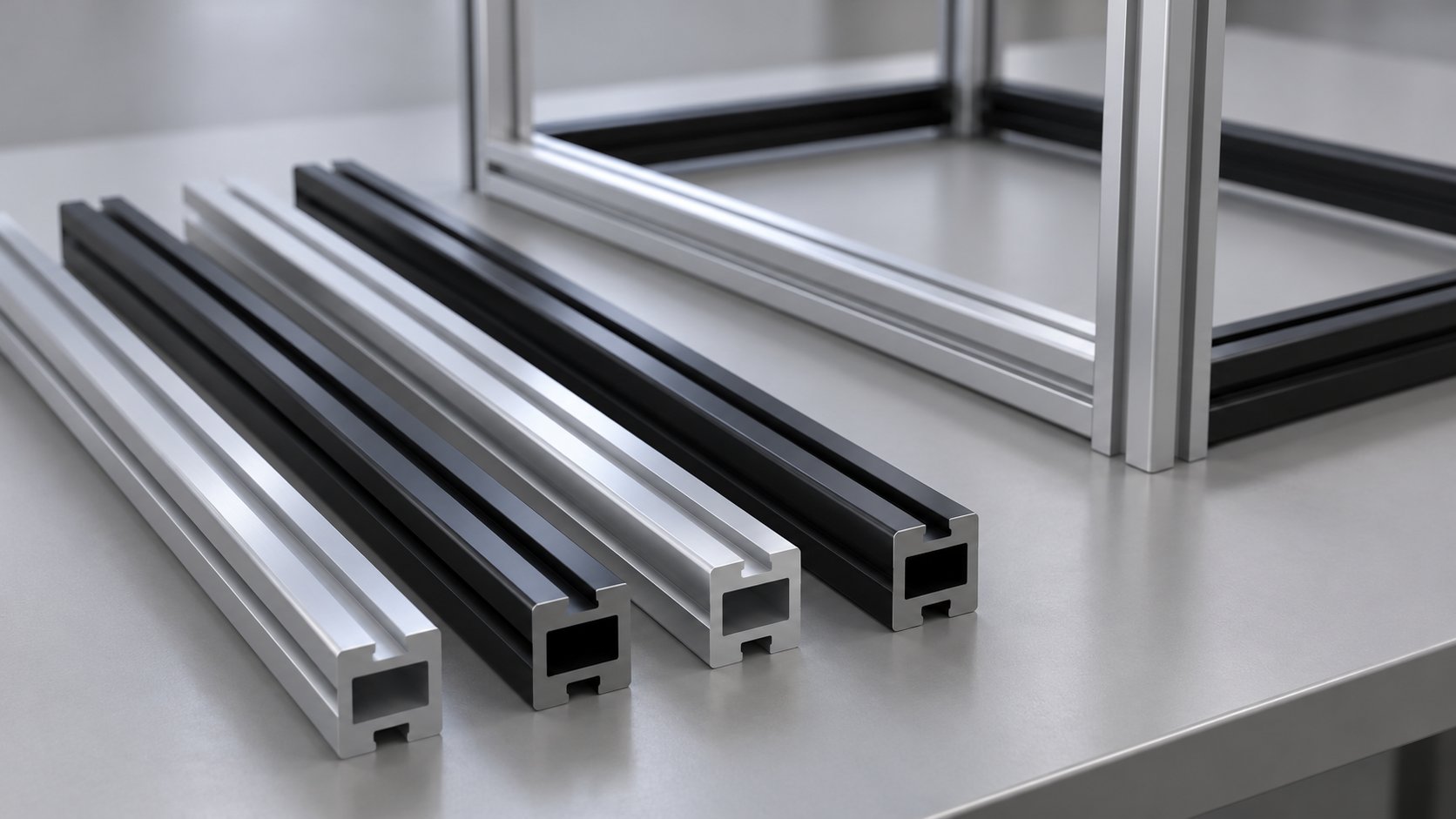
Have you ever opened a product page for 2040 extrusion and wondered what the numbers mean, or whether it's the right rail for your frame? You're not alone. Most pages that rank for this term describe a single product. This guide takes a vendor-neutral approach. It explains the profile itself, so you can judge any listing before you compare suppliers.
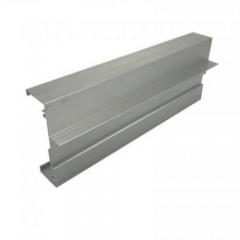
2040 aluminium extrusion is a modular structural rail with a nominal 20mm x 40mm cross-section, part of the 20 series, with slots along its faces that accept nuts and fasteners, so builders can assemble rigid frames for machines, enclosures and fixtures without welding.
The name is a size code. The "20" and "40" describe a nominal 20mm x 40mm cross-section. The shorter side is 20mm, so the profile belongs to the 20 series, the same family as 2020. Picture two 20mm square cells sitting side by side and you have the basic idea.
Some catalogs add the series number as a prefix. For example, 80/20 lists its metric profiles with the series in front, as in 20-2040, while its inch-based profiles drop the prefix. That's why search strings like "20 4040" can be confusing. The leading number points to a series, and the rest names a profile size.
Spelling adds another layer of confusion. 2040 aluminum extrusion (US spelling) and aluminium extrusion 2040 (UK and European spelling) refer to the same profile format. Remember that the name is nominal. Wall thickness, slot opening and internal geometry all vary by manufacturer, so the datasheet always has the final word.
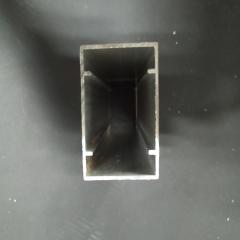
The slots are the whole point of the profile. Each face carries a channel that accepts T-nuts and screws, and the wider faces typically have two channels side by side. To make a joint, you slide or drop a nut into the slot and bolt on a bracket. Because these frames are modular, they don't require welding and can be put together with simple hand tools. Need to move a shelf or add a sensor mount? Loosen two screws and slide it to the new spot.
Think of 2040 as the middle ground. It resists bending better than single-cell 2020 when loaded through its taller side, yet it stays lighter and more compact than 40 series profiles. That balance makes it popular for 3D printers, CNC gantries, enclosures and workstations. The material helps as well. Aluminum is roughly one-third the weight of steel, and it forms a natural oxide film that resists corrosion.
A nominal name only tells you the outline, though. The figures that decide how a rail behaves under load are on the spec sheet and the technical drawing. Once you can read those, you'll compare listings very differently.
Open almost any 2040 product page and you'll find a short list of specs: moment of inertia, slot size, finish, length and weight. Sounds technical? Each one answers a simple question about how the rail will behave in your frame. Learn to read them and you can compare listings on substance instead of photos.
Moment of inertia, usually written as I, describes how well a cross-section resists bending. A higher value means less deflection under the same load. Shape matters as much as outer size. Vention points out that two profiles with identical outer dimensions can have very different rigidity because their internal geometry differs. That's exactly why the nominal 20x40 name can't tell you how stiff a rail will be.
Because 2040 is rectangular, you'll usually see two values, often labeled Ix and Iy. Vention notes the same thing for its own rectangular profiles: the inertia depends on orientation. In practice, the rail is stiffer when the load runs along its 40mm side than along its 20mm side.
The slot opening decides which nuts and screws will fit. Slot depth limits how far a screw can reach before it bottoms out. The center bore runs through each cell and is often tapped for end connections. Wall thickness and corner radius affect stiffness, weight and how flush your brackets sit.
| Specification | What It Describes | Why It Matters for Your Build |
|---|---|---|
| Moment of inertia (Ix, Iy) | Resistance to bending about each axis | Predicts sag over a span and tells you which orientation is stronger |
| Slot size or slot opening | Width and shape of the channel on each face | Determines which T-nuts, screws and accessories fit |
| Surface finish | Treatment such as anodized or mill finish | Affects corrosion resistance, wear and appearance |
| Cut length and length tolerance | Ordered length and allowed variation | Controls whether your frame comes out square |
| Weight per unit length | Mass of the profile per meter or foot | Helps you estimate total frame weight and shipping cost |
A typical drawing shows the profile's end view with dimension callouts. When you study one, look for these details:
Labeling conventions differ between catalogs, so always check which axis is which before you trust a number.
Pull exact figures from the manufacturer's datasheet or CAD download, never from a generic chart or a different supplier's drawing.
Established suppliers make this easier. 80/20, for example, offers free 2D and 3D CAD files for its profiles, fasteners and accessories. Many suppliers also use part numbering systems that tie a profile to a specific size and cut length, which reduces ordering mistakes. These same reading skills apply whether you're comparing 2040 against other extruded aluminum sizes or weighing a heavier 40mm aluminum extrusion from the 40 series aluminum extrusion family.
One line on that drawing deserves a closer look, though: the shape of the slot itself. Two rails can share the same 20x40 outline yet use completely different slot geometry, and that single detail decides what hardware, and what kind of motion, the rail can support.
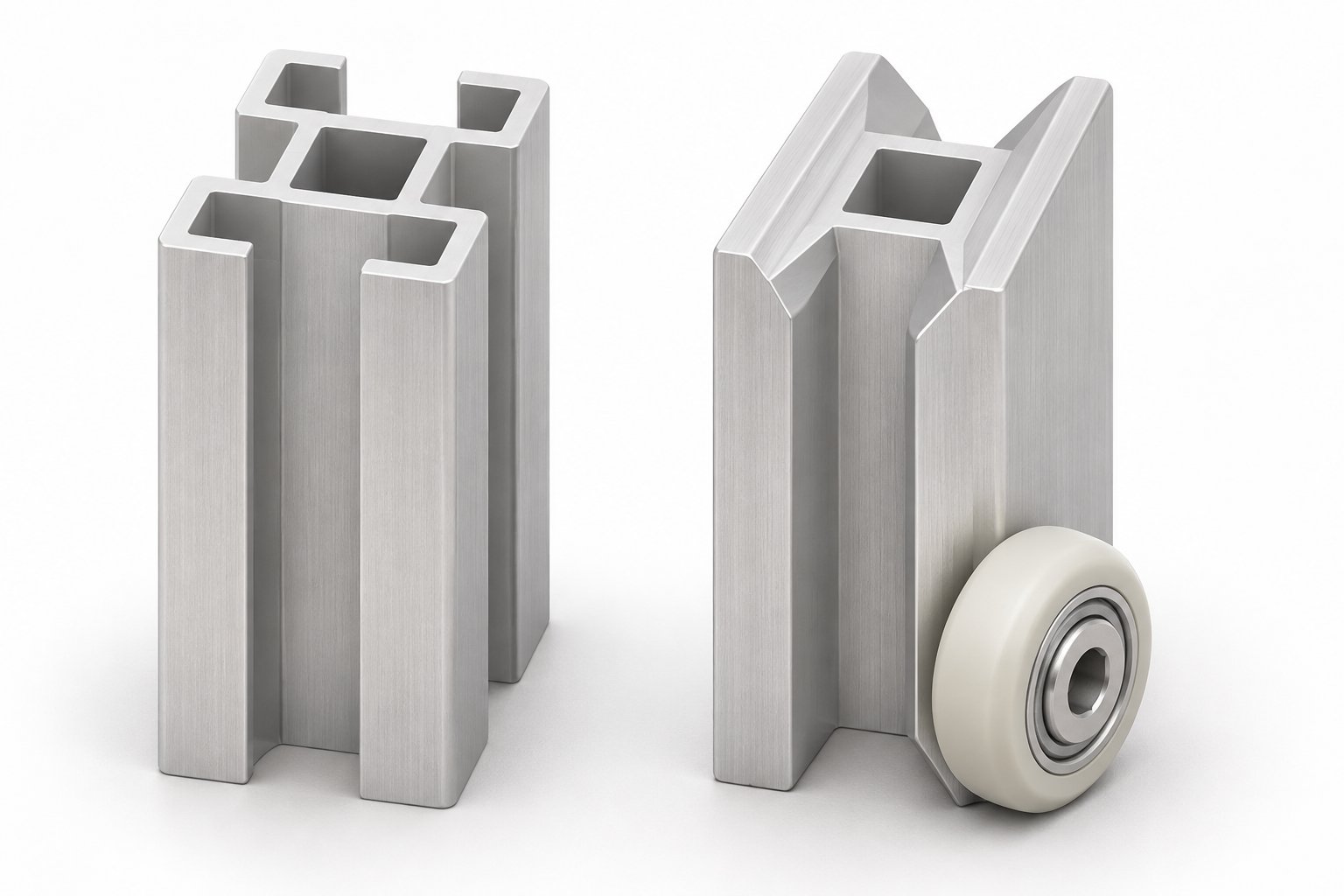
Imagine you order a rail for a 3D printer gantry, the box arrives, and your wheels won't sit in the slot. Frustrating? It happens more often than you'd think. Most pages that rank for aluminum extrusion 2040 cover only one slot style, yet two main systems share the same outline. Picture the cross-section as a simple area model, 20 x 40, made of two 20mm squares side by side. The two systems differ in the shape cut into each face.
T-slot 2040 has open channels shaped like a T. It is commonly listed with six open T-slots, with two on each wide face and one on each narrow face. The open design lets T-nuts and other fasteners slide in and lock almost anywhere along the rail. That's why T-slot profiles are built around modularity. You can reconfigure a workbench or enclosure without major rework. When a T-slot rail needs to move something, it usually pairs with sliding hardware such as linear bearings rather than rolling wheels.
V-slot extruded aluminum has beveled, angled faces inside each groove. It's commonly listed with a 6mm slot in the European style. Those angled faces act as a track. V-wheels on a carriage press against them and roll along the length, so the frame doubles as a linear rail. You'll see this in many 3D printers and light CNC machines. The tradeoff? The groove is designed mainly to guide wheels, so your choice of compatible fasteners and components is more limited.
| Profile Geometry | Slot Shape | Typical Compatible Hardware | Linear Motion Suitability | Common Applications |
|---|---|---|---|---|
| T-slot 2040 | Open T-shaped channel on each face | T-nuts, screws, corner brackets, panels, linear bearings | Moderate, using sliding bearings or add-on rails | Enclosures, workstations, fixtures, machine guarding |
| V-slot 2040 | V-shaped groove with angled inner faces | V-wheels, wheel carriages, slot-matched nuts | High, because wheels roll directly on the groove | 3D printers, light CNC routers, motion gantries |
Choose T-slot if:
Choose V-slot if:
V-wheels need the angled faces to track properly. T-nuts are shaped for one specific slot opening and depth. As a result, hardware from one system rarely fits the other cleanly. Measurement units create a second trap. Metric profiles typically pair with threads such as M5 or M6, while inch-based systems use threads such as 1/4-20. A nominal conversion doesn't make two systems compatible. For example, 1.5 inches equals 38.1mm, not 40mm. If you've searched for 8020 dimensions, you've probably seen fractional profiles that follow their own slot logic entirely.
Confirm the slot type and slot size on the manufacturer's drawing before you buy a single nut or wheel.
Slot shape is only half of the compatibility puzzle. The same naming code that gives you 2040 also produces 2020, 4020 and 4040. One of those names describes exactly the same rail turned on its side.
Why do extrusion sizes look like random four-digit codes? They aren't random at all. Each name describes the outline in millimeters, and the series comes from the shorter side. ProLean explains that profiles are classified by the shorter side of the cross-section, so 2020 and 2040 both belong to the 20 series. Learn that one rule and the whole family of extruded aluminum sizes starts to make sense.
2020 is a single 20x20 cell with one slot on each face. 2040 joins two of those cells side by side, which gives you six slots instead of four. That extra width adds stiffness and a larger mounting face. Imagine a 2020 rail across the top of a printer frame, flexing slightly under a heavy print head. A 2040 extrusion rail in the same spot, set with its 40mm side vertical, resists that bending far better.
If you're weighing these two formats for a compact frame, a combined listing such as Shengxin Aluminium's 2020 and 2040 T-slot and V-slot aluminum profiles lets you review both sizes and both slot systems in one place, with an anodized finish. The listing doesn't publish a full compatibility or load-rating specification, so confirm the cross-section, slot geometry, length, tolerances and mating hardware with the supplier before you order.
In most catalogs, yes. A 4020 aluminum extrusion is usually the same profile described in the opposite orientation, with the 40mm side listed first. Some suppliers write the long side first, while others start with the short side. The real trap runs in two directions. Don't assume a different name means a different part, and don't assume the same name means identical geometry across brands. Whether a listing says 2040 extruded aluminum or aluminium extrusion 2040, the drawing settles it.
The 40 series starts with 4040, a single 40x40 cell. It's bulkier and stiffer, and its slots are typically larger. ProLean's 4040 example uses T-slots around 8mm wide, so 20 series nuts won't fit. 8040 places two 40mm cells side by side for heavier frames and longer spans.
Be careful with searches for '8020 dimensions'. They often lead to 80/20's fractional, inch-based profiles, which follow their own naming logic. Some guides also use 8020 to describe an 80x20mm metric profile. Either way, never assume metric and inch hardware will mix.
| Profile Name | Nominal Cross-Section Description | Relative Stiffness | Typical Use |
|---|---|---|---|
| 2020 | Single 20x20 cell | Lowest in this group | Light frames, small printers, enclosures |
| 2040 | Two 20x20 cells side by side | Higher than 2020, strongest through the 40mm side | Printer and CNC gantries, workstations |
| 4020 | Same as 2040, named in the opposite orientation | Same as 2040, depends on orientation | Same as 2040 |
| 4040 | Single 40x40 cell | Higher | Workbenches, automation frames, racks |
| 8040 | Two 40x40 cells side by side | Highest in this group | Heavy machine bases, long load-bearing spans |
Choosing a size quietly commits you to a hardware ecosystem. Every name in that table has its own nuts, brackets and connectors, and how those parts grip the slot decides how solid your finished frame feels.
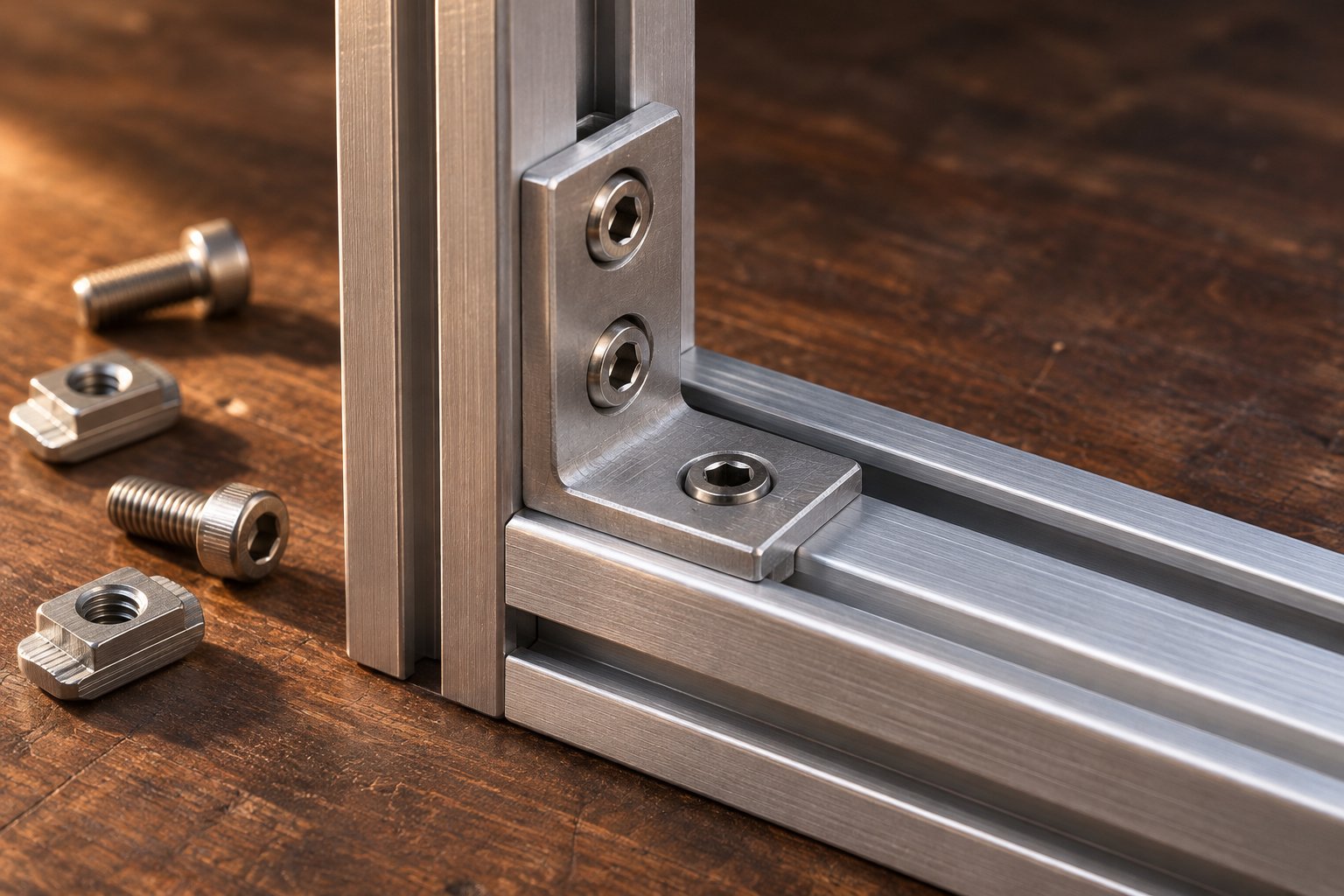
Scroll past the specs on a typical 2040 listing and you'll notice a row of related products: corner brackets, M5 button head socket cap screws and assorted connectors. These parts aren't afterthoughts. They are what turns a pile of rails into a rigid frame. It helps to sort them into two groups. Framing Tech draws a clear line between connectors and fasteners. Connectors join profiles at the right angle, while fasteners mainly attach accessories such as panels, doors and handles to the finished structure.
Almost every joint starts with a nut sitting inside a slot. Here are the types you'll meet most often:
Spring-loaded versions matter more than you might expect. Drop-in nuts with a leaf or ball spring are ideal for vertical T-slots, where a loose nut would simply fall. Hammer-style heads with serrated teeth also create a strong, electrically conductive connection.
Matching is simple but strict. The nut must fit the slot opening and depth, and its thread must match the screw. An M5 nut needs an M5 screw, and a nut sized for a 20 series slot won't seat properly in a 40 series slot. Choose screw lengths that pass through the bracket and fully engage the nut without bottoming out in the slot. If a listing quotes unfamiliar aluminum extrusion dimensions, such as 20x41 instead of 20x40, treat it as a different profile until the drawing proves otherwise.
Corner brackets are the workhorses. These L-shaped parts bolt to two rails and hold them at 90 degrees. Gusset plates span the outside of a joint to add rigidity where racking is a concern. Joining plates bridge rails that meet end to end or in a T or L layout. Size matters here too. Heavier frames built from 8040 extrusion use brackets made for 40 series slots, so 2040 brackets won't carry over.
Want clean lines with no visible hardware? Tap the center bore at the end of one rail, then run a screw through the mating rail into that thread. Hidden or anchor fasteners work in a similar way. They sit inside the slot and pull two profiles together, though many require a drilled access hole. These joints look tidy on display stands and enclosures, but they are harder to adjust later than a bolted bracket.
Torque requirements vary by nut, screw and profile, so follow the hardware maker's guidance instead of a generic figure.
Each of these joints quietly assumes something about the rail itself: ends that are cut square, burrs that have been removed and, for hidden connections, a bore that's tapped cleanly. A frame only feels solid when that prep work is done well before the first bracket goes on.
Cut one rail even half a millimeter short and you'll feel it the moment you try to square the frame. Fabrication isn't the exciting part of a build, but it decides whether every bracket sits flush and every joint pulls tight. A few habits make the difference between a frame that fights you and one that just goes together.
Aluminum cuts easily, but it heats up fast and leaves burrs if you rush. For power saws, Paramount Extrusions recommends a carbide-tipped, non-ferrous blade with 60 to 100 teeth, depending on diameter. For hand cuts, use a hacksaw with 18 to 24 teeth per inch. A miter saw gives the most square, repeatable results.
Pay extra attention to the slot edges. A small burr inside a v slot can make a wheel bump as it rolls past, and one inside a T-slot can stop a nut from sliding freely.
Always wear safety glasses, hearing protection and gloves, and use only blades designed for non-ferrous metal.
End-tapped joints depend on a straight, clean thread in the center bore. Check the drawing for the bore diameter and the matching tap size, then keep the tap square to the end face. Use cutting fluid, back the tap out often to clear chips, and blow out the bore before assembly.
Need a dozen identical rails? Factory cut-to-length pieces often make more sense. For production work, Paramount points to cold saws or CNC cutting for maximum precision. Length tolerance matters because opposite sides of a rectangle must match. If one rail runs long, the frame racks, and no amount of tightening will fix it. Ask your supplier for its stated length tolerance before ordering.
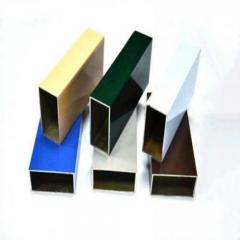
Most t aluminum extrusion ships anodized. Anodizing is an electrochemical process that grows a hard oxide layer into the metal rather than on top of it. Once sealed, the finish is integral to the part, with nothing on top to chip off. Typical Type II anodizing is only 10 to 25 microns thick, so it barely changes slot fit. Powder coat is different. It forms a 60 to 120 micron polymer skin that can tighten clearances and fill threads. Keep in mind that cut ends are usually left bare, because rails are typically finished before they're cut to length.
| Finish | Appearance | Protection Level | Typical Use |
|---|---|---|---|
| Clear or silver anodized | Metallic silver with a subtle depth | Good corrosion and wear resistance | General frames, workstations, machines |
| Black anodized | Metallic black, shade can vary between batches | Good corrosion and wear resistance | 3D printers, display builds, low-glare setups |
| Mill finish | Raw, untreated aluminum with visible marks | Lower, relies on the natural oxide film | Prototypes, hidden or indoor structure |
| Powder coat | Opaque, paint-like, wide color range | Good, but coating can chip on impact | Color-matched frames, cosmetic enclosures |
Square ends and a durable finish make a frame look professional. Whether it stays straight once you hang a spindle or a print head from it is another matter, and the answer sits in those inertia values on the datasheet.
Will your rail sag when you hang a spindle or print head in the middle of it? You don't need simulation software to find out. Two textbook formulas and the inertia values from a datasheet will give you a solid first estimate in a few minutes with a calculator.
Units cause more errors than formulas do. PARCO's deflection guide works in pounds, inches and pounds per square inch. A European-style 2040 aluminum profile datasheet usually lists metric values, often in mm4 or cm4. Remember that 1 cm4 equals 10,000 mm4. Mix them up and your answer can be wrong by a factor of 10,000.
Standard beam deflection tables cover the cases you'll meet most often:
You'll notice two patterns. Span is cubed, so doubling L multiplies deflection by eight. A cantilever also deflects 16 times more than a center-loaded, simply supported beam of the same length and load, because 48 divided by 3 is 16. Overhanging arms deserve extra caution.
These formulas give estimates only, and any safety-critical or load-bearing design needs review by a qualified engineer.
The same rail has two inertia values. Set it with the 40mm side vertical and it is much stiffer than with the 20mm side vertical. Material placed farther from the bending axis contributes far more stiffness. For a simple solid rectangle, inertia grows with the cube of its height. A 2040 is hollow and slotted, so the datasheet gives the exact ratio, but the direction never changes. On a v slot aluminum extrusion gantry, simply rotating the rail can be the cheapest upgrade you make.
What if the estimate is still too high in the strong orientation? First, try shortening the span, adding a mid-support or bracing the joint. If that isn't practical, step up a size. Deflection is inversely proportional to I, so a profile with twice the inertia sags half as much under the same load. Compare the published values for 4040 or 8040 directly, and remember they need 40 series hardware. Dropping down to a 20/20 extrusion only makes sense where loads are light and spans are short.
Run these numbers on a few real builds and a pattern appears. Some machines sit comfortably inside what 2040 can handle, while others outgrow it almost immediately.
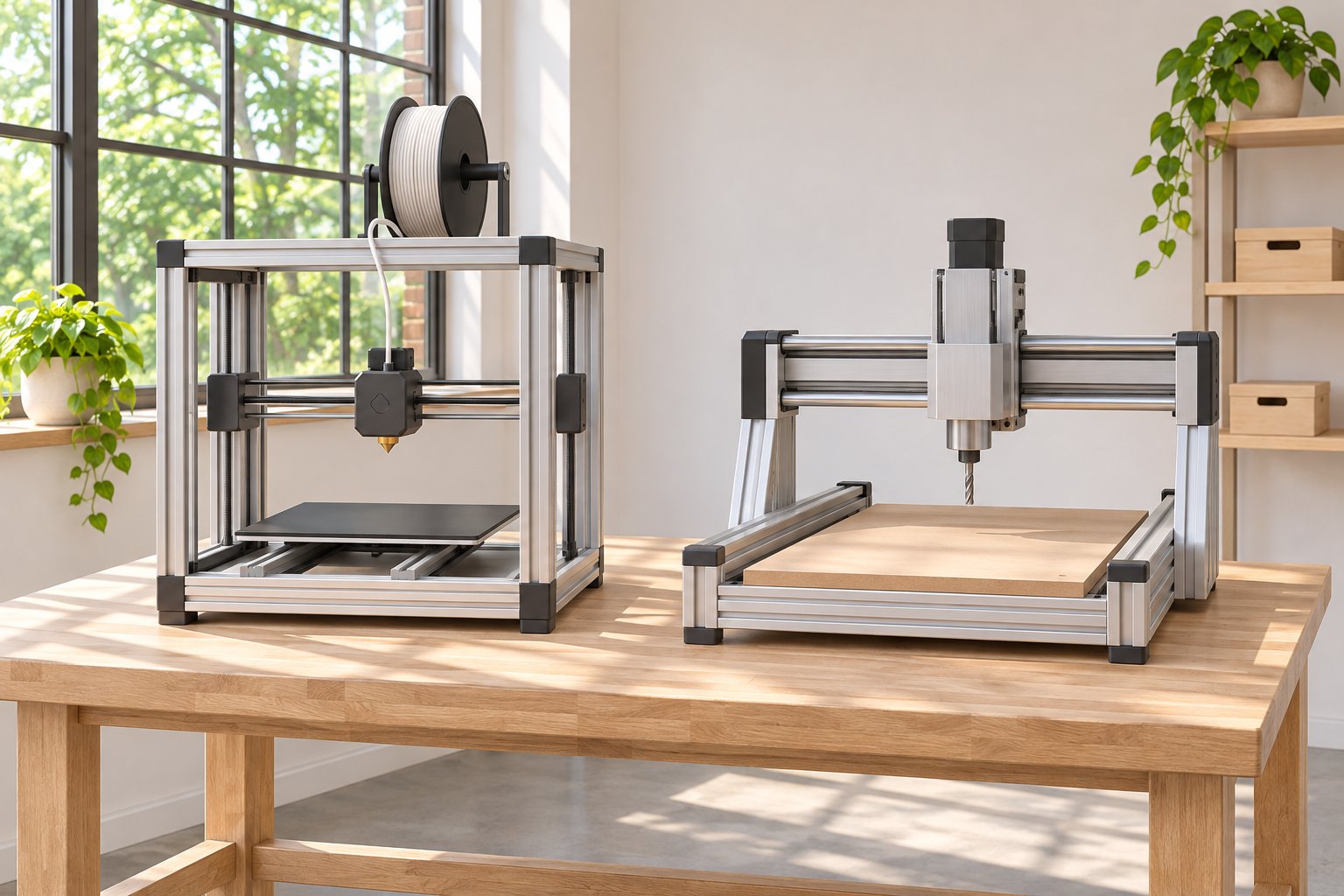
Where does 2040 actually earn its place? Look closely at a desktop 3D printer, a hobby CNC router or a lab workstation and you'll often spot it. Its two-cell shape gives you a stiffer rail than 2020 without the bulk and heavier hardware of 40 series framing. That balance explains why it shows up in so many different builds.
GAP Engineering describes 20 series profiles as a strong fit for compact, lightweight structures with modest loads. Within that family, 2040 tends to take on these roles:
Scale has limits, though. Xometry points out that gantry machines can grow by lengthening their structural members, but only until the loss of stiffness starts to hurt accuracy. That tradeoff is exactly what a structured choice helps you manage.
Picture a desktop CNC built this way: 2040 V-slot for the moving gantry, 2020 for the light enclosure frame and perhaps 4040 under a heavy spindle. Each size does the job it suits best.
A sound plan on paper doesn't guarantee a smooth build, of course. Most frustrations at the bench trace back to a handful of small, surprisingly common slips that are easy to avoid once you know them.
Have you ever finished a frame, stepped back and noticed it wobbles? The frustrating part is that most of these problems start well before assembly. Hobby-Store observes that the cause is often not the profiles themselves. The real issue is usually parts that don't match the overall project. Some mistakes only show up once the frame is loaded or a machine speeds up. These are the ones that catch 2040 builders most often.
Mixing T-slot and V-slot hardware, or metric and imperial parts, is the classic error. A nut made for another slot may drop in but never clamp properly. Connectors that don't match the slot width can also loosen and gradually weaken the structure. A quieter trap is assuming every 2040 shares the same geometry. One maker's 20 series aluminum extrusion may have a different slot depth or bore from another's, even when both listings read "2040 x 1000mm". Screw length matters too. If a screw is too long, it bottoms out in the slot before the joint is tight.
Mount a 2040 with its 20mm side vertical and you give away much of its stiffness. Long spans make this worse, because deflection grows with the cube of the length. A profile that's too small for the job tends to deflect and vibrate, especially over long unsupported sections. Often the fix is simple: rotate the rail or add a mid-support. Swapping in a lighter 20 20 extrusion to save weight rarely helps on these spans.
Some nuts can only be inserted from the end of the profile. Framing Tech lists several T-nut styles that require pre-installation. Forget them, and you'll be taking the frame apart again. Out-of-square cuts cause similar grief, because no tightening sequence can fix a rail that's too short. Check the frame geometry before you fully tighten any screws.
| Mistake | Consequence | How to Prevent It |
|---|---|---|
| Mixing T-slot, V-slot, metric or imperial hardware | Nuts that won't seat or clamp, wheels that won't track | Match every part to the slot type and size on the drawing |
| Mounting the beam in its weak orientation | Visible sag and vibration under load | Set the 40mm side parallel to the main load |
| Ignoring deflection over long spans | Poor accuracy and a frame that flexes | Run a deflection estimate and add supports where needed |
| Forgetting to pre-insert nuts | Partial disassembly to add hardware | Plan nut counts per slot before closing joints |
| Out-of-square cuts | Racked frame and gaps at brackets | Use a miter saw or order factory cut-to-length rails |
| Screws too long for the slot | Screw bottoms out and the joint stays loose | Check slot depth and choose screw length accordingly |
| Assuming all 2040 profiles are identical | Hardware or CAD models that don't fit | Compare each supplier's drawing before mixing brands |
Verify every rail, nut, bracket and screw against the manufacturer's datasheet and drawing before you order.
Many of these errors come down to missing information. If a supplier provides a full drawing, a clear slot size and a stated length tolerance, most of the problems above never reach your workbench. That makes the questions you ask before buying just as important as the design itself.
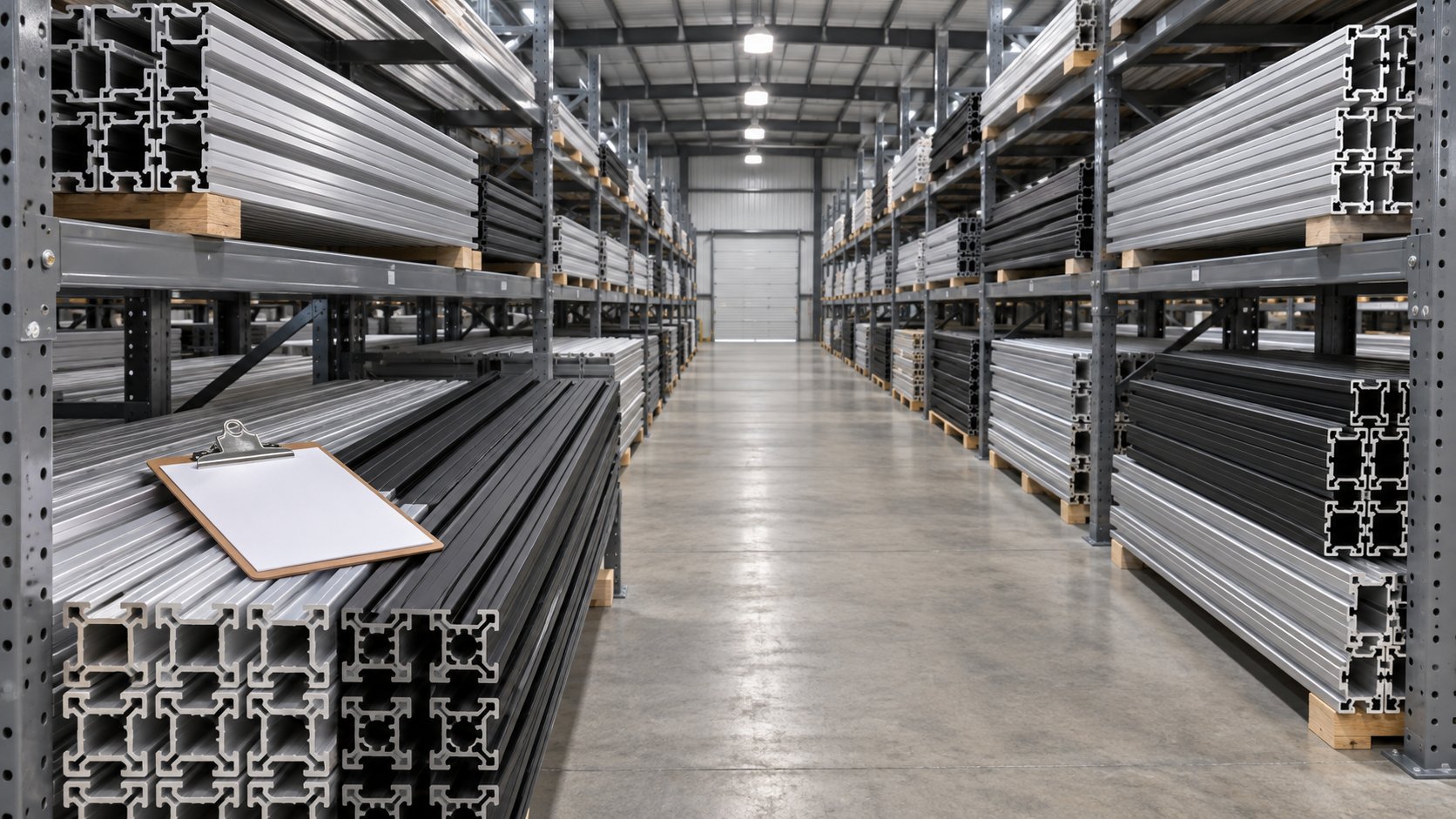
You've settled the size, the slot system and the orientation. Ordering should be the easy part, right? It is, as long as the supplier gives you enough detail to check. A short checklist keeps a well-planned design from turning into a box of parts that almost fit.
AL Circle's supplier checklist is a useful starting point. Ask which tolerance standard the profiles follow, such as EN 755-9 or ASTM B221, and whether the plant holds ISO 9001 certification. Find out if finishing happens in-house or is outsourced, since that affects lead time and quality control. It's also worth asking about minimum order quantity, standard lead time and whether the supplier can work from your CAD files.
If your design mixes sizes, a combined listing saves time. Shengxin Aluminium's 2020 and 2040 T-slot and V-slot aluminum profiles page covers both slot systems in a single 2020 2040 aluminum profile range, listed with an anodized surface finish. The page describes anodizing as converting the aluminum surface into a durable, corrosion-resistant oxide layer. Keep in mind that the listing doesn't provide a complete compatibility or load-rating specification. Before ordering, request the exact cross-section, slot geometry, length, tolerances and compatible hardware details, then compare them with your plan.
Whichever supplier you choose, the habits from this guide still apply. Read the drawing, match the slot, check the deflection and confirm every part before it ships.
The best 2040 order is one where every number on your plan traces back to a drawing the supplier has confirmed.
In most catalogs, yes. 4020 and 2040 usually describe the same two-cell rail. One supplier lists the long side first and another lists the short side first. The name only tells you the nominal outline, though. Slot depth, center bore, wall thickness and inertia values can still differ between manufacturers. If you are matching parts from two brands, compare both technical drawings side by side. Do not assume they are interchangeable because the size code looks similar.
Sometimes, but you should not count on it. A V-slot groove has angled inner faces designed to guide wheels. A T-slot channel is shaped to trap a nut with flat shoulders. A nut made for one system may drop into the other and still fail to clamp securely, which can let the joint creep under vibration. Buy nuts, brackets and wheels that the supplier specifically lists for your exact slot type and size. Also check whether the profile is metric or inch-based, because a close nominal size does not make the two systems compatible.
Orient the rail so the load pushes against its 40mm side. In that position, more material sits farther from the bending axis, and that is what gives a beam its stiffness. Datasheets show this as two separate inertia values, usually labeled Ix and Iy. Use the drawing to see which axis each value belongs to. For gantries and long shelves, turning the rail to its strong orientation is often the cheapest way to reduce sag. Adding a mid-support or shortening the span helps too.
Metric 20 series profiles commonly pair with M5 hardware, and some systems also use M4 or M6. The only reliable answer is the slot opening and slot depth shown on the manufacturer's drawing. The nut has to fit that slot, and its thread has to match the screw. Choose a screw length that passes through the bracket and fully engages the nut without hitting the bottom of the slot. Drop-in or hammer-head nuts can be added after assembly. Slide-in nuts must be inserted before a joint or end cap closes off the slot.
If your design mixes sizes or slot styles, a combined listing simplifies comparison. Shengxin Aluminium offers 2020 and 2040 T-slot and V-slot aluminum frame profiles with an anodized surface finish. This gives equipment designers and fabrication buyers one place to evaluate compact frame options. The listing does not publish a complete compatibility or load-rating specification. Ask for the exact cross-section drawing, slot geometry, cut length, tolerances and mating hardware before you place an order. Whichever supplier you use, also ask for inertia data and CAD files so you can check fit and deflection before you buy.



 บริการออนไลน์
 0086 136 3563 2360
 sales@sxalu.com
 +86 136 3563 2360
 ไทย
 English
 français
 Deutsch
 русский
 español
 português
 العربية
 Việt
 Українська