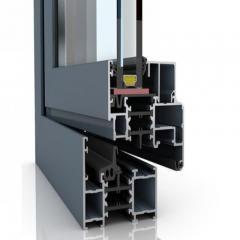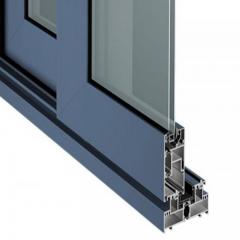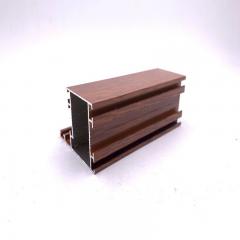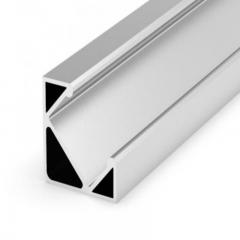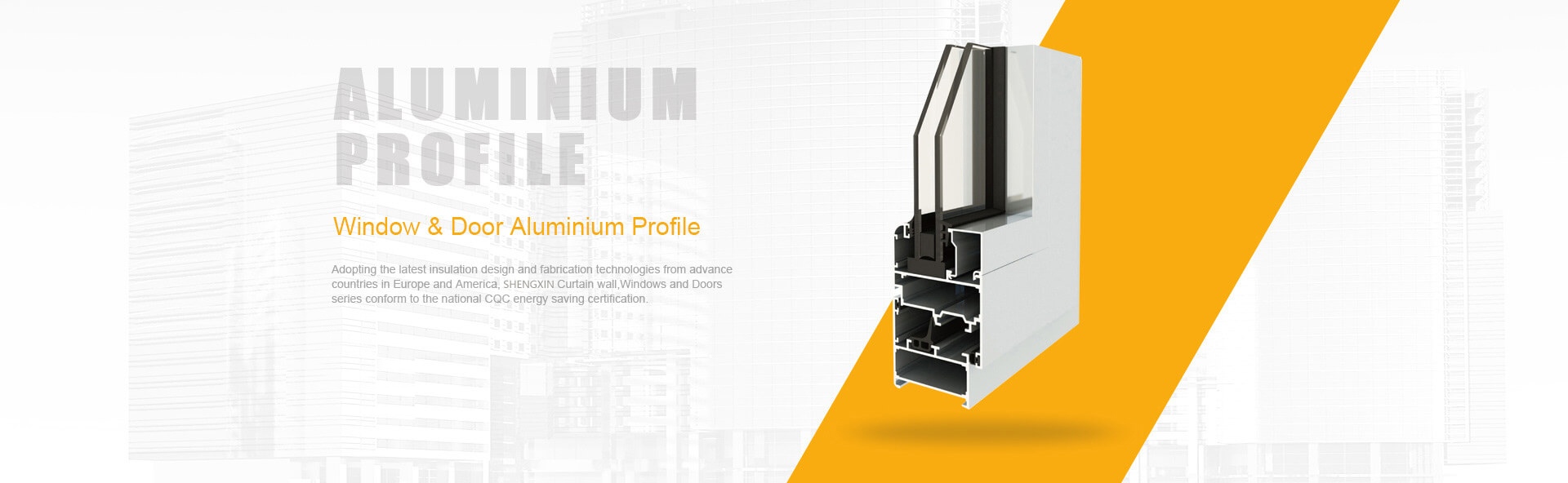
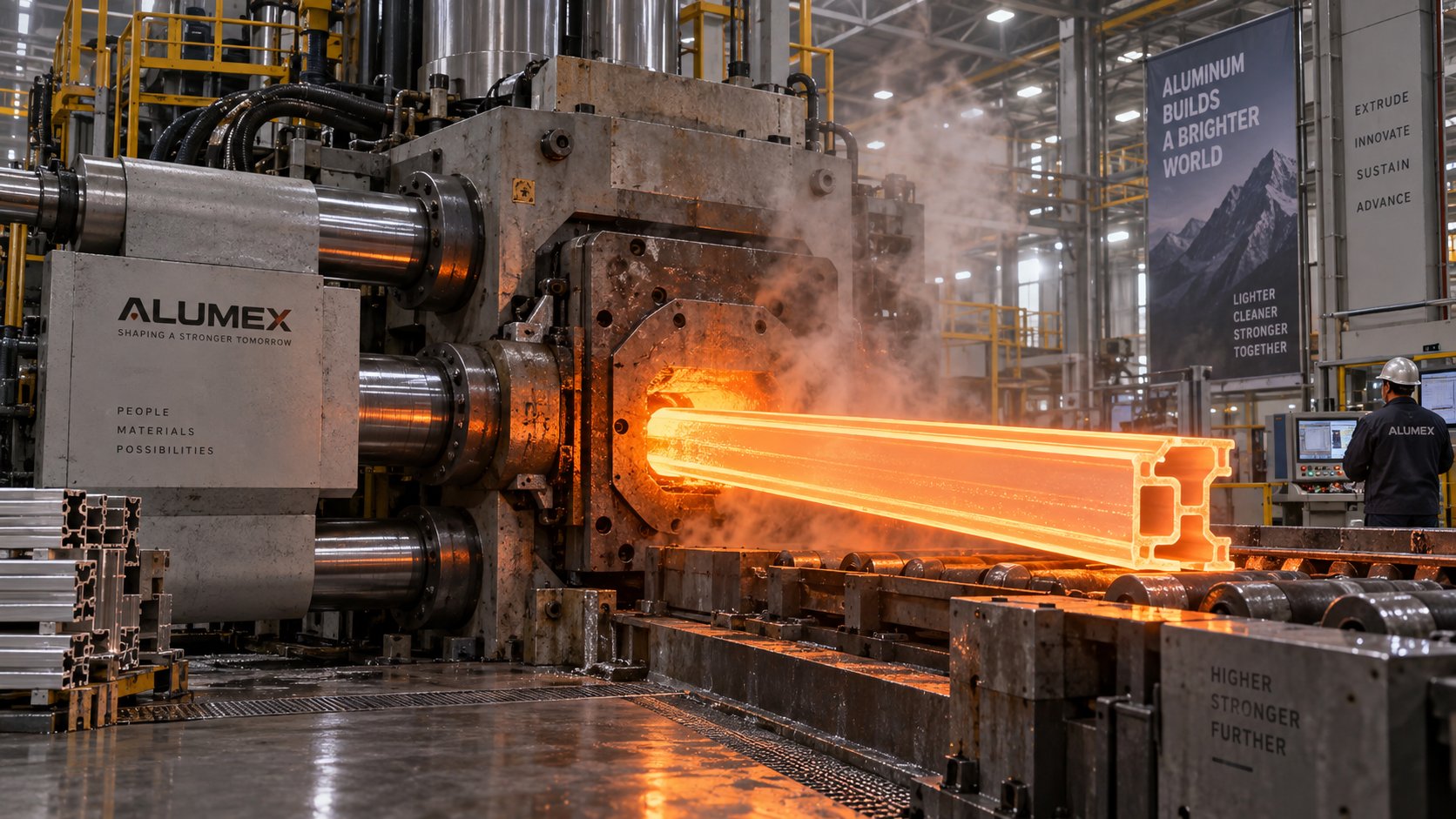
Ever wondered how manufacturers create those perfectly shaped aluminum window frames, heat sinks, or structural components you see everywhere? The answer lies in a remarkably versatile manufacturing process called aluminum extrusion. Whether you're an engineer sourcing materials or simply curious about modern manufacturing, understanding what is aluminum extrusion opens the door to appreciating one of industry's most efficient metal-shaping techniques.
So, what is an aluminum extrusion exactly? Let's break down the aluminum extrusion definition in clear terms:
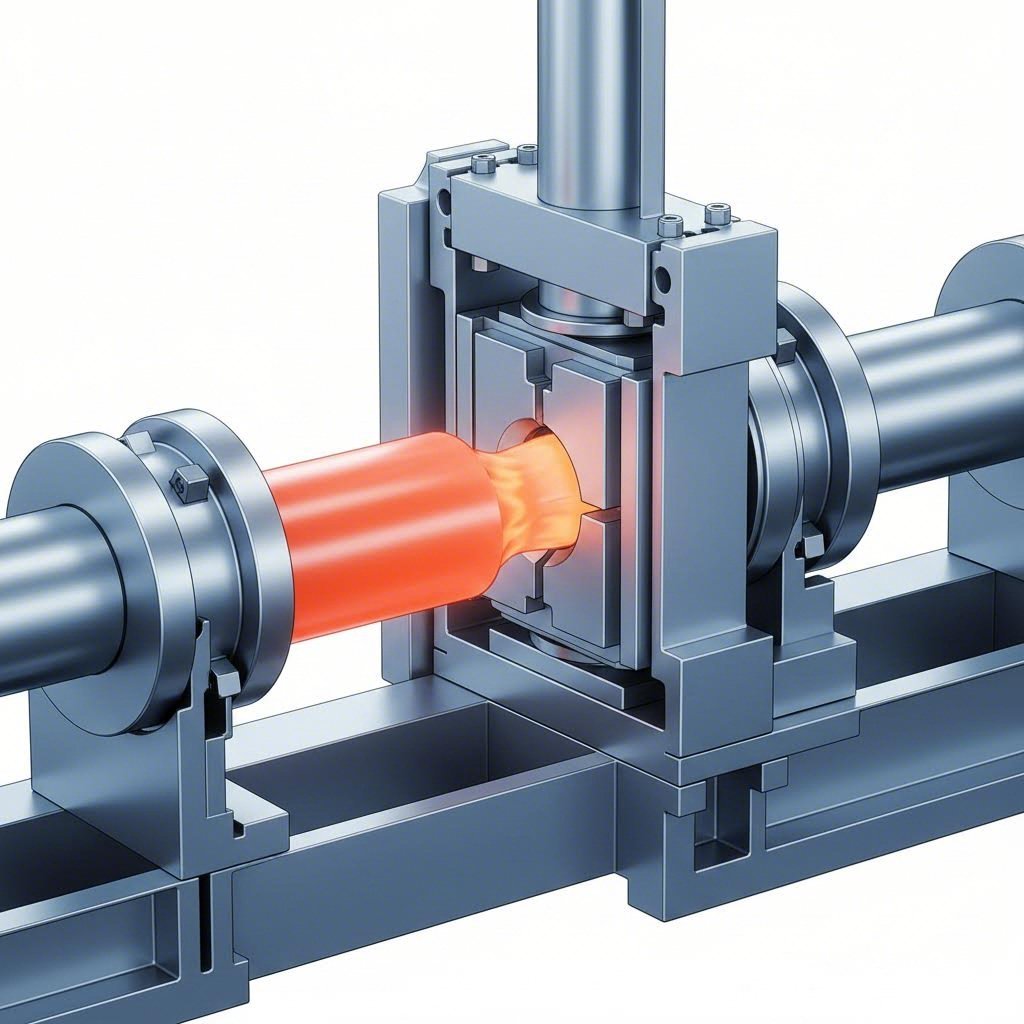
Aluminum extrusion is a manufacturing process where heated aluminum alloy is forced through a shaped die opening under immense hydraulic pressure, creating profiles with consistent cross-sectional shapes that can be cut to virtually any length.
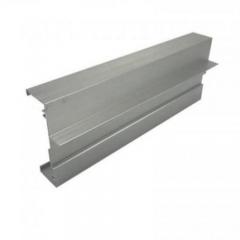
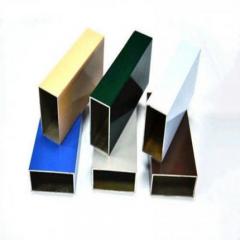
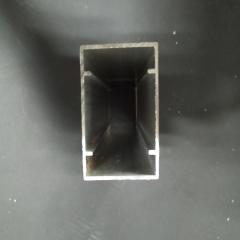
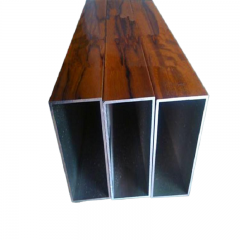
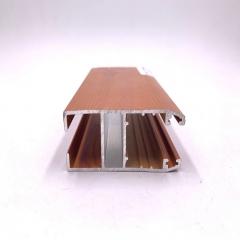
The result? Extruded aluminum profiles that maintain the exact same cross-section throughout their entire length. This consistency makes the process ideal for producing everything from simple bars and tubes to incredibly complex architectural profiles with intricate internal features.
Sounds complex? Imagine squeezing Play-Doh through a shaped hole in a toy press. What comes out the other side matches that hole's shape perfectly, whether it's a star, a circle, or something more elaborate. That's essentially what is extrusion at its core—just scaled up dramatically for industrial applications.
Here's how it works in practice: A solid cylindrical aluminum billet gets preheated to temperatures between 700-930°F (370-500°C). At this temperature range, the aluminum becomes soft and pliable without actually melting. A powerful hydraulic ram then applies tremendous pressure—anywhere from 1,000 to 15,000 tons—forcing the softened metal through a precision-engineered steel die. As the aluminum emerges from the die opening, it takes on that exact shape.
To define extruded aluminum simply: it's aluminum that has been pushed through a die to create a specific profile shape, then cooled and processed for its final application.
What is extruded aluminum's role in today's industrial landscape? The answer is extensive. This manufacturing method has become indispensable across countless industries for several compelling reasons:
From the curtain walls of modern skyscrapers to the lightweight frames in electric vehicles, aluminum extrusion has become a cornerstone of manufacturing. The process enables designers and engineers to create custom solutions that would be impractical or prohibitively expensive using other metalworking methods. Understanding what is an extrusion process helps you recognize why this technique dominates so many applications where precision, durability, and design complexity matter.
Now that you understand what aluminum extrusion is, let's explore exactly how aluminum extrusion is made from start to finish. The aluminum extrusion process involves a carefully orchestrated sequence of steps, each critical to producing high-quality profiles. Whether you're evaluating manufacturing options or simply want to understand how your aluminum components come to life, this detailed breakdown reveals what happens at every stage of the extrusion line.
Every aluminum extrusion begins with a billet—a solid cylindrical log of aluminum alloy, typically cut from larger cast logs. Before any extrusion can occur, this raw material must undergo precise preparation and heating.
The billet enters a specialized log oven or billet oven where it's heated to approximately 800-925°F (425-495°C). This temperature range is critical: hot enough to make the aluminum soft and pliable, yet not so hot that it melts. At these temperatures, the metal reaches an ideal malleable state for extrusion.
Why does temperature matter so much? According to industry experts, temperature is the most critical factor in the extrusion process because it directly determines the aluminum's final characteristics, including hardness and surface finish. Too hot, and the metal becomes overly fluid, causing dimensional inconsistencies. Too cold, and the press requires excessive force, potentially damaging equipment or creating defects.
While the billet heats, the extrusion die also warms in a separate die oven at 750-900°F for 4-6 hours. This preheating prevents thermal shock when hot aluminum contacts the die and extends tool life significantly.
The extrusion press itself is an impressive piece of machinery. Press size determines the maximum profile dimensions—measured by the smallest circle that can completely enclose the shape's cross-section. Presses range from smaller units around 500-600 tons to massive machines exceeding 5,000 tons of force.
Here's where the aluminium extrusion process truly begins. The heated billet receives a thin film of lubricant (called smut) to prevent sticking, then moves into the press container. A powerful hydraulic ram pushes a dummy block against the billet, forcing it forward. Under immense pressure, the softened aluminum has nowhere to go except through the die opening.
As the profile emerges from the die, it travels onto the leadout table and then the run-out table. Here's something fascinating: during extrusion, liquid nitrogen often flows around die sections to cool them and create an inert atmosphere that prevents oxide formation on the fresh profile.
The extruded aluminum then undergoes quenching—rapid cooling using fans positioned along the entire run-out table length. Some alloys, like 6061, require additional water quenching for proper heat treatment. This cooling phase locks in the profile's shape and begins developing its mechanical properties.
Once cooled, profiles move to the stretcher. This step is essential: stretching straightens any curves or twists while simultaneously performing work hardening. The molecular realignment during stretching improves both hardness and strength—a critical benefit for structural applications.
Here's the complete workflow from raw material to finished profile:
Understanding how to cut aluminum extrusion properly matters because cutting occurs at multiple stages—first during initial sizing on the run-out table, then more precisely after stretching to achieve final customer specifications.
After these ten steps, profiles are ready for age ovens where heat treatment further develops their mechanical properties. This artificial aging process accelerates what would naturally take months, producing the final temper characteristics required for specific applications. The entire extrusion press operation represents a remarkable balance of temperature control, pressure management, and precise timing—all working together to transform simple aluminum billets into complex, high-performance profiles.
You've learned how the aluminum extrusion process works, but here's a question that trips up many engineers and buyers: which aluminum alloy should you actually specify? The answer significantly impacts your project's performance, cost, and longevity. Selecting the right aluminum extrusion material isn't just a technical detail—it's a decision that determines whether your aluminum extrusion profiles will excel in their intended application or fall short of expectations.
The 6000 series aluminum alloys dominate the extrusion of aluminium industry for good reason. These Al-Mg-Si alloys combine excellent extrudability with heat-treatability, good corrosion resistance, and versatile mechanical properties. But within this family, each alloy offers a distinct balance of characteristics. Let's break down your options.
When you see sleek window frames, elegant door profiles, or polished furniture components, you're likely looking at 6063 aluminum—often called the "architectural alloy." Why does this extruded aluminum alloy dominate decorative and structural-aesthetic applications?
The answer lies in its exceptional extrudability. 6063 produces thin, complex, and precise profiles with excellent surface finish, making it ideal for intricate architectural designs. When your application demands both visual appeal and corrosion resistance, 6063 delivers consistently.
Here's what makes 6063 stand out:
Typical 6063 applications include aluminum handrails and fence extrusions, cabinet frame extrusions, boat windshield frames, signage, display fixtures, solar panel framing, lighting fixtures, and electronic cabinetry. If your project prioritizes appearance, moderate strength, and weather resistance, 6063 is likely your best choice.
Need more muscle? 6061 aluminum steps up when structural demands exceed what 6063 can handle. This alloy contains approximately 30-50% more magnesium and silicon than 6063, plus added copper and chromium for enhanced strength.
In the T6 temper condition, 6061 delivers a tensile strength of approximately 310 MPa compared to 6063's 241 MPa—nearly 29% stronger. This makes 6061 the go-to aluminum alloy extrusion for applications where mechanical performance takes priority over surface aesthetics.
Consider 6061 when your project requires:
The tradeoff? 6061 has a poorer finishing response and costs more than 6063. It's also slightly denser (2.75 g/cm³ versus 2.70 g/cm³) and doesn't extrude as smoothly. For internal structural components where appearance matters less than performance, these tradeoffs make perfect sense.
Beyond the 6063-versus-6061 decision, two other aluminium alloy extrusion options deserve consideration: 6005 and 6082. Each fills specific niches in the extrusion of aluminium alloys spectrum.
6005 aluminum bridges the gap between 6063 and 6061. It offers excellent extrudability and strength combined with good formability, weldability, and finish characteristics. Think of it as a balanced compromise when you need better strength than 6063 but don't require 6061's full mechanical capabilities. Common applications include building and construction, ladders, platforms, and modular structures.
6082 aluminum represents the heavyweight of the 6000 series. With tensile strength reaching 350 MPa in T6 temper, it's often used as a substitute for mild steel. The higher manganese content (0.4-1.0%) drives this strength advantage. However, 6082 is more difficult to extrude and is better suited for thick, load-bearing profiles rather than intricate shapes.
| Property | 6063-T6 | 6061-T6 | 6005-T6 | 6082-T6 |
|---|---|---|---|---|
| Tensile Strength | ~241-270 MPa | ~310 MPa | ~310 MPa | ~350 MPa |
| Yield Strength | ~214-240 MPa | ~276 MPa | ~260 MPa | ~340 MPa |
| Corrosion Resistance | Excellent | Good (copper content slightly reduces it) | Good | Excellent (marine-grade) |
| Weldability | Good to Excellent | Good | Excellent | Moderate (strength loss in weld zones) |
| Extrudability | Excellent | Moderate | Good | Difficult |
| Surface Finish | Excellent | Fair | Good | Fair |
| Typical Applications | Windows, doors, curtain walls, furniture, solar frames | Aerospace, automotive, structural components, heat sinks | Ladders, platforms, construction framing | Heavy structural, marine, bridges |
| Best-Use Scenario | Architectural profiles requiring aesthetics and moderate strength | Structural parts needing high strength and machinability | Medium-strength structural extrusions with good weldability | Maximum strength applications replacing steel |
Still unsure which alloy fits your aluminum extrusion profiles project? Use this decision framework:
Remember that different heat treatment tempers (T5, T6, etc.) also affect final properties within each alloy. When specifying your aluminum extrusion material, always confirm both the alloy designation and the required temper to ensure your profiles meet performance requirements.
With your alloy selected, the next consideration becomes equally important: how does aluminum extrusion compare to alternative manufacturing methods? Understanding when extrusion excels—and when other processes might serve you better—helps you make fully informed sourcing decisions.
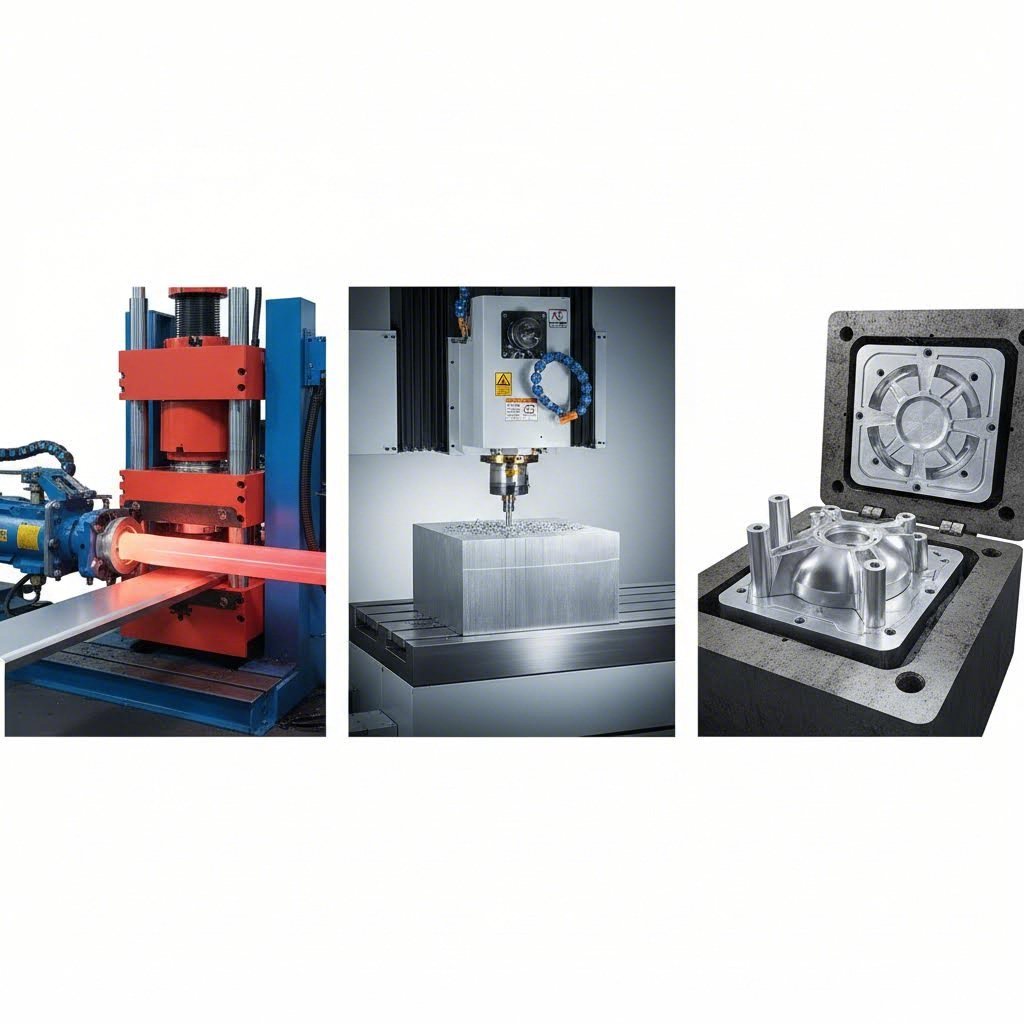
You've selected your alloy and understand the extrusion process—but is extrusion actually the right manufacturing method for your project? This question matters more than many buyers realize. Metal extrusion offers tremendous advantages in specific scenarios, yet other manufacturing processes might serve you better depending on your part geometry, production volume, and precision requirements.
Understanding when aluminum extrusion manufacturing excels—and when alternatives make more sense—helps you avoid costly mistakes and optimize both performance and budget. Let's compare the major metalworking options head-to-head.
Die casting and extrusion both shape aluminum, but they produce fundamentally different types of parts. Die casting injects molten aluminum into a mold cavity under high pressure, creating complex three-dimensional shapes with internal features, undercuts, and varying wall thicknesses. Extrusion, by contrast, creates profiles with consistent cross-sections along their entire length.
When should you choose each method?
Die casting typically involves higher tooling costs—often thousands of dollars compared to extrusion dies that may cost only a few hundred for simple shapes. However, die casting produces near-net-shape parts that require minimal secondary machining, which can offset initial tooling investments for complex components.
CNC machining and extrusion serve different sweet spots in the extrusion manufacturing process landscape. According to Standard Machining, CNC machining is significantly more precise, holding tolerances of ±0.005 inches or tighter, while aluminum extrusion generally achieves tolerances around ±0.010 inches or wider depending on profile complexity.
Consider CNC machining when your project demands:
Here's a powerful strategy many manufacturers overlook: combining both methods. You can use a cost-effective extrusion to create the basic profile shape, then apply CNC machining to add precise features like holes, threads, or milled pockets. This hybrid approach leverages the efficiency of extruded metal production with the precision of subtractive manufacturing.
The economics of extrusion metal processes versus alternatives come down to volume, complexity, and material utilization. Here's what you need to understand about cost dynamics:
Tooling cost amortization: Extrusion tooling is relatively inexpensive—generally a few hundred dollars for simple shapes with short lead times. This contrasts sharply with die casting or injection molding tools that cost thousands and require longer development periods. When you spread extrusion die costs across thousands of units, per-part tooling expense becomes negligible.
Material waste comparison: The extrusion manufacturing process generates minimal waste since nearly all the aluminum billet becomes usable profile. CNC machining, being subtractive, removes material to create the final shape—sometimes wasting 50% or more of the original block. Forging and casting fall somewhere between, with casting potentially creating gates and runners that require recycling.
Production speed at scale: For mass production, extrusion is exceptionally fast once dies are ready. Profiles emerge continuously at speeds that machining or casting cannot match for linear components. However, for one-off parts or small batches, machining delivers faster total turnaround since no tooling development is required.
Both direct indirect extrusion methods share these economic advantages over subtractive processes when production volumes justify the initial die investment.
| Factor | Aluminum Extrusion | Die Casting | CNC Machining | Forging | Rolling |
|---|---|---|---|---|---|
| Complexity Capability | Complex cross-sections; consistent along length | High 3D complexity; internal features possible | Highest—virtually unlimited geometries | Moderate; best for solid, dense shapes | Simple flat or sheet profiles only |
| Material Waste | Very low (5-10%) | Low to moderate (gates/runners recycled) | High (30-70% of block removed) | Low | Very low |
| Tooling Costs | Low ($200-$2,000 typical) | High ($5,000-$50,000+) | None (programming time only) | High (custom dies required) | Moderate to high |
| Production Speed | Very fast for high volume | Fast cycle times per part | Slow (each part individually machined) | Moderate | Very fast for sheet/plate |
| Ideal Applications | Window frames, heat sinks, structural rails, channels | Engine blocks, housings, complex enclosures | Prototypes, precision parts, low-volume production | High-stress components, aerospace fittings | Sheet metal, plate stock, foil |
| Best Volume Range | 500+ units (economical at 1,000+) | 1,000+ units | 1-500 units | 100+ units | High volume continuous |
When does aluminum extrusion manufacturing clearly win? Consider extrusion your primary option when:
When should you look elsewhere? Machining makes sense for prototypes, complex 3D parts, or when you need precision beyond extrusion tolerances. Casting excels for intricate three-dimensional components. Forging delivers superior strength for high-stress applications where grain structure matters.
The best manufacturing decision often isn't choosing one method exclusively—it's understanding how these processes can work together. An extruded aluminum profile can serve as the starting point for secondary CNC operations, combining extrusion's efficiency with machining's precision to deliver optimized final parts.
Your aluminum extrusion profile has emerged from the die, been cooled, stretched, and cut to length. But here's what many buyers don't realize: the profile you receive often undergoes extensive additional processing before it's ready for your application. These post-extrusion operations transform raw extruded aluminum profiles into finished components with optimized mechanical properties, protective surfaces, and precise features. Understanding this workflow helps you specify exactly what you need—and avoid costly miscommunications with suppliers.
Ever noticed the "T5" or "T6" designation after an aluminum alloy number like 6063-T6? These temper designations indicate how the aluminum was heat-treated after extrusion—and they dramatically affect the profile's strength, hardness, and performance characteristics.
Here's the critical distinction between these common tempers:
T5 temper occurs when extruded profiles are quenched directly from the extrusion press while still hot, then artificially aged. The profile never receives a separate solution heat treatment step. This process is simpler and more economical, making T5 the standard choice for many architectural and general-purpose applications.
T6 temper involves a more rigorous process. The aluminum first undergoes solution heat treatment at approximately 980°F for about an hour, dissolving all alloying elements into solid solution. After quenching in water to lock in this state, the material receives artificial aging treatment at temperatures between 325-400°F. Common aging cycles include one hour at 400°F, five hours at 350°F, or eight hours at 325°F—all producing equivalent results.
What's the practical difference? T6 temper delivers approximately 10-15% higher tensile and yield strength compared to T5 in most 6000-series alloys. When your application demands maximum structural performance, specify T6. For decorative or moderately loaded components, T5 offers excellent value without the additional processing cost.
Raw aluminum naturally develops a thin protective oxide layer when exposed to air. But for most applications, this minimal protection isn't enough. Surface treatments enhance durability, improve appearance, and add functionality to your aluminium extrusion trim and profiles.
Here are the primary surface finishing options available:
How do you choose? Anodizing excels when you need tight dimensional control, metallic appearance, and heat dissipation. Powder coating wins when vibrant colors, thick protective layers, or unique textures matter most. For premium architectural projects demanding both durability and aesthetics, PVDF often represents the optimal choice.
Surface treatment is just one aspect of post-extrusion processing. Most aluminum extrusion profiles require additional fabrication to become installation-ready components. This is where aluminium extrusion machining and other secondary operations come into play.
Common secondary fabrication operations include:
The most capable aluminum extrusion suppliers offer comprehensive post-processing under one roof. For example, manufacturers like Shengxin Aluminium combine their 35 extrusion presses with in-house CNC machining centers, enabling precise cutting, drilling, and bending alongside surface treatments including anodizing (with custom color options), powder coating, PVDF, and micro-arc oxidation. This integrated approach—backed by over 30 years of experience—streamlines production from die development through finished machined aluminum extrusion delivery.
When evaluating suppliers, ask about their secondary processing capabilities. A partner who handles both extrusion and fabrication eliminates coordination headaches, reduces lead times, and ensures accountability for the complete finished product.
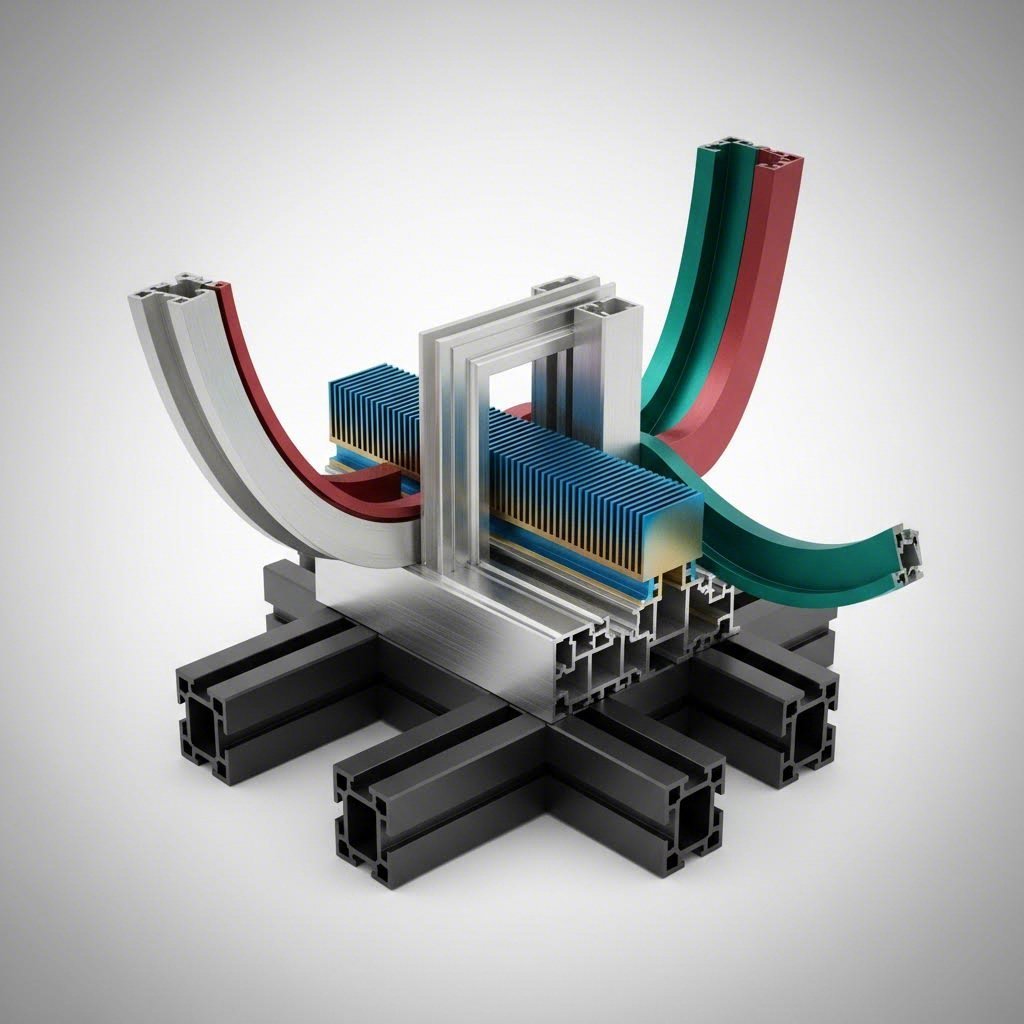
You've learned what aluminum extrusions are, how they're made, and the processing options available. But what are aluminum extrusions used for in the real world? The answer spans virtually every industry you can imagine. From the window frames in your home to the structural components in electric vehicles, aluminum extrusions have become indispensable across modern manufacturing.
What makes extruded aluminum products so universally adopted? Three key advantages drive their dominance: an exceptional strength-to-weight ratio (aluminum weighs one-third as much as steel while maintaining structural integrity), natural corrosion resistance without additional treatment, and unmatched design flexibility that accommodates everything from simple tubes to complex multi-void architectural profiles.
Let's explore how different industries leverage these benefits.
Walk through any modern building, and you'll encounter aluminum extrusions everywhere—often without realizing it. The construction industry relies heavily on extruded aluminum shapes for both structural and decorative purposes.
Why does aluminum dominate architectural applications? According to Howard Precision Metals, extruded aluminum components resist distortion caused by weather and building movement while retaining strength and flexibility under loads. They spring back from impact shock—a critical advantage for long-term structural performance. Plus, aluminum's attractive uncoated appearance means many architectural elements need no finishing at all.
The transportation industry has embraced aluminum extrusions enthusiastically, driven by the constant pressure to reduce vehicle weight without sacrificing safety or performance. When you're asking what are aluminum extrusions used for in automotive applications, the list is extensive.
Here's a compelling example: the Ford F-150 pickup truck achieved a 700-pound weight reduction by incorporating aluminum extrusions and body panels. That weight savings translates directly into improved acceleration, braking performance, and fuel economy. Electric vehicle manufacturers have accelerated this trend, using extruded aluminum extensively in battery enclosures and structural components where every pound saved extends driving range.
Beyond architecture and transportation, aluminum extrusions serve countless industrial and consumer applications where their unique properties solve specific engineering challenges.
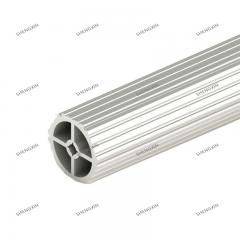
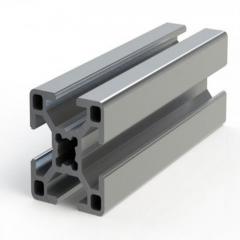
The breadth of extrusion shapes available—from simple round tubes and rectangular channels to intricate multi-void profiles with integrated features—means designers can specify exactly the cross-section their application requires. This design flexibility, combined with aluminum's inherent material advantages, explains why extruded aluminum products appear in virtually every industry sector.
Whether you need a simple structural angle or a complex architectural system with integrated drainage channels and thermal breaks, aluminum extrusion delivers. The next step? Understanding the design guidelines and specifications that ensure your custom profiles meet performance requirements while remaining manufacturable.
You've explored applications and processing options—but here's where projects often go wrong: the design phase. A profile that looks perfect in CAD software may prove difficult, expensive, or even impossible to extrude. Understanding the practical limitations and specifications for extruded profiles prevents costly redesigns and ensures your aluminum extrusion die produces exactly what you need.
Whether you're developing custom extrusion profiles or modifying standard shapes, these guidelines will help you design for manufacturability while meeting performance requirements.
What tolerances can you realistically expect from profile extrusion? This depends on several factors: profile complexity, wall thickness, alloy selection, and the specific dimensions involved.
According to industry standards, extrusion profile tolerances are generally controlled by BS EN 755-9—a European standard specifying tolerances on dimensions and form for extruded aluminum profiles. Adhering to this standard ensures consistent quality across suppliers and applications.
Here are the key specification parameters to consider:
The relationship between tolerance and cost is direct: tighter specifications require slower extrusion speeds, more frequent die corrections, and higher rejection rates. Always specify the loosest tolerances your application can accept.
Wall thickness represents one of the most critical—and frequently misunderstood—aspects of designing a die for aluminium extrusion. Getting this wrong creates problems ranging from poor surface finish to complete extrusion failure.
Several factors influence minimum wall thickness requirements:
As a general guideline, maintaining uniform wall thickness throughout the profile makes extrusion significantly easier. When walls must vary, gradual transitions perform better than abrupt changes.
For hollow versus solid profile considerations, remember that hollow sections require more complex dies with internal mandrels (called porthole or bridge dies). These cost more and limit design options but enable lightweight structural sections impossible to achieve with solid profiles.
Corner radii also matter significantly. Sharp corners should be avoided—ideally, all corners should be radiused to assist aluminum flow through the die. Blend radii between different mass areas prevent witness lines along the profile surface.
Even experienced engineers make preventable errors when designing extrusion profiles. Learning from these common mistakes saves time, money, and frustration:
Many extruders prefer working with designs that are balanced, symmetrical, and feature similar wall thicknesses throughout. These characteristics make die production more cost-efficient, extend tool life, and improve productivity.
Here's valuable advice from the Aluminum Extruders Council: good aluminum extrusion design practices include balanced walls, minimizing hollows where possible, using generous tapers, practicing symmetry, incorporating grooves and ribs for stiffness, and minimizing the perimeter-to-cross-section ratio.
When in doubt about whether your design is manufacturable, consult your extrusion partner early. Experienced suppliers can suggest minor tweaks that dramatically improve extrudability—often without compromising your functional requirements. This collaborative approach to designing extrusion profiles saves both parties time and ensures your project succeeds from die development through final delivery.
You now understand what is an aluminum extrusion, how the process works, which alloys to specify, and how to design manufacturable profiles. But here's the question that ultimately determines your project's success: who will actually produce your extrusions? Selecting the right aluminum extrusion services partner is as critical as any technical specification you'll make.
The difference between a mediocre supplier and an exceptional one shows up in every aspect of your project—from initial die development speed to final part quality, from communication responsiveness to on-time delivery reliability. Whether you need standard aluminum extrusions or complex custom aluminium extrusions, choosing wisely protects your timeline, budget, and reputation.
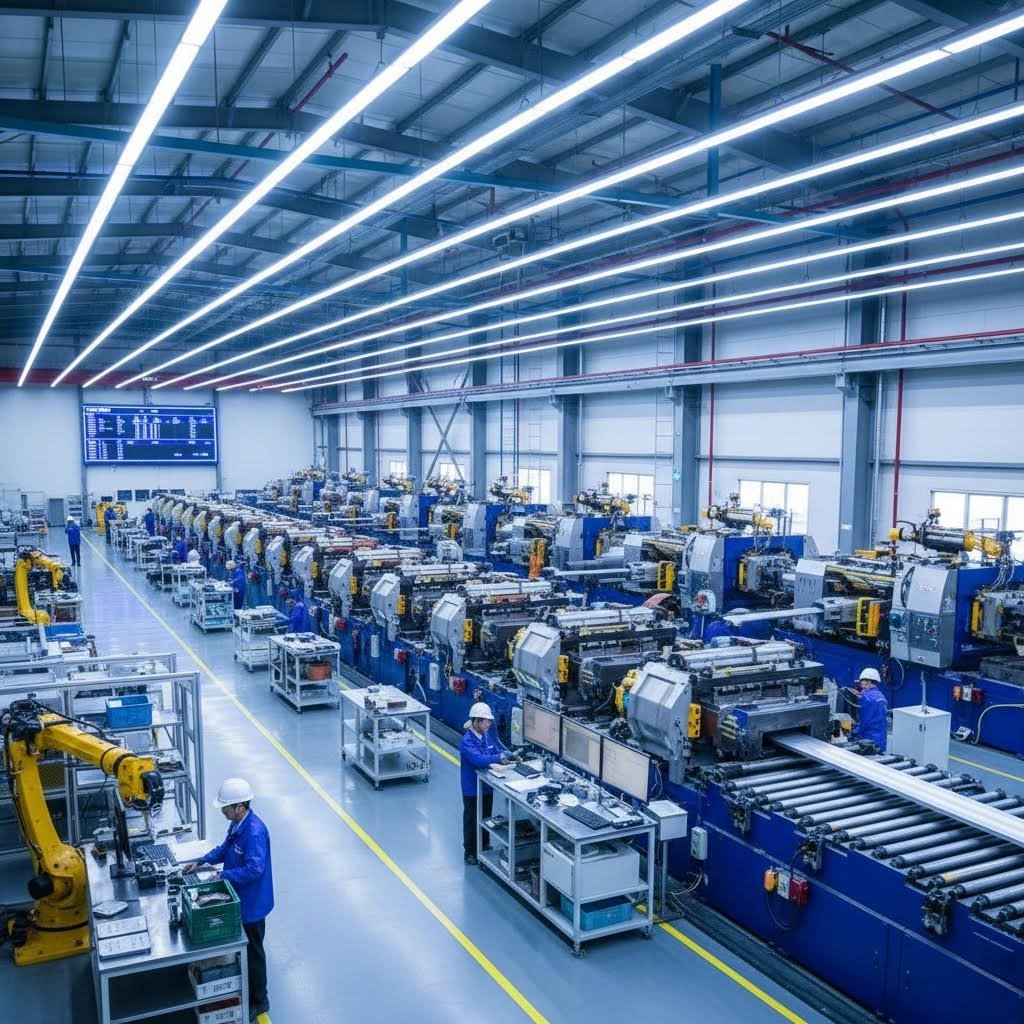
Not all aluminum extrusion manufacturers are created equal. Their equipment directly limits what they can produce—and how efficiently they can do it. Before requesting quotes, understand what capabilities matter for your specific application.
Press capacity range: An aluminum extrusion machine's tonnage determines the maximum profile size and complexity it can handle. Smaller presses (500-1,000 tons) work well for simple, lightweight profiles, while larger profiles or harder alloys require substantially more force. According to industry experts, you should evaluate the supplier's extrusion press tonnage, die library, and machining centers to ensure they can handle your requirements.
Look for manufacturers with multiple aluminium extrusion machine options spanning a broad tonnage range. For example, facilities operating presses from 600T to 5500T can accommodate everything from delicate architectural trim to heavy structural components—giving you flexibility as project requirements evolve.
Surface treatment capabilities: Does the manufacturer handle finishing in-house, or will your profiles ship to third parties for treatment? In-house anodizing, powder coating, and other surface processes reduce lead times, improve quality control, and simplify accountability. The best partners offer comprehensive options including anodizing with custom colors, powder coating, PVDF, and specialized treatments like micro-arc oxidation.
Secondary processing equipment: CNC machining centers, precision cutting equipment, and bending capabilities transform raw extrusions into finished components. Top-tier suppliers deliver value-added services including CNC machining, tapping, deburring, and even sub-assembly—all under one roof.
Custom extrusion aluminum projects follow a structured development path from concept to production. Understanding this workflow helps you plan realistic timelines and budget appropriately.
The journey typically unfolds in these phases:
The total timeline from initial concept to delivered parts typically ranges from 4-8 weeks for custom projects—though experienced manufacturers with comprehensive capabilities can often compress this schedule.
Before committing to any aluminum extrusion partner, conduct thorough due diligence. Never hesitate to ask candidates for references—reputable companies will jump at the chance to share information, while those with questionable track records will try to avoid the topic.
Use this evaluation checklist when assessing potential suppliers:
Why does working with a fully integrated manufacturer matter? Consider what happens when you source extrusion, machining, and finishing from separate vendors: coordination becomes your responsibility, quality issues spark finger-pointing between suppliers, and lead times compound as parts move between facilities.
Contrast this with manufacturers offering end-to-end support from die development to mass production. These partners—like Shengxin Aluminium, with their 35 extrusion presses ranging from 600T to 5500T, in-house CNC machining centers, and comprehensive surface treatments—handle your entire project under one roof. Their 30+ years of experience translates into technical expertise that anticipates problems before they occur.
Factory-direct relationships for custom aluminum extrusion projects offer additional advantages: clearer communication without intermediary markup, faster response to design changes, and direct accountability for quality. When issues arise (and in manufacturing, they occasionally do), having a single point of contact simplifies resolution dramatically.
As you evaluate potential partners, remember that the lowest quote rarely represents the best value. A supplier who catches a design flaw before die production, maintains consistent quality across large orders, and delivers on schedule provides value that far exceeds modest price differences. Your aluminum extrusion partner becomes an extension of your manufacturing team—choose one worthy of that role.
Extruded aluminum undergoes a specific manufacturing process where heated aluminum is forced through a shaped die, creating profiles with consistent cross-sections. This process enhances structural integrity compared to rolled aluminum, which is simply flattened into sheets. Extruded aluminum offers greater strength, precise dimensional consistency, and the ability to create complex hollow or multi-void shapes impossible with other methods. The extrusion process also allows for custom profile designs tailored to specific applications.
A billet is the raw material—a solid cylindrical log of aluminum alloy—used as the starting point for extrusion. The billet must be heated to 700-930°F before being pushed through a die under hydraulic pressure. The aluminum extrusion is the finished product that emerges from this process, featuring the specific cross-sectional shape defined by the die. Think of the billet as the ingredient and the extrusion as the finished product created through controlled heating and forming.
Aluminum extrusions serve countless applications across industries. In construction, they form window frames, curtain walls, and solar panel mounts. Transportation uses include automotive chassis components, railway car structures, and boat hulls. Industrial applications feature heat sinks for electronics, T-slot framing for automation, and HVAC components. Consumer products include furniture frames, display systems, and lighting fixtures. The combination of strength-to-weight ratio, corrosion resistance, and design flexibility makes extrusions ideal for any application requiring lightweight, durable profiles.
Choose 6063 when your project prioritizes surface finish, corrosion resistance, and cost efficiency—ideal for architectural applications like window frames and decorative trim. Select 6061 when you need higher strength, better machinability, and superior fatigue resistance for structural components like aerospace parts or automotive frames. 6063 offers excellent extrudability for complex thin-walled profiles, while 6061 delivers approximately 30% higher tensile strength but with reduced surface finish quality.
Custom aluminum extrusion projects typically require 4-8 weeks from initial concept to delivered parts. This timeline includes design consultation, die development (2-4 weeks depending on complexity), first article sampling, production runs, heat treatment, surface finishing, and quality inspection. Experienced manufacturers with comprehensive in-house capabilities—including multiple extrusion presses, CNC machining, and surface treatment facilities—can often compress this schedule while maintaining quality standards.



 บริการออนไลน์
 0086 136 3563 2360
 sales@sxalu.com
 +86 136 3563 2360
 ไทย
ไทย English
 français
 Deutsch
 русский
 español
 português
 العربية
 Việt
Việt Українська