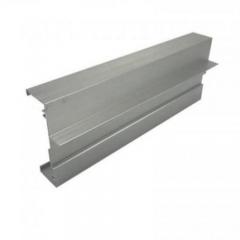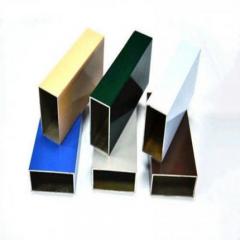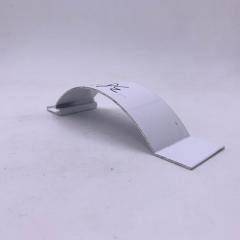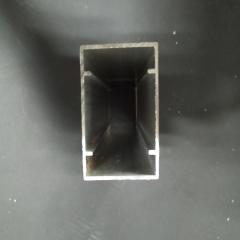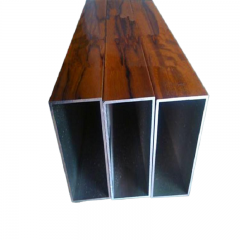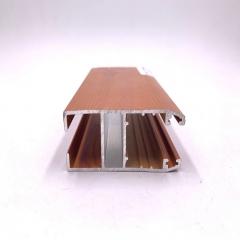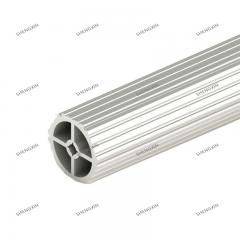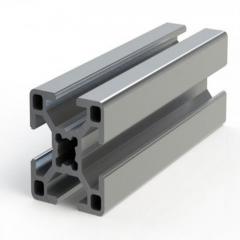
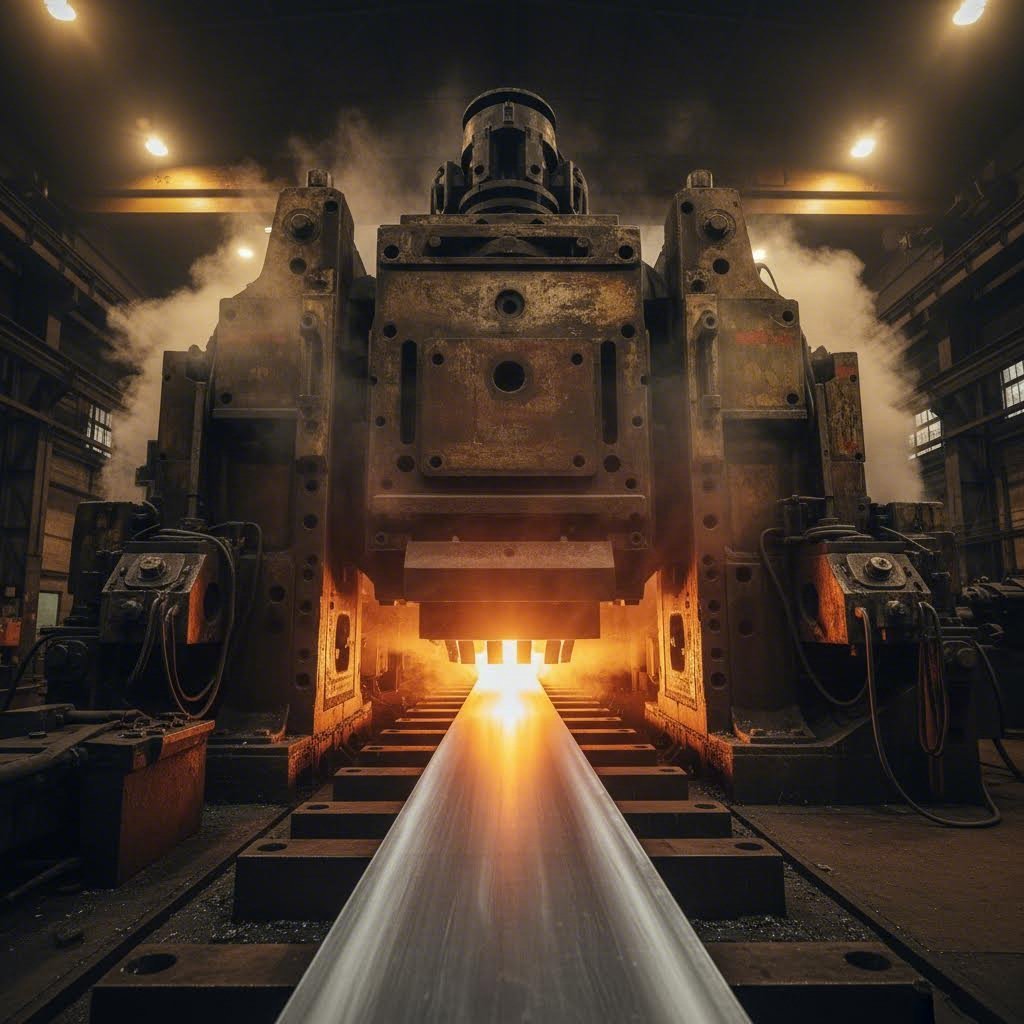
When you need structural profiles that combine strength, precision, and design flexibility, channel aluminum extrusion stands as the manufacturing method of choice across countless industries. But what exactly makes this process unique, and why do engineers and architects consistently specify extruded aluminum channel profiles over alternatives?
Channel aluminum extrusion is a manufacturing process in which heated aluminum billets are forced through precision-engineered dies to create continuous profiles with consistent cross-sectional channel shapes, including C-channels, U-channels, and specialty configurations.
This definition captures the essence of the process, but understanding the mechanics behind it reveals why aluminum extrusion channel profiles deliver such exceptional performance characteristics.
Imagine squeezing toothpaste through its tube opening—that's essentially how aluminum extrusion works, just with considerably more force and precision. The process begins with a cylindrical aluminum billet, typically preheated to 400-500°C to achieve the perfect malleable state without becoming molten.
Here's how the aluminum extrusion process unfolds:
The result? Continuous aluminium channel profiles with remarkably consistent dimensions and mechanical properties throughout their entire length.
You might wonder why manufacturers don't simply roll or machine channel profiles instead. The answer lies in what each method does best.
Roll forming works by passing sheet metal through progressive rollers to bend it into shape. While this method excels at producing simple profiles in high volumes, it struggles with complex geometries and tight tolerances. According to Zetwerk, aluminum extrusion offers superior precision and versatility in creating solid, hollow, and semi-hollow shapes that roll forming simply cannot match.
Consider these key distinctions:
This guide takes you beyond catalog-style specifications to help you understand alloy selection, load calculations, and the technical details that matter for your specific application. Whether you're specifying channels for architectural trim, industrial framing, or precision equipment, you'll find the engineering insights needed to make confident decisions.
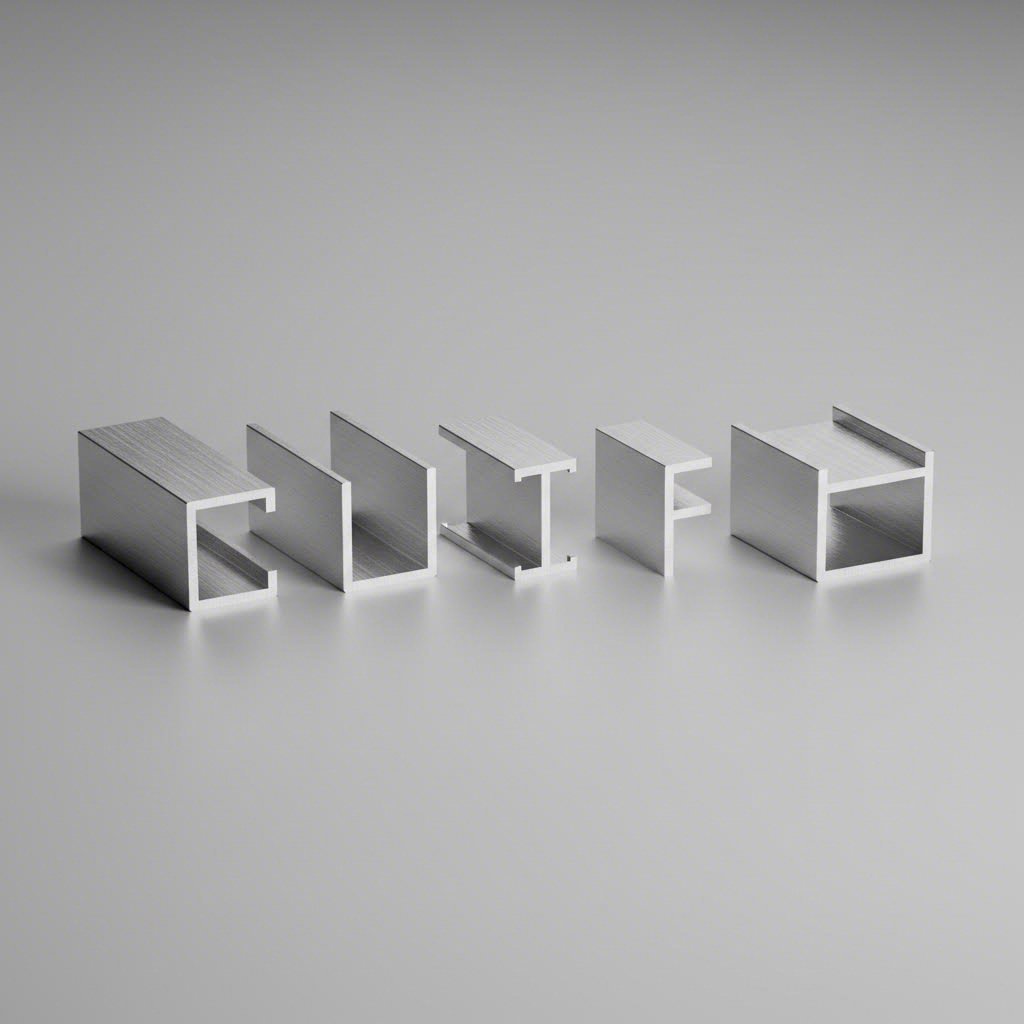
Selecting the right channel profile can feel overwhelming when you're staring at catalogs filled with letters like C, U, T, and F. Each shape exists for specific engineering reasons, and understanding these distinctions helps you match profiles to your application requirements with confidence.
Think of aluminum channel profiles as specialized tools in a toolbox—each designed to solve particular structural or finishing challenges. Let's break down the primary channel types you'll encounter and explore what makes each one suited for specific applications.
| Channel Type | Profile Shape | Common Applications | Key Characteristics |
|---|---|---|---|
| C-Channel | Resembles the letter C with a web and two parallel flanges | Structural framing, vehicle chassis, racking systems, building construction | High load-bearing capacity, excellent for linear support, available in multiple alloy grades |
| U-Channel | Symmetric U-shape with perpendicular flanges | Edge protection, sliding tracks, glass panel framing, cable raceways | Versatile mounting options, wall thicknesses from 1/16" to 1/4", ideal for containment |
| T-Channel | T-shaped profile with T-slots for fasteners | Modular framing, machine guards, workstations, automation equipment | Enables bolt-free assembly, highly reconfigurable, supports rapid prototyping |
| F-Channel | Resembles the letter F with extended web design | Panel edge protection, window glazing, partition framing, trim work | Customizable web length, excellent for transitions, clean finishing appearance |
| Hat Channel | Hat-like profile with horizontal flanges | Wall furring, ceiling systems, drywall mounting, exterior cladding | Superior strength-to-weight ratio, moisture resistant, fire protection properties |
The aluminum c channel remains the workhorse of structural applications. When you need to support vertical loads or create rigid framing systems, this profile delivers. The three primary C-channel standards you'll encounter include Aluminum Association profiles (featuring thicker walls and rounded inner corners), American Standard (with tapered flanges), and Canadian Standard configurations.
What sets the alum c channel apart from other profiles? Its geometry distributes loads efficiently across the web while the flanges provide mounting surfaces and resist twisting forces. You'll find these channels supporting everything from store fixtures to vehicle frames where structural integrity matters most.
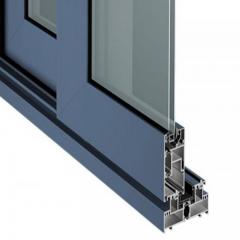
The aluminum u channel takes a different approach. Its symmetric design creates a protected channel space—perfect for edge protection, sliding mechanisms, and containment applications. Picture the tracks that guide sliding doors or the protective edging around glass panels. These profiles excel at those tasks.
U-channels come in impressive variety. According to industry specifications, wall thicknesses typically range from 1/16 inch to 1/4 inch, allowing you to match the profile to your specific load and design requirements. Options include flat-bottom, round-bottom, and custom configurations depending on whether you're framing architectural elements or building industrial equipment.
Beyond the common C and U profiles, specialty channels address specific engineering challenges that standard shapes cannot solve efficiently.
The aluminum t channel—particularly T-slot configurations—revolutionized modular construction. These precision-engineered profiles feature T-shaped slots that accept sliding fasteners, eliminating the need for welding or clamping. Imagine building an entire machine enclosure that you can reconfigure in minutes without drilling a single hole. That's the power of T-slot framing systems, which find extensive use in:
The aluminum f channel addresses finishing and transition challenges. Its extended web design without a full flange makes it ideal for panel edge protection and window glazing applications. When you need clean visual transitions in curtain wall systems or cabinetry, F-channels deliver professional results with customizable web lengths to match your specific installation requirements.
The aluminum hat channel—sometimes called a c chanel in certain regional contexts—earns its name from the distinctive hat-like cross-section featuring outward-facing horizontal flanges. This geometry provides exceptional performance for wall furring and ceiling applications where you need to create an even substrate over uneven surfaces.
Why do contractors and builders favor aluminium hat channel profiles? The horizontal flanges create reliable attachment points for drywall, metal panels, or plasterboard while the raised center section spaces the finish material away from the structural wall. This configuration delivers several critical benefits:
Each of these channel types can be produced in various alloys and tempers to match your strength, corrosion resistance, and finishing requirements. Understanding which profile geometry matches your application is the first step—selecting the right alloy comes next.
You've identified the right channel profile for your project—but which alloy should you specify? This question trips up many designers because competitors mention alloy options without explaining what those numbers actually mean for your application. Let's fix that.
The 6000 series dominates aluminum extrusions for good reason. These magnesium-silicon alloys combine excellent extrudability with solid mechanical properties and corrosion resistance. Within this family, two alloys stand out: 6063 and 6061. Understanding their differences helps you match material performance to your specific requirements.
Think of 6063 and 6061 as cousins with distinct personalities. They share the same family traits but excel in different situations.
6063 Aluminum—The Architectural Choice
Often called "architectural aluminum," 6063 has been optimized for extrudability. It flows through dies more easily than almost any other alloy, producing complex shapes with exceptionally smooth surfaces. When appearance matters as much as performance, this alloy delivers.
Key properties of 6063 aluminum include:
You'll find 6063 aluminum extrusions framing modern window systems, forming sleek railings, and creating the clean lines of architectural facades. The alloy contains approximately 0.45-0.9% magnesium and 0.2-0.6% silicon—lower concentrations than 6061, which explains its improved formability.
6061 Aluminum—The Structural Workhorse
Often referred to as "structural aluminum," 6061 trades some extrudability for enhanced mechanical properties. When your application demands higher strength or extensive machining, this alloy becomes the better choice.
Key properties of 6061 aluminum include:
The higher magnesium content in 6061 (0.8-1.2%) combined with silicon (0.4-0.8%) creates a stronger alloy. You'll encounter 6061 aluminum u channel profiles in machine frames, transportation equipment, and structural assemblies where load capacity takes priority over surface aesthetics.
Sounds complex? Here's a simple decision framework: choose 6063 when appearance and corrosion resistance matter most; select 6061 when strength and machinability drive your requirements. Many extruded aluminium channel applications work perfectly with either alloy, so cost and availability may ultimately guide your decision.
Alloy selection tells only half the story. The temper designation following the alloy number—like T5 or T6—reveals how the material was processed and, consequently, how it will perform.
The "T" indicates thermal treatment, while the number describes the specific process applied. For extrusion aluminum applications, you'll most commonly encounter these tempers:
What does this mean practically? A 6063-T5 profile bends more easily for curved applications, while 6063-T6 resists bending forces better in structural service. Similarly, 6061-T6 delivers peak strength for demanding alluminum extrusion applications, making it the default choice for load-bearing aluminium extrusion components.
The aging process—whether at room temperature or in controlled ovens—allows magnesium silicide precipitates to form within the aluminum matrix. These microscopic particles impede dislocation movement, increasing the material's resistance to deformation. The result? Higher yield and tensile strength values that engineers can rely on for structural calculations.
When specifying channel profiles, always include both the alloy and temper designation. A "6061-T6 aluminum C-channel" communicates exactly what you need, eliminating guesswork for fabricators and suppliers. This precision becomes especially important when your design calculations depend on specific material properties.
With your alloy and temper selected, the next consideration involves matching your profile to the right dimensions and tolerances for your application.
You've selected your alloy and temper—now comes the critical question of sizing. When browsing aluminum channel sizes, you'll encounter specification tables filled with abbreviations and measurements that can feel overwhelming. Let's decode these dimensions so you can confidently specify the right channel stock for your project.
Understanding aluminum channel dimensions goes beyond simply picking a depth and width. Wall thicknesses, flange proportions, and fillet radii all influence structural performance and fit-up with other components. Engineering professionals often struggle to find this level of detail in competitor catalogs, so let's address that gap directly.
American Standard aluminum channels follow established conventions developed by the Aluminum Association. These profiles are designated by their depth and weight per foot—for example, a "3 x 1.42" channel measures 3 inches deep and weighs 1.42 pounds per linear foot.
Here's an aluminum channel sizes chart showing common C-channel and U-channel profiles with their critical dimensions:
| Designation | Depth (in.) | Width (in.) | Web Thickness (in.) | Avg. Flange Thickness (in.) | Area (sq. in.) |
|---|---|---|---|---|---|
| 2 x 1.22 | 2.000 | 1.410 | 0.170 | 0.273 | 1.04 |
| 3 x 1.42 | 3.000 | 1.410 | 0.170 | 0.273 | 1.21 |
| 3 x 2.07 | 3.000 | 1.596 | 0.356 | 0.273 | 1.76 |
| 4 x 2.16 | 4.000 | 1.647 | 0.247 | 0.297 | 1.84 |
| 5 x 3.11 | 5.000 | 1.885 | 0.325 | 0.320 | 2.64 |
| 6 x 3.63 | 6.000 | 2.034 | 0.314 | 0.343 | 3.09 |
| 7 x 5.10 | 7.000 | 2.299 | 0.419 | 0.367 | 4.33 |
When reviewing alum channel sizes, notice how web and flange thicknesses increase proportionally with channel depth. A 2-inch deep channel typically features 0.170-inch web thickness, while 7-inch channels commonly use 0.419-inch or heavier webs. This scaling maintains structural efficiency across the size range.
For extruded aluminum sizes, standard lengths typically run 12, 20, or 24 feet, though custom lengths are available from most suppliers. Keep in mind that longer profiles may require additional straightening operations to meet tolerance specifications.
Here's where many specification documents fall short—tolerances matter enormously for fit-up and function, yet few resources explain what you can realistically expect from extruded profiles.
According to industry standards published by The Aluminum Association and ANSI, standard dimensional tolerances for aluminum extrusions follow these general guidelines:
How do these tolerances compare to other manufacturing methods? Extruded channels typically achieve tighter dimensional control than roll-formed alternatives, though precision machining still delivers the tightest possible tolerances when your application demands it. The tradeoff involves cost—tighter tolerances require slower extrusion rates, more frequent inspections, and potentially higher rejection rates.
Several factors influence achievable tolerances on aluminum c channel dimensions:
When your application requires non-standard tolerances, discuss requirements with your supplier before placing orders. Experienced extruders may suggest minor design modifications that achieve your functional requirements while remaining within practical manufacturing limits. This collaborative approach often yields better results than simply specifying tighter tolerances and hoping for the best.
With dimensions and tolerances understood, your next consideration involves how surface treatments affect both appearance and long-term performance.
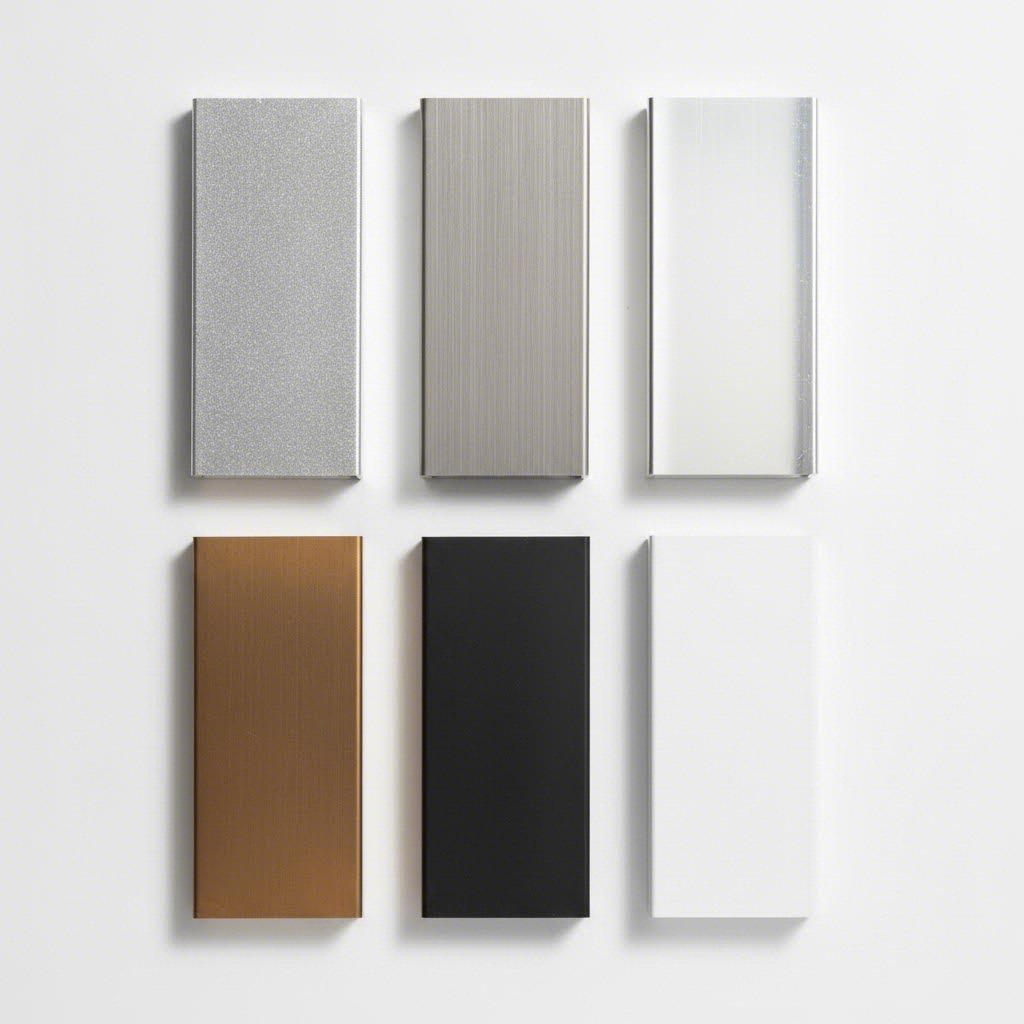
Your channel profile is sized, your alloy is selected—but how will that extruded aluminum channel look and perform five years from now? Surface finishing transforms raw extrusions from functional components into durable, visually striking elements that withstand their intended environments. Yet this critical step remains one of the most poorly explained aspects of aluminum channels in industry resources.
Here's the reality: aluminum extrusions are rarely utilized as they come from the press. Whether you're specifying an aluminum trim channel for architectural facades or an aluminium c channel for industrial equipment, understanding your finishing options directly impacts long-term performance and total project costs.
Let's explore each finish type and identify which applications they serve best.
Two finishing processes dominate the aluminum channel market: anodizing and powder coating. Each offers distinct advantages, and choosing between them depends on your performance priorities.
Anodizing—Enhanced Protection from Within
Unlike paints that sit on top of aluminum, anodizing works differently. An electrochemical process stimulates the naturally-occurring aluminum oxide layer into growing thicker, creating protection that's integral to the metal itself. This oxide layer cannot peel, flake, or chip because it's not a separate coating—it's transformed aluminum.
Anodized finishes for aluminium trim channel applications offer these key benefits:
Clear anodizing preserves aluminum's natural metallic appearance while adding protection. Colored anodizing—available in bronze, black, gold, and other shades—creates distinctive architectural effects. You'll notice anodized aluminum channels throughout modern commercial buildings where durability and refined aesthetics intersect.
Powder Coating—Unlimited Color Possibilities
When your project demands specific colors or you need to match existing finishes, powder coating delivers. The process involves spraying dry paint powder onto cleaned aluminum surfaces using electrostatic attraction, then baking the assembly to melt and cure the coating into a smooth, even finish.
Powder coated aluminum channels provide:
One important consideration: powder coatings are not as hard as anodized surfaces. They provide exceptional appearance and corrosion resistance as long as the coating remains intact. For applications where the aluminium hat channel or other profiles face frequent mechanical contact, anodizing often proves more durable.
PVDF Coatings—Premium Exterior Performance
Polyvinylidene fluoride coatings represent the premium choice for demanding exterior applications. These resin-based finishes with embedded color pigments offer exceptional performance characteristics that justify their higher cost for certain projects.
PVDF-coated aluminum channels excel in these areas:
You'll find PVDF coatings specified for aluminum wall cladding, curtain wall systems, and other architectural applications where appearance must remain consistent across decades of service.
Matching your finish to the application environment prevents premature failures and unnecessary costs. Consider these guidelines when specifying surface treatments for your aluminum channels:
Indoor Applications
Interior environments present the least demanding conditions. Mill finish aluminum—the as-extruded surface showing die marks and minor oxidation—works adequately for hidden structural components where appearance doesn't matter and budgets are tight. However, mill finish is generally only suitable for products expected to last a short time where appearance is unimportant.
For visible interior aluminum channels, consider:
Outdoor and Architectural Applications
Exterior exposure demands robust protection. UV radiation, moisture cycling, temperature extremes, and atmospheric pollution all attack unprotected aluminum surfaces over time. For outdoor aluminum channels, specify:
Industrial Environments
Manufacturing facilities, processing plants, and equipment applications present unique challenges—chemical exposure, mechanical abrasion, and frequent cleaning. For industrial aluminum channels, prioritize:
Many applications benefit from combining finishing processes. Mechanical polishing by anodizing, for example, creates brilliant surfaces with integral protection. Discuss your specific environmental conditions with your supplier to identify the optimal finishing approach for your extruded aluminum channel requirements.
With surface treatment selected, understanding how these profiles perform under load becomes your next critical consideration.

Now that you understand alloys, dimensions, and finishes, where do these profiles actually go to work? Channel aluminum extrusions serve an remarkably diverse range of industries—from the sleek window frames in modern office towers to the rugged equipment frames on factory floors. Understanding these applications helps you visualize how the specifications we've covered translate into real-world performance.
Rather than simply listing products, let's explore how different sectors leverage the unique properties of aluminum channel profiles to solve their specific challenges.
Walk through any contemporary commercial building, and you're surrounded by aluminum channel extrusions—often without realizing it. The construction industry relies heavily on these profiles because they combine structural capability with aesthetic flexibility.
Window and Door Systems
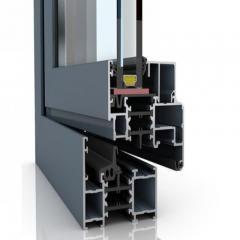
Modern fenestration systems depend on precision-extruded aluminum channels to frame glass panels while managing thermal performance. U-channels and specialized glazing profiles grip glass edges securely, while C-channel structural members support entire curtain wall assemblies spanning multiple floors.
The architectural sector particularly values 6063-T5 aluminum for its superior surface quality and excellent anodizing response. When that polished bronze finish on a building's window frames still looks pristine after a decade of weather exposure, you're seeing proper alloy selection and finishing working together.
Interior Construction Elements
Beyond exterior applications, aluminum channels shape interior spaces in ways you encounter daily:
Industrial environments demand profiles that prioritize function over form—though modern manufacturing increasingly values both. Here, the strength-to-weight advantages of aluminum channel extrusions truly shine.
Machine Guarding and Safety Enclosures
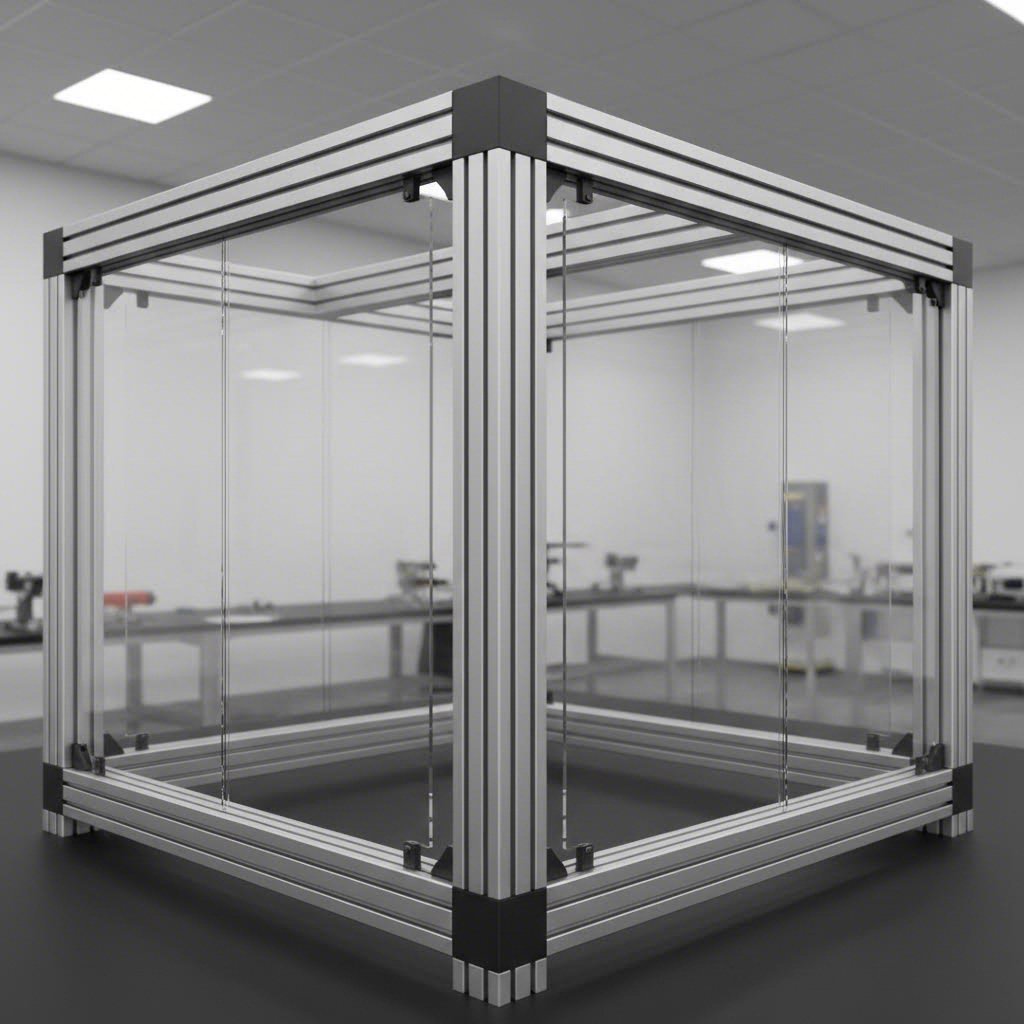
Worker safety regulations require protective barriers around automated equipment, and T-slot aluminum framing has become the standard solution. Why? Because these systems offer something traditional steel fabrication cannot match: rapid reconfiguration as production needs change.
According to industry experts, T-slot aluminum channel extrusions function like industrial building blocks—you can quickly assemble custom workbenches, machine guards, safety enclosures, equipment racks, and carts. When requirements change, the frame can be easily disassembled, modified, or expanded without welding or extensive drilling.
Material Handling Systems
Conveyor systems and material handling equipment leverage aluminum channels for both structural support and guidance functions:
Equipment Frames and Workstations
Custom equipment builders increasingly specify aluminum channel profiles for frame construction:
Beyond traditional architectural and industrial uses, aluminum channel extrusions enable innovation in specialized sectors where their unique properties create competitive advantages.
Solar Panel Mounting Systems
The renewable energy sector has embraced aluminum channel profiles for photovoltaic installations. These systems face demanding requirements: decade-long outdoor exposure, precise panel positioning, and installation by crews working quickly across vast arrays.
LED Lighting Integration
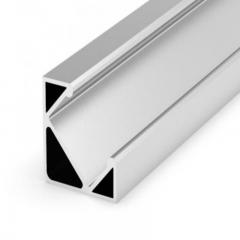
Modern lighting design increasingly relies on aluminum channels for both thermal management and optical control. LED aluminum channels play a crucial role in modern lighting systems—they provide structural support for LED strips while aiding heat dissipation, light diffusion, and protection of the LEDs.
The aluminum's high thermal conductivity proves essential here—it draws heat away from LED chips, extending their lifespan significantly compared to plastic housings.
Sliding and Track Systems
Anywhere components need to move along defined paths, aluminum channel track profiles provide the solution:
Each of these applications demonstrates how aluminum channel extrusions adapt to solve distinct challenges. The common thread? These profiles deliver the right combination of strength, precision, corrosion resistance, and finishing options that each application demands. Understanding how others have successfully deployed channel profiles often sparks ideas for your own projects—and clarifies which specifications matter most for your specific use case.
With applications understood, the question becomes: how do you ensure your selected profiles can handle the actual loads your design requires?
Here's a question that keeps engineers up at night: how much weight can that c channel aluminum actually support? Unlike simple material specifications, load capacity depends on multiple interacting factors—and getting this wrong leads to structural failures, costly redesigns, or over-engineered solutions that waste budget.
Understanding structural performance requires looking beyond tensile strength numbers. The same aluminum profile can support dramatically different loads depending on how you orient it, where you place supports, and how you connect components. Let's decode these critical factors so you can specify channels with confidence.
When evaluating u channel aluminum or any structural profile, remember that published strength values represent material properties—not installed performance. Your actual load capacity emerges from the interaction between material, geometry, orientation, and support conditions.
The load-bearing capacity of aluminum channel extrusions is not a single value but depends heavily on the specific alloy, temper, cross-sectional shape and dimensions, and how the load is applied.
How Orientation Affects Strength
Picture a C-channel lying flat versus standing upright. Same profile, dramatically different performance. Why? Because the moment of inertia—the geometric property governing bending resistance—changes based on orientation.
According to structural engineering principles, a taller channel section significantly increases resistance to bending loads. A deeper channel positions more material farther from the neutral axis, creating greater leverage against deflection. Consider these orientation guidelines:
Material and Alloy Influence
Your alloy selection directly impacts structural capacity. According to published data on aluminum strut channels, typical 6063-T6 aluminum yields at approximately 23 ksi (160 MPa), while mild steel yields around 33 ksi. This means aluminum reaches its stress limits roughly 30% earlier than steel under equivalent loading.
The modulus of elasticity presents an even more significant difference—aluminum measures approximately 10,000 ksi compared to steel's 29,000 ksi. Practically speaking, aluminum deflects about three times more than steel under identical loads. This characteristic makes deflection limits, not just strength limits, the controlling factor in many aluminum channel frame designs.
Real-World Load Capacity Examples
What does this mean for your project? Here's actual performance data for a typical 1-5/8" x 1-5/8" solid aluminum strut channel made from 6063-T6, simply supported at both ends:
| Clear Span | Max Uniform Load | Mid-Span Deflection |
|---|---|---|
| 12 in (305 mm) | ~3,500 lb | ~0.014 in |
| 36 in (914 mm) | ~1,400 lb | ~0.11 in |
| 60 in (1.52 m) | ~700 lb | ~0.36 in |
| 72 in (1.83 m) | ~590 lb | ~0.51 in |
| 84 in (2.13 m) | ~500 lb | ~0.70 in |
Notice how capacity drops dramatically as span increases—a 36-inch span handles less than half the load of a 12-inch span. For point loads rather than uniform distribution, reduce these values by approximately 50%.
Even perfectly specified channels fail when improperly installed. Support spacing, connection methods, and fastener selection all influence whether your c channel framing performs as designed.
Support Spacing Principles
The relationship between span and capacity follows predictable engineering principles. Doubling your span doesn't just halve your capacity—it reduces it more dramatically due to the cubic relationship between span and deflection. Follow these spacing guidelines:
Connection Methods and Fastening
How you connect channels affects both strength and long-term reliability. Aluminum's lower hardness compared to steel creates specific fastening considerations:
Double-Channel Configurations
When single channels can't meet your requirements, back-to-back configurations nearly double moment of inertia and load capacity. This approach often proves more economical than jumping to the next size up, particularly for channel rail applications requiring extended spans.
Secure double channels using manufacturer-approved tie plates or continuous bolts at regular intervals. This maintains composite action under load, ensuring both channels work together rather than independently.
Temperature and Environmental Factors
Aluminum's structural properties change with temperature—a consideration often overlooked in load calculations:
With structural requirements understood, your final consideration involves selecting a supplier who can deliver the right profiles with the quality and support your project demands.
You've defined your profile geometry, selected your alloy, and calculated your load requirements—now comes the decision that determines whether those specifications become reality or remain drawings on paper. Choosing an aluminum channel supplier involves far more than comparing prices. The right partner acts as a technical extension of your team, supporting everything from die development through final delivery.
What separates adequate suppliers from exceptional ones? Let's walk through the evaluation criteria that matter most for your aluminum channel extrusions project.
Before contacting suppliers, clarify whether standard profiles meet your needs or custom extrusion is required. This decision significantly impacts costs, lead times, and which suppliers can serve you.
Standard Profiles
Stock channel aluminum profiles offer compelling advantages for straightforward applications:
If an extruded aluminum c channel or extruded aluminum u channel from standard catalogs matches your requirements, you'll save both time and money compared to custom development.
Custom Profiles
When standard shapes can't deliver your required functionality, custom extrusion opens possibilities that off-the-shelf products simply cannot match. According to industry experts, custom profiles are often required to meet specific mechanical tolerances, aesthetic finishes, or structural functions that standard options don't address.
Custom aluminum extruded profiles make sense when you need:
Experienced suppliers assist with die design and prototyping, ensuring manufacturability from the earliest design stages. This collaboration often improves your final product while reducing tooling revisions and development delays.
Not all aluminum channel suppliers offer equivalent capabilities. Beyond basic extrusion, evaluate these critical factors that separate reliable partners from commodity vendors.
Production Capacity and Equipment
Can the supplier scale with your needs? Evaluate their extrusion press tonnage, number of production lines, and machining capabilities. For example, Shengxin Aluminium operates 35 extrusion presses ranging from 600T to 5500T, enabling production of everything from delicate u channel aluminum extrusion trim profiles to heavy structural channels.
Key capacity questions to ask:
Value-Added Processing
Full-service suppliers reduce your coordination burden by handling operations beyond basic extrusion. Look for in-house capabilities including:
These integrated services from a single source improve consistency while eliminating shipping between multiple vendors. When evaluating aluminum channel suppliers, ask specifically about their deep processing options and how they maintain quality control across operations.
Quality Certifications and Testing
Certifications verify that suppliers maintain systematic quality controls rather than relying on ad-hoc inspection. At minimum, look for ISO 9001 certification. For specialized applications, additional certifications may be required:
Beyond certifications, ask about in-house testing capabilities. Reputable suppliers offer tensile strength testing, dimensional inspection, salt spray resistance checks, and hardness verification to catch issues before shipment.
Lead Times and Supply Chain Reliability
For many buyers, on-time delivery matters as much as product quality. Evaluate how suppliers manage raw material sourcing, inventory control, and logistics planning. Key considerations include:
Suppliers with automated tracking systems, local warehousing options, and established freight partnerships typically deliver more reliable service than those managing logistics reactively.
Technical Support and Communication
Responsive communication separates genuine partners from order-takers. Before committing to significant purchases, evaluate:
With over 30 years of industry experience, suppliers like Shengxin Aluminium have developed technical teams capable of supporting projects from initial die development through mass production—providing the end-to-end partnership that complex channel aluminum projects demand.
Practical Evaluation Steps
Before finalizing your supplier selection, take these verification steps:
Building a structured evaluation checklist allows objective comparison across potential suppliers. Weight the factors most critical to your application—whether that's custom profile expertise, surface treatment options, or logistics capabilities for export orders.
With the right supplier partnership established, you're positioned to move from specification to production with confidence. The final step involves pulling together all your decisions into a clear action plan.
You've navigated alloy specifications, dimensional tolerances, surface treatments, and structural calculations. Now it's time to transform that knowledge into action. Whether you're sourcing an alu channel for architectural trim or specifying heavy-duty c-channel for industrial framing, the decisions you make in the next steps determine your project's success.
Let's consolidate everything we've covered into a practical roadmap that moves you from specification to production.
Before reaching out to suppliers, confirm you've addressed these critical decision points that shape your channel extruded aluminum selection:
Profile Type Selection
Match your channel geometry to your functional requirements. C-channels deliver structural support for framing applications. U-channels excel at edge protection and sliding mechanisms. T-slot profiles enable modular assembly without welding. Hat channels solve wall furring and mounting challenges. When standard aluminum channel types don't fit your needs, custom extrusion opens unlimited possibilities.
Alloy and Temper Choice
Your environment and performance requirements dictate material selection. Specify 6063-T5 when surface finish and corrosion resistance matter most—ideal for visible architectural elements. Choose 6061-T6 when strength and machinability drive your design, particularly for structural and industrial applications. Remember: always include both alloy designation and temper when communicating specifications.
Surface Finish Requirements
Consider your installation environment carefully. Interior applications may work with mill finish or simple mechanical treatments. Exterior exposure demands robust protection through anodizing, powder coating, or PVDF finishes. Industrial environments with chemical exposure or high wear benefit from hard anodizing. Suppliers like Shengxin Aluminium offer comprehensive surface treatment options—including custom anodizing colors, powder coating, and PVDF—ensuring your aluminum chanel profiles perform and look right for decades.
Dimensional and Structural Verification
Confirm your selected profile handles actual loads with appropriate safety margins. Account for orientation effects, support spacing, and connection methods in your calculations. When standard profiles fall short, custom extrusions optimize material placement for your specific requirements.
Ready to move forward? Follow this action checklist to streamline your procurement process:
Working with experienced manufacturers who provide end-to-end support—from initial die development through mass production and finishing—simplifies your project management significantly. Rather than coordinating between multiple vendors for extrusion, machining, and surface treatment, integrated suppliers handle the entire process under unified quality control.
Shengxin Aluminium exemplifies this comprehensive approach, combining 30+ years of industry experience with 35 extrusion presses and state-of-the-art CNC machining centers. Their factory-direct pricing eliminates middleman markups, while their technical team supports projects from concept through delivery. Whether you need standard alum channel profiles or fully custom solutions, partnering with a full-service supplier transforms complex specifications into reliable, high-quality components.
Your channel aluminum extrusion project deserves more than catalog shopping. Armed with the knowledge from this guide—aluminum channel types, alloy properties, dimensional specifications, finishing options, and structural considerations—you're equipped to specify with confidence and select suppliers who deliver on their commitments.
Aluminum extruded channels are structural profiles manufactured by forcing heated aluminum billets through precision-engineered dies to create continuous shapes with consistent cross-sections. These profiles come in various configurations including C-channels, U-channels, T-channels, F-channels, and hat channels. Each shape serves specific applications—C-channels for structural framing, U-channels for edge protection and sliding tracks, and T-slot channels for modular assembly systems. The extrusion process delivers superior dimensional precision compared to roll forming while enabling complex geometries with integrated features like mounting slots and thermal breaks.
Aluminum channels have several considerations to keep in mind. They cost more upfront than steel alternatives and require additional installation time for proper mounting. Their lower modulus of elasticity means aluminum deflects approximately three times more than steel under equivalent loads, making deflection limits rather than strength the controlling factor in many designs. Aluminum channels also have lower hardness, requiring special fasteners to prevent thread stripping. For applications requiring complex bends or tight curves, standard channels offer limited flexibility. However, these drawbacks are often offset by aluminum's corrosion resistance, lightweight properties, and excellent strength-to-weight ratio.
6061 aluminum channel is a U-shaped or C-shaped profile made from 6061 alloy, often called structural aluminum. This alloy contains 0.8-1.2% magnesium and 0.4-0.8% silicon, providing approximately 20-30% greater tensile strength than 6063 aluminum. With typical tensile strength around 35,000 PSI in T6 temper, 6061 channels excel in load-bearing applications including machine frames, transportation equipment, and structural assemblies. The alloy offers excellent machinability, good weldability, and versatile fabrication options. Choose 6061-T6 when structural performance and precision machining take priority over surface aesthetics.
Extruded aluminum channel strength varies significantly based on alloy, temper, and profile dimensions. Typical aluminum channels have tensile strengths ranging from 20,000-45,000 PSI depending on specifications. For 6061-T6 alloy commonly used in structural applications, expect approximately 35,000 PSI tensile strength. A standard 1-5/8" x 1-5/8" solid strut channel can support roughly 3,500 lbs at 12-inch spans but only about 500 lbs at 84-inch spans. Load capacity depends heavily on orientation, support spacing, and connection methods—not just material properties. Always calculate actual installed performance rather than relying solely on published material values.
Choose standard profiles when off-the-shelf dimensions meet your requirements—they offer immediate availability, no tooling costs, lower minimum quantities, and proven performance specifications. Custom extrusion becomes worthwhile when you need integrated features like mounting slots or cable channels, optimized weight distribution, exact dimensional matching to mating components, or consolidated multi-part assemblies. Custom profiles require die development investment and longer lead times but can reduce total costs by eliminating secondary operations and assembly labor. Experienced suppliers like Shengxin Aluminium support projects from initial die development through mass production, helping optimize designs for manufacturability.



 บริการออนไลน์
 0086 136 3563 2360
 sales@sxalu.com
 +86 136 3563 2360
 ไทย
ไทย English
 français
 Deutsch
 русский
 español
 português
 العربية
 Việt
Việt Українська