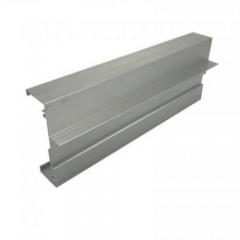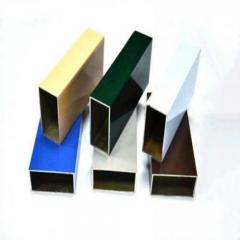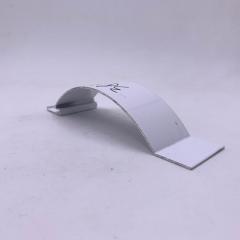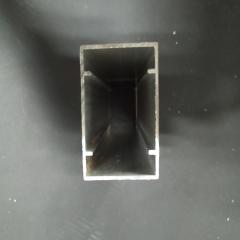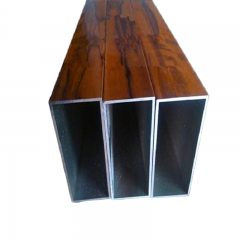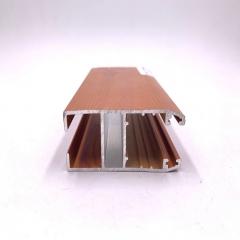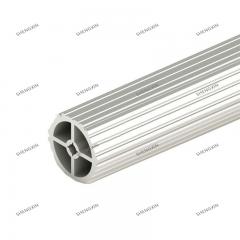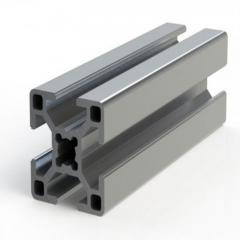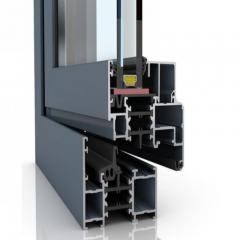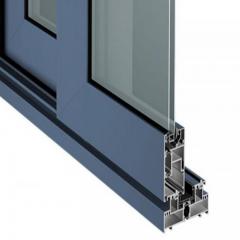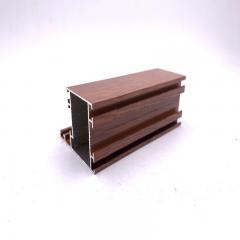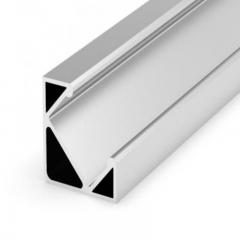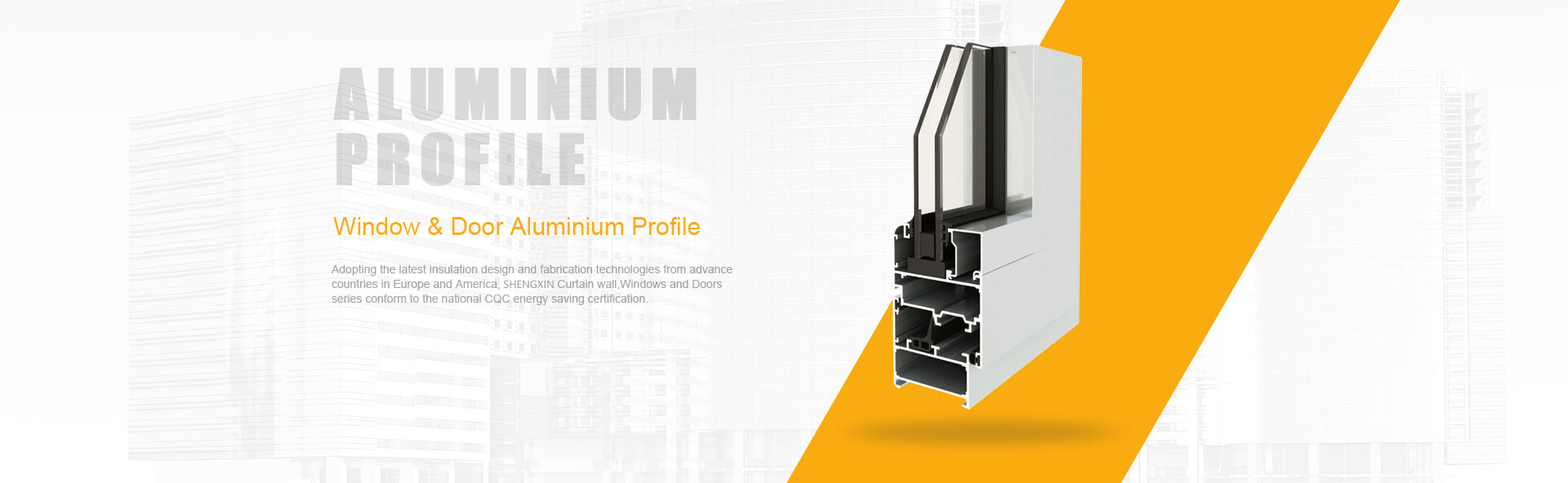
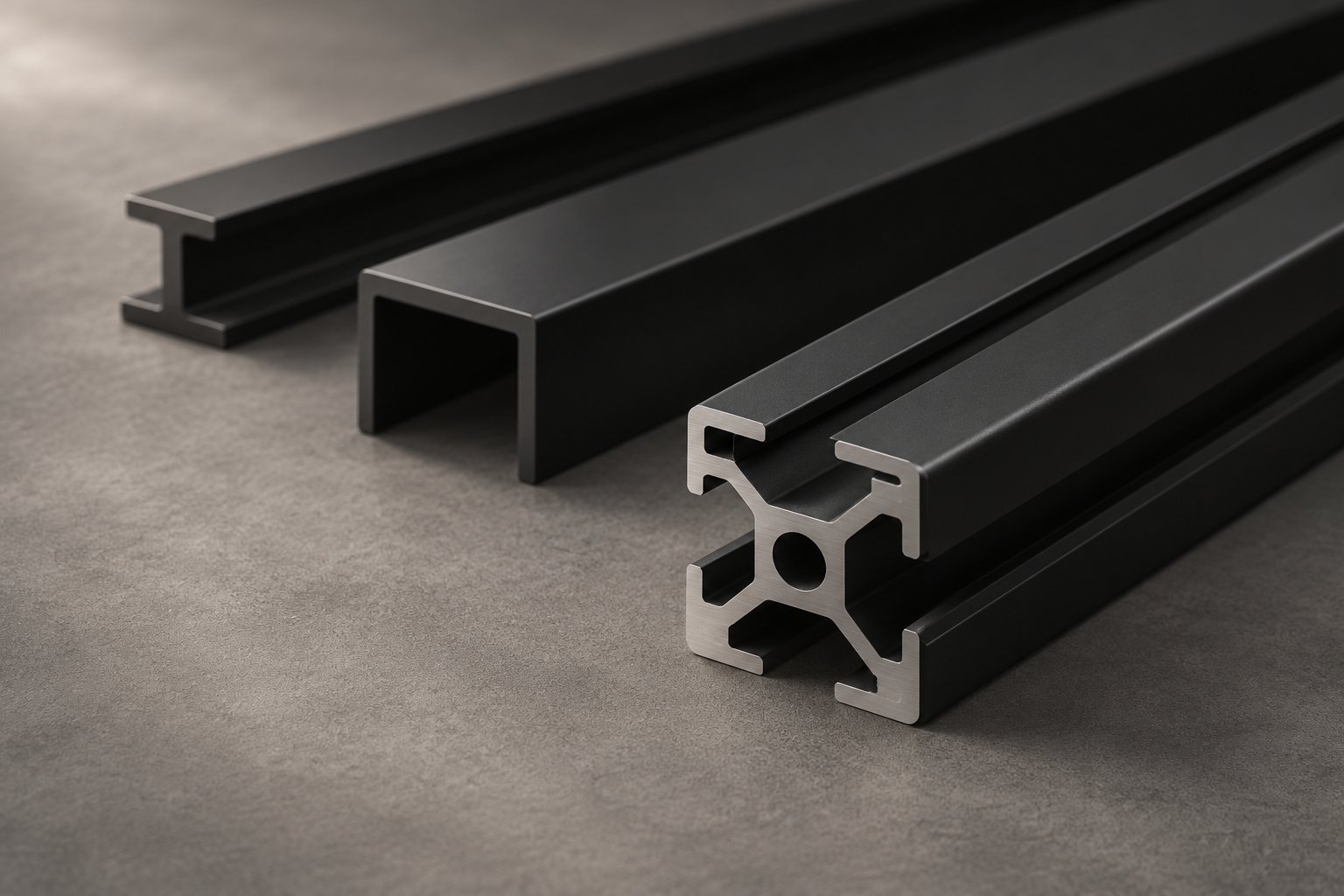
Black aluminium extrusion is a profile made by pushing heated aluminum alloy, usually from the 6000 series, through a shaped die and then giving it a black surface finish, most commonly by anodizing.
Ever noticed how many 3D printer frames, machine guards, and display fixtures now come in black instead of silver? That shift is more than a style trend. To understand why some black finishes last for years while others fade, it helps to start with what the product actually is.
Think of it as two parts working together. The first is the base profile. Billets of 6000-series alloy are heated to roughly 400 to 500 degrees C, soft enough to form but not molten, then forced through a steel die. The emerging profile is cooled, stretched straight, cut, and aged to its final temper. The second part is the black finish applied afterward. The same profile could just as easily ship in silver, so the finish defines both the color and much of how the surface behaves in service.
When the finish is anodizing, the aluminum surface itself is converted into a protective oxide layer, which is then colored and sealed. Because this layer grows from the metal rather than sitting on top of it, it does not chip or peel the way a paint film can. Buyers choose black for three practical reasons:
You'll find black aluminum extrusion in three broad camps: makers and DIY builders working on printers, CNC routers, and enclosures; industrial users building workstations, guarding, and assembly lines; and architects or designers specifying trim, furniture profiles, and display systems. Each group weighs strength, finish, and appearance differently, and this guide addresses all three.
Here's what the rest of the article covers:
Here's the catch, though: the black you see depends heavily on the metal beneath it. Two profiles colored in the same tank can come out looking different simply because their alloy or temper differs.
When you spot a code like 6063-T5 on a product listing, it can look like a random part number. It is actually a compact recipe. It tells you what the metal is made of and how it was heat treated, and both of those details shape the black you end up with.
The four-digit number identifies the alloy chemistry. The letters and digits after the dash form the temper, which describes how the metal was mechanically or thermally treated. A capital T means thermally treated, and the number that follows narrows it down:
Same alloy, different route, different result. In 6063, the published minimum yield strength rises from about 110 MPa in T5 to 170 MPa in T6. That extra strength comes with slightly more distortion risk in long, thin sections, along with a higher price.
| Alloy-Temper | Typical Role | Relative Strength | Surface Finish Quality | Anodizing Appearance |
|---|---|---|---|---|
| 6063-T5 | Architectural trim, decorative profiles, light frames | Moderate | Smoothest, handles thin complex walls | Most uniform, fewer streaks |
| 6061-T6 | Machined, welded, and load-bearing parts | Highest of the three | Good, better suited to heavier sections | Acceptable, more prone to variation |
| 6105-T5 | T-slot framing and structural profiles | Higher than 6063, approaching 6061-T6 | Good | Generally good, can vary slightly |
For context, 6061-T6 carries a minimum yield of around 275 MPa. That is why a 6061 anodized custom extruded aluminum profile is a common pick for machined or welded structures.
Anodizing grows its oxide from the metal itself, so whatever sits inside the metal ends up shaping the coating. Alloying elements, typically added at 0.05 to seven percent, plus impurities such as iron, change how the oxide forms and how evenly it absorbs dye. Temper matters too. It alters surface chemistry, and higher tempers usually produce greater finish clarity.
You'll notice the result when two batches of black sit side by side and look a shade apart. That is a known material behavior, not a defect. It is also why specifiers ask for extrusions from the same lot and temper on visible projects.
So how should you choose? For a heavy duty aluminum extrusion used in machine bases or structural frames, a stronger temper usually earns its cost, and an ODM T6 custom aluminum profile makes sense when the section truly carries load. For decorative and architectural parts, finish uniformity tends to matter more, which often points to 6063. Over-specifying T6 on a trim piece simply adds cost without benefit.
Still, the metal only sets the stage. Whether that black stays deep for years or drifts toward bronze after a few summers depends on what happens inside the anodizing tank.
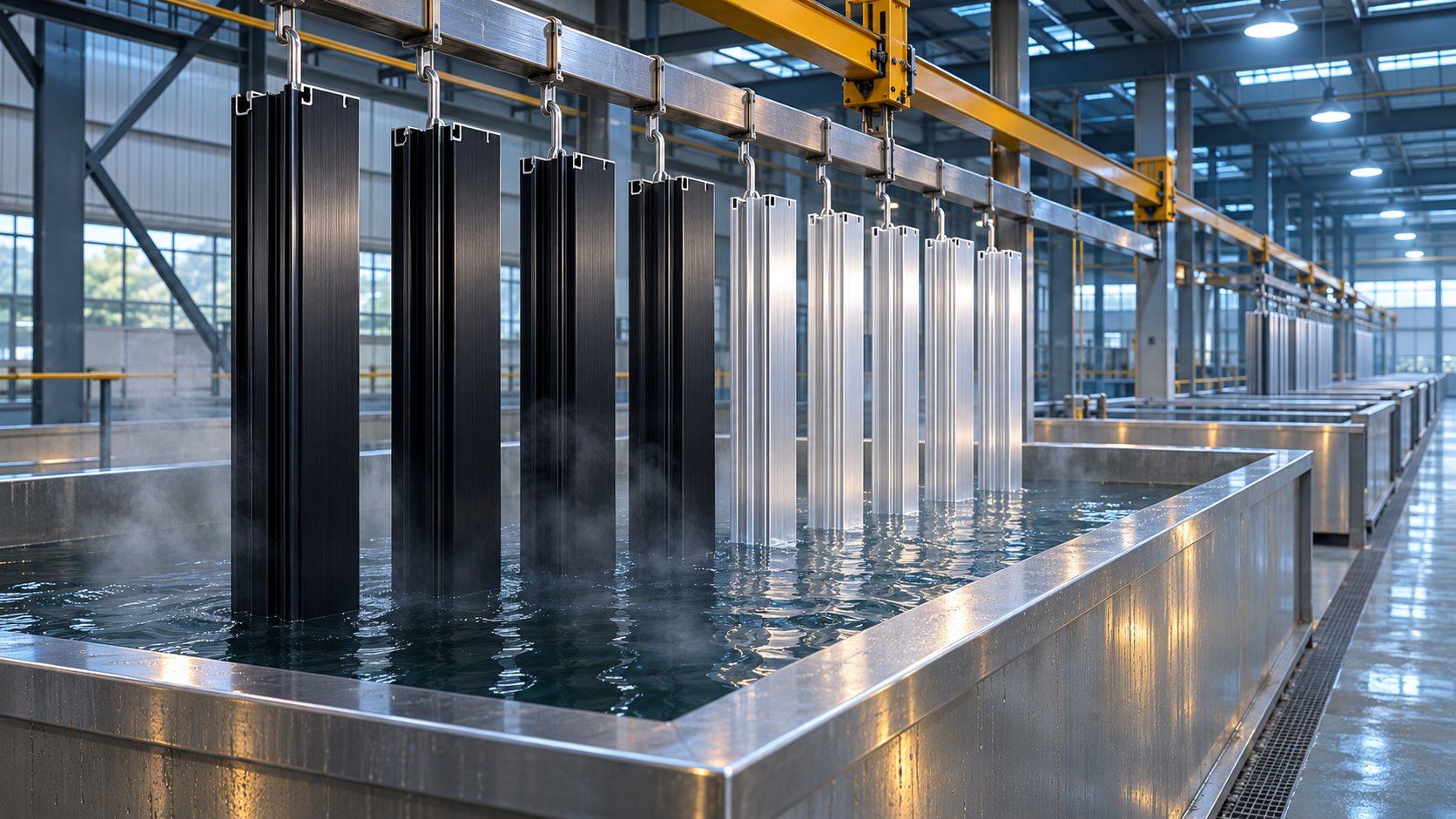
Ever wondered why one black profile still looks jet black after years outdoors while another drifts toward purple-brown? The answer is rarely the aluminum alone. It comes down to a handful of steps inside the finishing line, and each one leaves its mark on the final anodized extruded aluminum.
Most black profiles follow the same basic route, with rinses between stages:
Sounds simple? Each step carries its own variables, such as time, temperature, and bath chemistry. That is why two shops can produce noticeably different blacks on the same anodized extruded aluminum profile.
Dyed black delivers the familiar deep, jet tone. The catch is the dye itself. Organic dyes are not recommended for outdoor use, since UV gradually breaks them down, while inorganic pigments hold up far better. Even dyes rated for exterior use can fade in real service, and finishing experts stress that processing conditions matter as much as the dye rating.
Electrolytic coloring takes a different path. After anodizing, the profile enters a second bath containing metal salts such as tin, nickel, or cobalt, which settle deep in the pores. With no organic dye involved, this method is common on architectural aluminum and is generally regarded as more lightfast. Imagine a storefront frame facing the afternoon sun every day. That is where the difference shows.
An unsealed anodic layer behaves like a sponge. Sealing, typically by hydrating the oxide or using chemical seals such as nickel acetate, closes those pores. A good seal improves corrosion resistance, keeps stains from soaking in, and prevents dye from bleeding out. A poor seal can let even a premium black fade early. In practice, the last step often decides how long the first four last.
You'll often see listings mention MIL-A-8625, a U.S. military specification that groups anodizing into types. Two come up most:
One caution: a phrase like 'Type II black' or 'hard anodized' on a listing describes a process style. It is not proof of certified compliance. If your project truly requires MIL-A-8625, ask for documentation that confirms it.
Whether you're buying a stock anodised aluminium extrusion or a custom one, the process label tells you how the black was made. It doesn't tell you how thick, hard, or sun-tolerant that layer will be, and those are the numbers that separate a finish that fades from one that lasts.
Picture two black frames leaving the factory on the same day. They look identical. Five years later, one still looks new, while the other has turned dull and slightly brown. What changed? Usually nothing you could have seen on day one. Real performance hides in details like coating thickness, seal quality, and the type of coloring used.
Think of the oxide layer as armor grown from the metal itself. Thicker armor generally means better wear and corrosion resistance. It also gives the pores more depth to hold color. For black work, a minimum anodic thickness of 25 microns is often recommended for good color fastness. Hardcoat (Type III) layers go further. They are grown denser and thicker, so they resist abrasion better than decorative Type II coatings.
How hard is true anodize? A simple nickel rub test shows it well: the coin wears down against the surface instead of scratching it. One caution, though. A high-strength anodized aluminum extrusion describes the strength of the alloy underneath. Coating hardness is a separate property, so check both.
Salt-spray testing, commonly run under ASTM B117, exposes samples to a heated salt fog and then checks for pitting, staining, or coating breakdown. It is a useful way to compare finishes side by side. However, it does not translate neatly into years of real-world service. Alloy, thickness, and sealing all shift the results. Rather than trusting a generic claim, ask your supplier for actual test reports on comparable anodized aluminum profiles.
Here is the candid part. Organic dye-based blacks can fade or shift tone under prolonged UV exposure. Indoors, you may never notice. Outdoors, it can show within a few seasons. Metal-salt (electrolytic) coloring is known for much stronger color fastness, and powder coating is another option for exterior work. Black finishes exposed to heat swings can also develop fine cracks, because the coating and the metal expand at different rates.
For building products, the FGIA's AAMA 611 specification separates Class I, a high-performance finish for exteriors, from Class II, intended for interiors. A well-sealed anodic coating can last 10 to 20 years, depending on thickness, sealing, and the application.
Good news first: black is one of the more forgiving colors, and finishers note that black and clear show less variation than shades like blue. Still, black extruded aluminum is not immune. Alloy and temper, bath chemistry, time, and temperature all play a role. Even the order of parts matters, since pieces dipped last in a tank tend to come out lighter. Different lines or anodizers add yet another variable.
The fix is practical. Order matching parts together so they run in the same batch. Agree on a physical approved sample and an acceptable color range, because photos are unreliable for color matching.
Before you place an order, ask your supplier:
Work through those answers and a pattern appears: black anodize shines in some settings and struggles in others. That raises a fair question. For your project, would clear anodize or a black powder coat simply be the smarter fit?
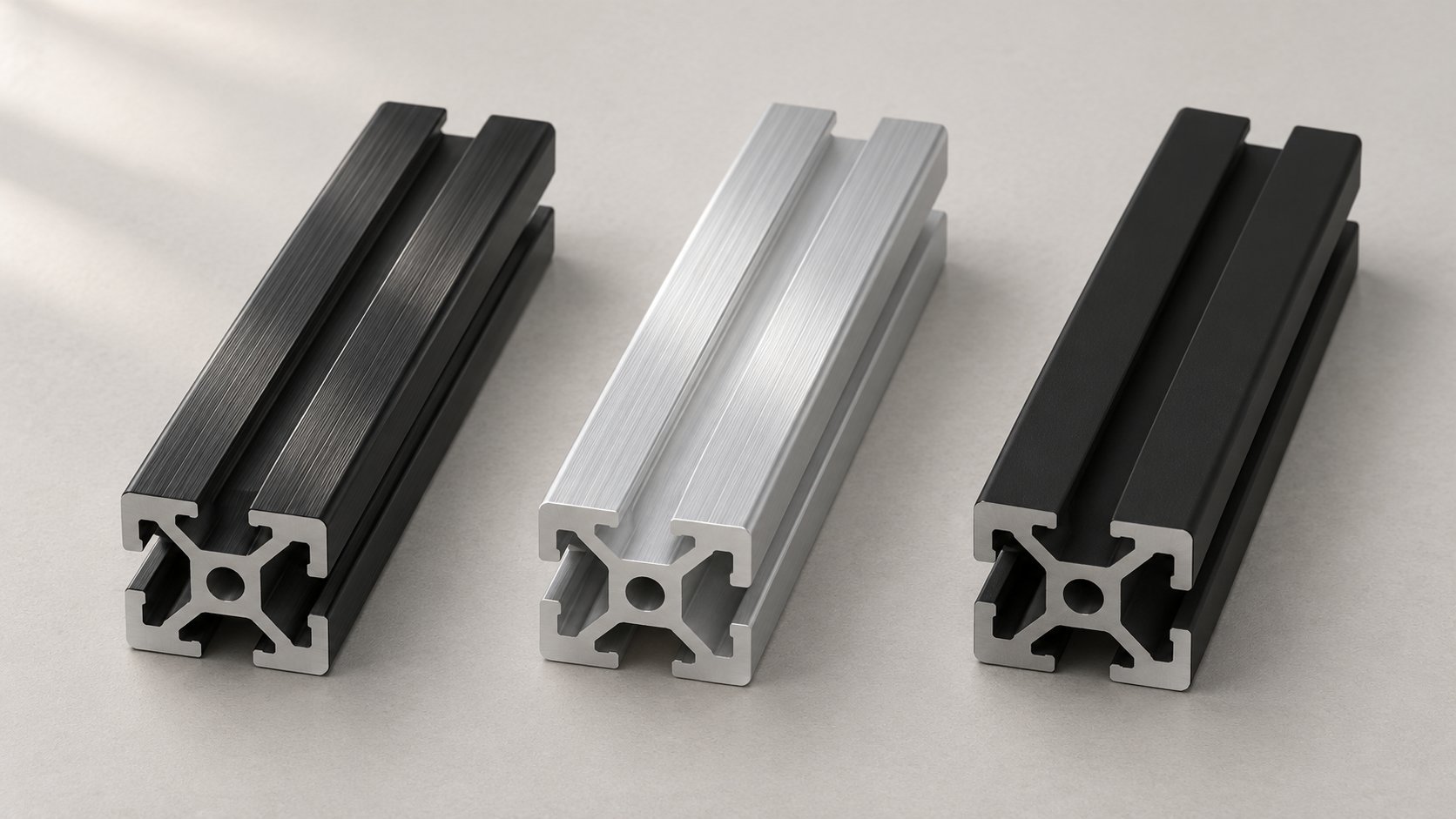
You've settled on aluminum profiles for your project. Now comes the question that trips up many buyers: should the finish be black anodize, clear anodize, or black powder coat? Each one solves a different problem, and none of them wins everywhere.
| Factor | Black Anodized | Clear/Silver Anodized | Black Powder Coat |
|---|---|---|---|
| Relative cost | Slightly above clear due to the coloring step | Usually the lowest | Often comparable to anodizing, varies with color and volume |
| Lead time considerations | Extra coloring step, shade approval may add time | Simplest process, widely stocked | Separate coating line, custom colors may add time |
| UV fade tendency | Organic dyes can fade, electrolytic color resists better | Very low, no dye to fade | Depends on resin, exterior grades hold well |
| Scratch and fingerprint visibility | Scratches stand out, smudges less visible than polished silver | Scratches blend in | Thick film resists light marks, deep scratches show metal |
| Heat absorption in sunlight | High | Lower | High |
| Finish feel | Hard, thin, metallic | Hard, thin, metallic | Smooth, slightly softer, painted feel |
| Decorative suitability | Excellent for sleek, minimalist looks | Natural metal look | Widest color and gloss range |
For interior furniture, displays, and trim, an anodized minimalist extruded aluminum profile in black is hard to beat for that crisp, metallic edge.
Here's the first trade-off. On black, the color lives inside the oxide layer, so a deep scratch exposes bare aluminum underneath. That bright line jumps out against a dark surface. On clear anodized aluminum extrusions, the same scratch barely registers because the metal beneath is already silver. You also can't simply dab on matching paint. A true repair usually means stripping and re-anodizing the part.
The second trade-off is heat. Dark surfaces absorb more sunlight, so a black enclosure on a sunny rooftop will run warmer than a silver one. That matters for electronics housings and anything heat-sensitive. One nuance: when it comes to radiating heat away, color makes little difference. A study cited by Megawall found that clear and black anodized heat sinks perform almost identically, since the anodic layer, not the dye, drives emissivity.
Powder coat builds a thick, opaque skin. Exterior architectural profiles are typically specified at 60 to 100 microns dry film. It also offers a color and texture more uniform than anodized surfaces, which helps on large facades where shade matching across many profiles is critical.
The catch is build-up. A Type II anodized aluminum extrusion adds only a thin layer, while powder can add many times that. Tight T-slots, press fits, and mating surfaces may need masking. Edge coverage is the other weak point, since film tends to run thinner at corners and cut ends, which is why specifiers measure there, not just on flat faces.
Choose black anodize for sleek interior and decorative work, clear anodize for low cost and forgiving wear, and black powder coat for exterior color uniformity.
Of course, picking a finish is only half the decision, because the product listing itself is packed with codes that tell you whether a profile will actually fit your build.
You find a listing titled '4080 8mm Slot European Standard Black Anodized' and wonder which parts actually matter. Every term in that string answers a question about fit, strength, or finish. Read them one at a time, and the listing stops looking like a code.
| Listing Term | Example | What It Means for You |
|---|---|---|
| Series or size code | 4080 | The cross-section in millimeters: 40mm by 80mm, often written as 80x40mm. It belongs to the 40 series, which determines the matching hardware. |
| Slot width | 8mm | The opening of the T-slot. Nominal 8mm slots are often measured around 8.2mm, and one 4080 datasheet pairs them with M8 bolts. |
| Slot standard | European Standard | Describes the slot's internal shape, not just its width. Hardware made for one standard may not seat properly in another, even at the same nominal size. |
| Finish designation | Black Anodized | Names the process only. It says nothing about dye type, coating thickness, or sealing, so use the supplier questions from the finish section to fill those gaps. |
| Length or cut tolerance | Stock bar or cut-to-length | Stock bars are often around 6 meters long. Custom cuts should come with a stated tolerance and square ends. |
Moment of inertia, listed as Ix and Iy in cm4, tells you how strongly a profile resists bending. A bigger number means less sag under the same load over the same span. Weight per meter tells you how much metal you are buying, so it tracks closely with material and shipping cost.
Here's a real example. One supplier's published data for a 4080 aluminium extrusion lists 3.5 kg/m, with Ix of 74.8 cm4 and Iy of 21.6 cm4. Notice the two values. The profile is roughly three and a half times stiffer when loaded across its 80mm depth, so orientation matters. The same catalog lists its 4040 profile at 1.95 kg/m with 9.7 cm4. The 4080 adds less than double the weight but many times the stiffness in its strong axis.
Want to estimate actual sag? Combine the moment of inertia with aluminum's modulus of elasticity, roughly 70,000 N/mm2, in a standard beam deflection formula. When comparing listings, check that the units and axis match before drawing conclusions.
The slot is where everything attaches. Its opening width, depth, and shoulder shape decide which T-nuts, brackets, and accessories fit. Hardware is series-specific, and a T-nut made for 40 series slots won't fit 30 series profiles properly. Mixing metric and imperial systems causes the same headaches.
What happens when standards get mixed in a t slot aluminium extrusion frame? Nuts spin instead of locking, brackets sit proud of the surface, and joints creep under load. On black profiles, that slipping hardware can also scuff the finish. Plan your nut types early as well. Drop-in T-nuts can go in after assembly, while preset and square nuts usually slide in from an open end.
Before you buy, confirm:
A 4080 can be exactly right for one build and needless bulk for another. The better size often depends on who is building the frame and what it has to carry.
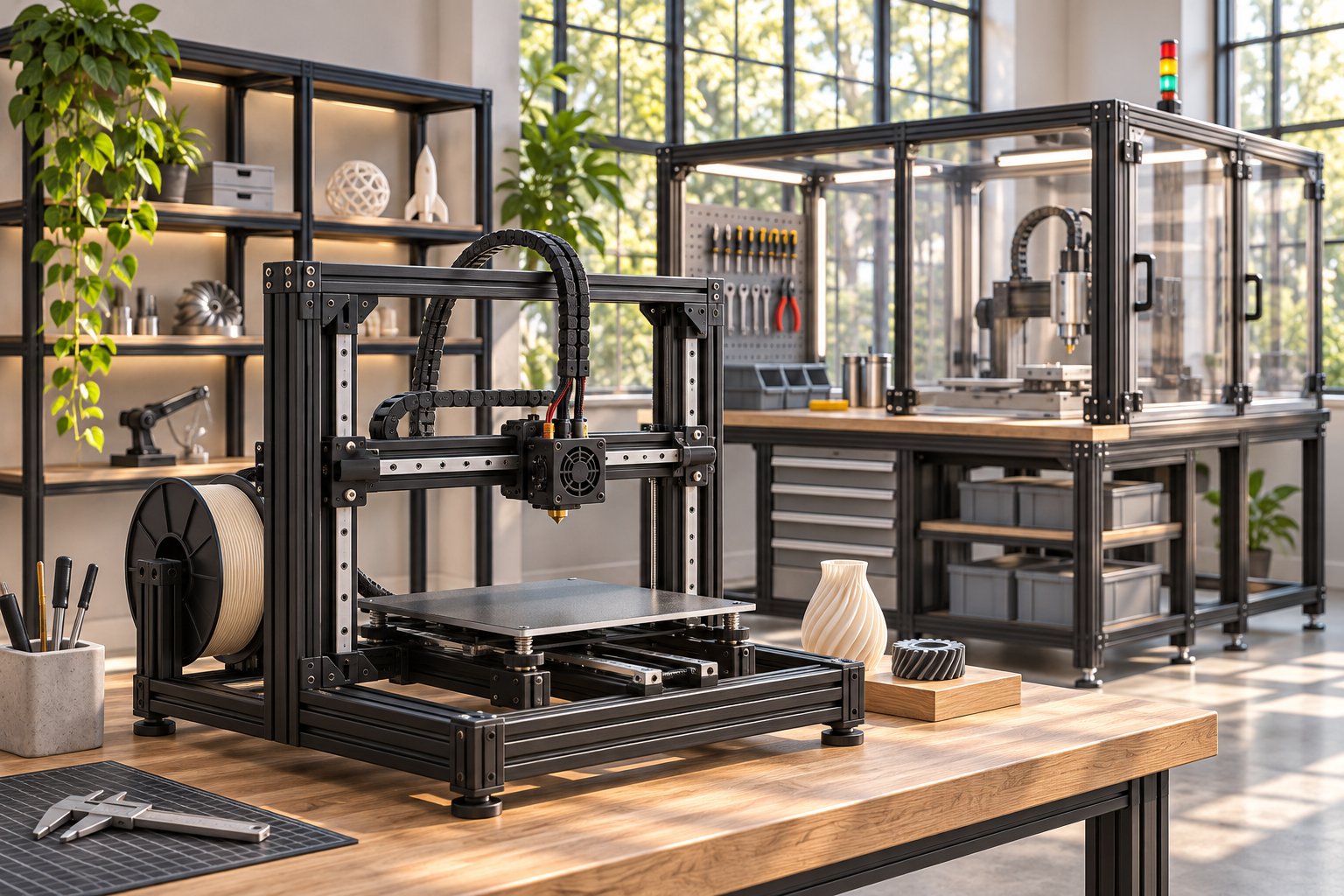
A hobbyist building a 3D printer and an engineer guarding a robot cell might order the same black profile. Yet they will judge it by very different standards. Size is the first filter, and your audience decides the rest.
Most metric T-slot profiles are named by their cross-section in millimeters. Here is how the main families of extruded aluminum sizes are typically used:
Cost climbs with size. The smart pick is usually the smallest profile that meets your stiffness needs, confirmed with published moment-of-inertia data rather than guesswork.
Open-source 3D printers, CNC routers, and printer enclosures often run on 2020 or 2040 frames. Black earns its place here for practical reasons. It reduces visual clutter, so the moving parts and the work stand out. It also cuts reflected glare near cameras, LED strips, and laser modules. For most makers, wide hardware availability matters more than a perfect shade match.
On the factory floor, profiles frame machine guarding, assembly benches, inspection stations, and conveyor supports. Modular frames can hold mesh, polycarbonate, or metal panels and be reconfigured with less welding when a line changes. That flexibility puts the finish under stress. Frames get bumped, cleaned, and re-bolted, so coating durability counts. Keep in mind that a profile frame does not make a guard safe on its own. Profile size, connector strength, unsupported spans, and the identified machine hazards all shape the final design.
Trim, closet and wardrobe systems, furniture profiles, retail displays, and panel frames put appearance first. These parts are often slot-free 6063 sections. Because dozens of pieces may sit side by side in one room, the batch variation discussed in the finish-performance section matters most here. Order matching parts together and approve a physical sample before production.
| Audience | Strength | Finish Durability | Slot Compatibility | Appearance |
|---|---|---|---|---|
| Makers and DIY builders | Moderate | Moderate | High | Moderate |
| Industrial users | High | High | High | Moderate |
| Architectural and interior | Low to moderate | High | Low, often slot-free | Very high |
Whichever group you belong to, profiles rarely arrive exactly as your build needs them. They get cut, drilled, and bolted, and every one of those steps can expose bright metal beneath the black.
You've picked the right profile and the right black. Then the first saw cut leaves a gleaming silver end, and a stray burr scratches the face of the next bar. Sound familiar? How you cut, fasten, and clean a profile decides whether the finish still looks factory-fresh a year from now.
For most builders, a miter saw is the recommended tool for cutting t slot profiles, with a bandsaw or hacksaw as slower alternatives. Whichever you use, a few principles protect the black surface:
Keep one fact in mind: every cut exposes raw silver aluminum at the ends. No technique avoids that.
You have three realistic options. Plastic end caps hide cut ends neatly and are standard on many T-slot frames. Touch-up products matched to the color and finish type can cover small scratches, an approach Bor USA suggests for damage through the finish. Be realistic, though. A touch-up rarely matches a factory anodized surface exactly, especially under raking light. The cleanest solution is to specify cut-to-length, and any machining, before anodizing so the oxide covers every face.
T-nuts and drop-in hardware ride inside the slot channel and clamp brackets against the profile. That clamping point is where marks appear. Serrated nuts and set screws can bite into the coating, and overtightening crushes it locally. Tighten firmly and consistently, and avoid dragging loaded hardware along visible faces. The same applies to extruded aluminum t track on jigs and workbenches, where clamps travel constantly and the channel lips wear first.
Machining order matters too. For a cnc-machined anodized t slot aluminum profile, machining before anodizing lets the coating protect holes, pockets, and edges. The catch is that anodizing converts the surface rather than filling it, so it reproduces every tool mark, smear, and chatter band. Sharp corners also get little coverage because the coating grows perpendicular to the surface, which is why Products Finishing suggests a radius of about 0.062 in. on hard anodized edges where the design allows. Machining after anodizing, by contrast, leaves bare metal in every new feature.
Anodized profiles need little care, but they do need some. Wash with clean water and a mild, pH-neutral detergent on a soft cloth, then rinse and dry. Skip steel wool, scouring powders, abrasive pads, and strongly acidic or alkaline cleaners, all of which can damage the anodic layer. Mortar and cement splashes are alkaline, so remove them right away. As a rule of thumb, clean once or twice a year in mild inland settings and about every three months near the coast or heavy industry.
Here's a simple cut-assemble-protect workflow:
Careful handling has limits, though. If your design calls for features no stock profile offers, or ends that never show silver, the smarter move may be a profile built that way from the very start.
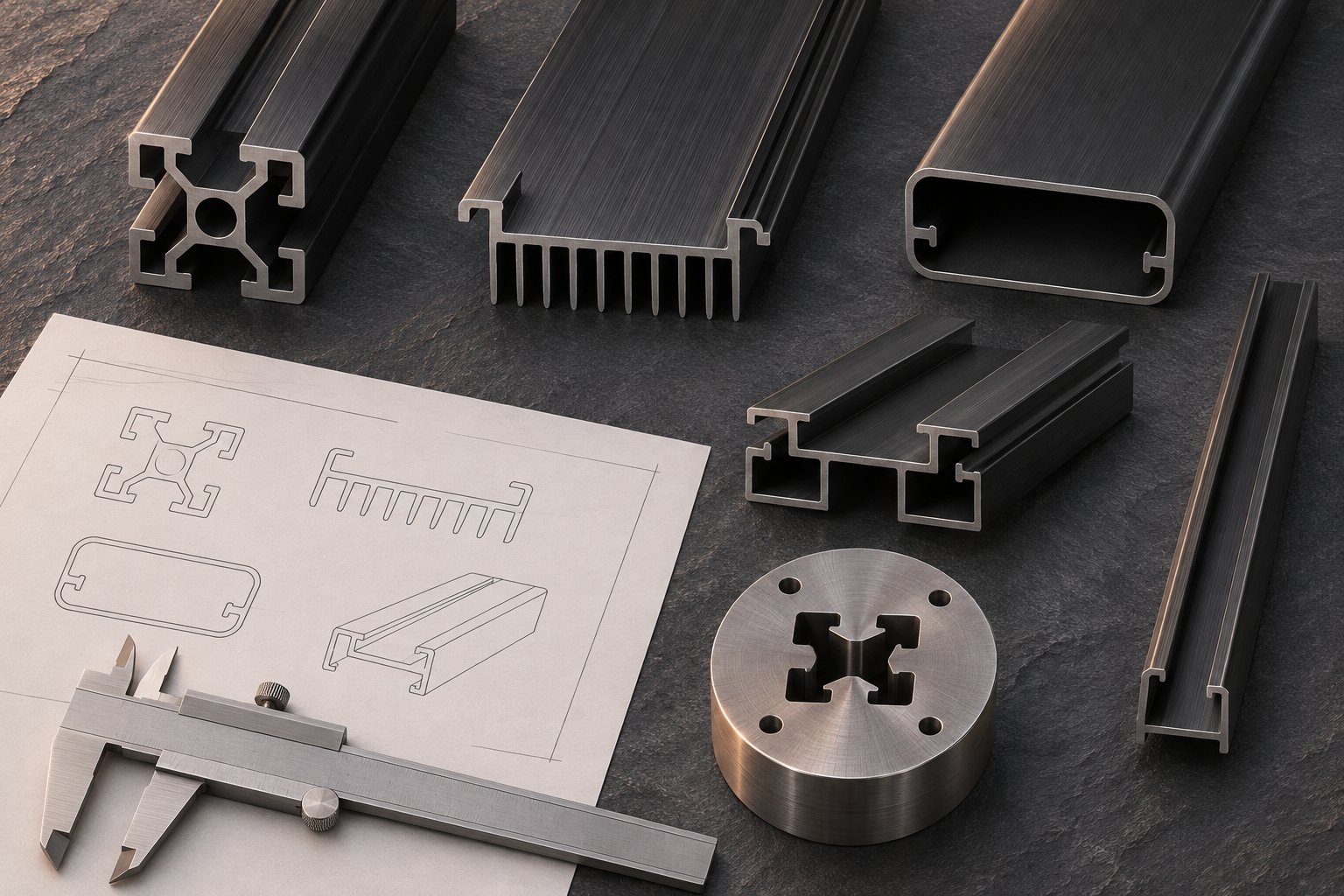
End caps and touch-up pens can only hide so much. When you keep working around a stock profile, the smarter fix is often a profile designed around your product, with the black finish planned in from day one.
Stock T-slot is built for flexibility, not for any single product. You'll likely outgrow it when you need:
Extrusion makes sense for these parts when the shape has a consistent cross-section along its length. A typical ODM project follows a predictable path:
An odm t6 custom extruded aluminum profile for a machine frame and an extruded custom-length anodized decorative aluminum profile for a wardrobe follow the same route. What differs is which specifications matter most.
Imagine approving a perfect sample, then receiving a batch that runs slightly brown. The way to prevent that is a written spec covering:
If you're comparing sources, one example is Shengxin Aluminium, which offers black anodized aluminum profiles with hard-oxidation surface treatment for industrial and architectural applications. The listing supports custom profiles and sample approval, so it can serve as a starting point for an odm anodized custom extruded aluminum profile where appearance and manufacturing requirements must line up.
Be clear-eyed about what any listing does and doesn't promise. Send the checklist above with your inquiry, and confirm the shade, coating thickness, dimensions, and performance criteria in writing. Note that the listing does not claim MIL-A-8625 Type III or aerospace qualification. If your project needs either, ask for documentation before you commit. The same rule applies to every supplier you evaluate.
Treat the black finish as a specified engineering requirement, not an afterthought, and it will last as long as the profile beneath it.
It can, depending on how the black was produced. Profiles colored with organic dyes are the most vulnerable, because UV light slowly breaks the dye down and the surface can drift toward brown, bronze, or purple over time. Indoors, this is rarely a problem. For outdoor or sun-facing parts, ask for electrolytic (metal-salt) coloring or inorganic pigments, a thicker anodic layer, and a high-quality seal, since a weak seal can undermine even a good dye. For building products, look for finishes rated to an exterior class such as AAMA 611 Class I, or consider black powder coat when long-term color stability matters more than a metallic look.
It depends on whether appearance or strength comes first. 6063, usually in T5 temper, extrudes into smooth, thin, complex shapes and tends to anodize with the most even black tone, which makes it the common choice for trim, furniture, displays, and other visible decorative parts. 6061-T6 is noticeably stronger and better suited to machined, welded, or load-bearing parts, but its chemistry makes the black slightly more prone to shade variation. 6105-T5 sits in between and is popular for T-slot framing. If a part carries real load, choose strength first. If dozens of pieces will sit side by side in one room, prioritize finish uniformity and order them from the same lot.
Choose black anodizing when you want a thin, hard, metallic finish that will not chip or peel and that keeps tight T-slots and mating surfaces close to their original dimensions. It suits interior frames, machines, and minimalist decorative work. Choose black powder coating when exterior color uniformity, a wide range of gloss levels, or a thick opaque barrier matters most, such as on large facades. Keep the trade-offs in mind: powder coat adds much more build-up, may need masking around slots and press fits, and can run thin at sharp edges, while anodized black shows bright metal wherever a deep scratch cuts through it.
Every saw cut and new machined feature exposes raw aluminum, so plan for it rather than fight it. Plastic end caps are the simplest way to hide cut ends on T-slot frames. Color-matched touch-up products can cover small scratches, but expect a visible difference under angled light, because nothing applied afterward truly replicates a factory anodic layer. The cleanest fix is prevention: have profiles cut to length and machined before anodizing so the coating covers every face, use padded clamps and sharp non-ferrous blades, and avoid dragging tightened hardware across visible surfaces. Full repair of a damaged face usually means stripping and re-anodizing the part.
Put the key requirements in writing before production starts: alloy and temper, dimensions and tolerances that account for coating build-up, a physical black reference sample with an acceptable color range, target anodic coating thickness and how it will be measured, wear, corrosion, and UV expectations with any test data you need, and cut lengths with end treatment. For example, Shengxin Aluminium offers black anodized aluminum profiles with a hard-oxidation surface treatment for industrial and architectural uses, with support for custom shapes and sample approval. As with any supplier, confirm shade, thickness, and performance criteria directly, and note that the listing does not claim military or aerospace hardcoat qualification, so request documentation if your project requires it.



 บริการออนไลน์
 0086 136 3563 2360
 sales@sxalu.com
 +86 136 3563 2360
 ไทย
 English
 français
 Deutsch
 русский
 español
 português
 العربية
 Việt
 Українська