
Imagine you're sourcing aluminum extrusions for your manufacturing operation, and suddenly your landed costs spike by 50% or more. What happened? Chances are, antidumping aluminum extrusions duties just entered the equation. These trade remedies can dramatically reshape your supply chain economics overnight, yet many importers struggle to understand exactly what they're dealing with.
Whether you're new to international aluminum trade or a seasoned importer seeking clarity on the distinction between duty types, understanding these trade mechanisms is essential for making informed sourcing decisions. Let's break down what these duties actually mean and why they exist in the first place.
In international trade, "dumping" sounds more dramatic than its technical definition. Simply put, dumping occurs when a foreign manufacturer sells products in the U.S. market at prices lower than what they charge in their home market, or below their actual production costs. When this practice threatens to harm American manufacturers, the U.S. government can step in with protective measures.
Under U.S. trade law, an antidumping duty is a special tariff imposed on imported goods when the U.S. Department of Commerce determines they are being sold at less than fair value, and the International Trade Commission finds that these imports cause or threaten material injury to a domestic industry.
For aluminum extrusions specifically, this has become a significant issue. The U.S. Department of Commerce has conducted investigations into aluminum extrusion imports from numerous countries, including China, Indonesia, Mexico, Turkey, and many others. These investigations examine whether foreign producers are pricing their aluminum extrusions unfairly in the American market.
Think of it this way: if a Chinese aluminum extrusion manufacturer sells profiles in China for $3.00 per pound but offers the same product to U.S. buyers for $1.80 per pound, that price difference raises red flags. The resulting aluminum extrusion anti dumping duties are designed to level the playing field by essentially closing that pricing gap.
Here's where things get confusing for many importers. Antidumping duties (AD) and countervailing duties (CVD) are often mentioned together, but they address completely different problems. Understanding this distinction is crucial for your compliance strategy.
| Aspect | Antidumping Duties (AD) | Countervailing Duties (CVD) |
|---|---|---|
| What It Addresses | Unfair pricing by foreign companies | Government subsidies to foreign companies |
| Target | Company-specific pricing practices | Government programs and financial support |
| Calculation Basis | Difference between fair value and export price | Value of subsidies received |
| Who Determines Rates | Commerce Department investigation | Commerce Department investigation |
| Injury Finding By | International Trade Commission (ITC) | International Trade Commission (ITC) |
When you see "AD/CVD" referenced together in aluminum extrusions antidumping discussions, it typically means both types of duties may apply to the same product. For instance, Commerce is currently conducting concurrent countervailing duty investigations on aluminum extrusion imports from China, Indonesia, Mexico, and Turkey alongside antidumping investigations.
The practical impact? Your import costs could include both duty types stacked on top of each other. An aluminum extrusion shipment from a subject country might face a 25% AD rate plus a 15% CVD rate, meaning you're looking at 40% in additional duties before standard tariffs even enter the picture.
For importers navigating this landscape, the key takeaway is straightforward: these aren't arbitrary fees. They're calculated remedies based on specific findings by U.S. trade authorities, and understanding whether your products face AD duties, CVD duties, or both will directly impact your sourcing strategy and bottom line.

How did we get here? The current landscape of antidumping aluminum extrusions duties didn't emerge overnight. It evolved through more than a decade of investigations, rulings, and expansions that transformed a single country-specific case into a sprawling multi-nation enforcement framework. Understanding this history helps you anticipate where trade policy might head next and why certain compliance requirements exist today.
The aluminum extrusion case against China, designated as A-570-967 for antidumping and C-570-968 for countervailing duties, fundamentally changed how trade authorities approach this product category. When the Commerce Department issued these orders in 2011, the scope was described by legal experts as "truly breathtaking."
What made these orders so unusual? Unlike typical trade cases targeting discrete products, the 2011 China orders covered an extraordinarily broad range of goods. According to legal analysis from Neville Peterson, the orders encompassed everything from extruded aluminum tennis racket handles to curtain walls used on building exteriors. This breadth reflected something unique about the domestic industry itself: aluminum extrusion companies own equipment capable of producing a near-infinite range of goods.
The consequences were immediate and far-reaching. The orders generated more scope and anticircumvention determinations than any previous trade cases. Litigation reached the courts over questions like whether extruded aluminum refrigerator handles with plastic end-caps fell within the scope. Some cases even resulted in criminal prosecutions and convictions.
Fast forward to October 2023, and the aluminum news headlines announced a massive expansion. Fourteen U.S. producers of aluminum extrusions, alongside the United Steelworkers union, filed new petitions targeting 15 countries with antidumping investigations and four countries with countervailing duty investigations.
The scale of this expansion is staggering. Imports of aluminum extrusions from these 15 countries totaled $3.19 billion in 2022, representing nearly 70% of all aluminum extrusions imported into the United States. This wasn't a minor adjustment; it was a fundamental restructuring of the trade enforcement landscape.
| Year | Key Milestone | Countries Affected | Significance |
|---|---|---|---|
| 2011 | Original AD/CVD orders issued | China (A-570-967 / C-570-968) | Established unprecedented scope covering vast product range |
| 2011-2023 | Ongoing scope rulings and anticircumvention proceedings | China | Generated more scope litigation than any prior orders |
| October 2023 | New AD petitions filed | 15 countries including China, Mexico, Indonesia, Turkey, and 11 others | Covered $3.19 billion in imports (70% of all U.S. aluminum extrusion imports) |
| October 2023 | New CVD petitions filed | China, Indonesia, Mexico, Turkey | Targeted government subsidy programs in key exporting nations |
| 2024 | Preliminary CVD determinations issued | China, Mexico, Turkey, Indonesia | Customs directed to collect provisional duties on expanded product scope |
What's particularly notable about the 2023 petitions is their scope language. The new petitions requested that products the Commerce Department had previously excluded from the original China orders now be subject to the expanded scope. This means goods that importers thought were safe from these duties suddenly faced potential coverage under the new investigations.
The petitions alleged substantial dumping margins across the targeted countries, with some alleged rates reaching into the triple digits. For CVD investigations, petitioners claimed significant subsidies exist in China, Indonesia, Mexico, and Turkey, though specific margins weren't initially quantified.
Perhaps most concerning for importers is how the expanded scope now reaches far beyond simple aluminum profiles. The preliminary determinations don't merely require duty collection on aluminum extrusions shipped from named countries. They extend to a vast array of finished goods that happen to contain aluminum extrusions from those countries. This approach effectively transforms a metals trade case into something that touches industries as diverse as automotive manufacturing, solar energy, construction, and consumer products.
With this historical context in mind, the next critical question becomes: which specific countries face these trade orders, and what duty rates apply to each? The answer requires a country-by-country breakdown that consolidates information importers have struggled to find in one place.
So which countries actually face these trade remedies, and what rates apply? If you've tried piecing this together from scattered government notices and legal bulletins, you know the frustration. Information exists across dozens of Federal Register publications, Commerce Department announcements, and trade law websites, but nowhere does it appear in one consolidated reference.
That changes here. Below you'll find the complete breakdown of countries currently subject to antidumping and countervailing duty investigations on aluminum extrusions, including case numbers, duty types, and the specific rate ranges announced in final determinations.
The U.S. Department of Commerce announced affirmative final determinations on September 27, 2024, covering 14 countries in antidumping investigations and four countries in countervailing duty investigations. Here's your consolidated reference:
| Country | AD Case Number | CVD Case Number | Duty Type | Status |
|---|---|---|---|---|
| China | A-570-158 | C-570-159 | Both AD & CVD | Final Affirmative |
| Indonesia | A-560-840 | C-560-841 | Both AD & CVD | Final Affirmative |
| Mexico | A-201-860 | C-201-861 | Both AD & CVD | Final Affirmative |
| Turkey | A-489-850 | C-489-851 | Both AD & CVD | Final Affirmative |
| Colombia | A-301-806 | N/A | AD Only | Final Affirmative |
| Ecuador | A-331-804 | N/A | AD Only | Final Affirmative |
| India | A-533-920 | N/A | AD Only | Final Affirmative |
| Italy | A-475-846 | N/A | AD Only | Final Affirmative |
| Korea | A-580-918 | N/A | AD Only | Final Affirmative |
| Malaysia | A-557-826 | N/A | AD Only | Final Affirmative |
| Taiwan | A-583-874 | N/A | AD Only | Final Affirmative |
| Thailand | A-549-847 | N/A | AD Only | Final Affirmative |
| United Arab Emirates | A-520-810 | N/A | AD Only | Final Affirmative |
| Vietnam | A-552-837 | N/A | AD Only | Final Affirmative |
Notice something important? Four countries face both duty types simultaneously. Chinese aluminum, Indonesian extrusions, aluminum from Mexico, and Turkish products can potentially be hit with stacked AD and CVD rates. This double exposure significantly increases landed costs compared to countries facing antidumping duties alone.
The Dominican Republic was initially included in the investigation but was terminated by the International Trade Commission in November 2023 due to negligible import volumes.
Raw case numbers don't tell you what these duties will actually cost. The rates vary dramatically by country and even by specific exporter within each country. According to published preliminary determinations, here's what importers should expect:
| Country | Antidumping Duty Range | Notable Considerations |
|---|---|---|
| China (A-570-158) | 0% – 365.19% | Highest potential rates; some based on adverse inference |
| Turkey (A-489-850) | 45.41% – 594.55% | Extremely high upper range; limited cooperating respondents |
| Indonesia (A-560-840) | 5.65% – 112.21% | Wide variation between exporters |
| Mexico (A-201-860) | 9.18% – 82.03% | USMCA neighbor; still faces significant duties |
| Taiwan (A-583-874) | 0.73% – 67.86% | Some producers qualify for minimal rates |
| Ecuador (A-331-804) | 17.23% – 51.2% | Moderate range |
| Korea (A-580-918) | 0% – 43.56% | Some exporters received zero rates |
| UAE (A-520-810) | 9.13% – 42.29% | Gulf region source |
| Italy (A-475-846) | 0% – 41.67% | European source; variable rates |
| India (A-533-920) | 3.44% – 39.05% | Growing export market |
| Colombia (A-301-806) | 8.85% – 34.47% | Latin American source |
| Malaysia (A-557-826) | 0% – 27.51% | Some producers qualify for zero rates |
| Vietnam (A-552-837) | 2.85% – 41.84% | Southeast Asian manufacturing hub |
| Thailand (A-549-847) | 2.02% – 4.04% | Lowest overall rate range |
Why such dramatic variations? The ranges reflect company-specific calculations. A cooperating exporter that provides complete information during investigation may receive a relatively low rate, while non-cooperating companies often face rates based on adverse inferences, which explains figures like Turkey's 594.55% upper bound.
For China aluminium imports specifically, the situation is particularly complex. The new A-570-158 investigation runs parallel to the original 2011 orders (A-570-967), meaning different products may fall under different case numbers with different scope definitions. Chinese aluminum extrusions that were excluded from the 2011 orders may now be covered under the expanded 2023 investigation.
The practical implication for importers? Knowing your supplier's specific rate matters enormously. A shipment from a Thai producer at 2.02% looks very different from Turkish aluminum at 594.55%. Your sourcing decisions should factor in not just the country but the specific exporter's determined rate.
With countries and rates now clear, the next critical question is exactly which products fall under these orders. The scope of coverage extends far beyond simple aluminum profiles, reaching into finished goods and assemblies that many importers don't realize are subject to these duties.
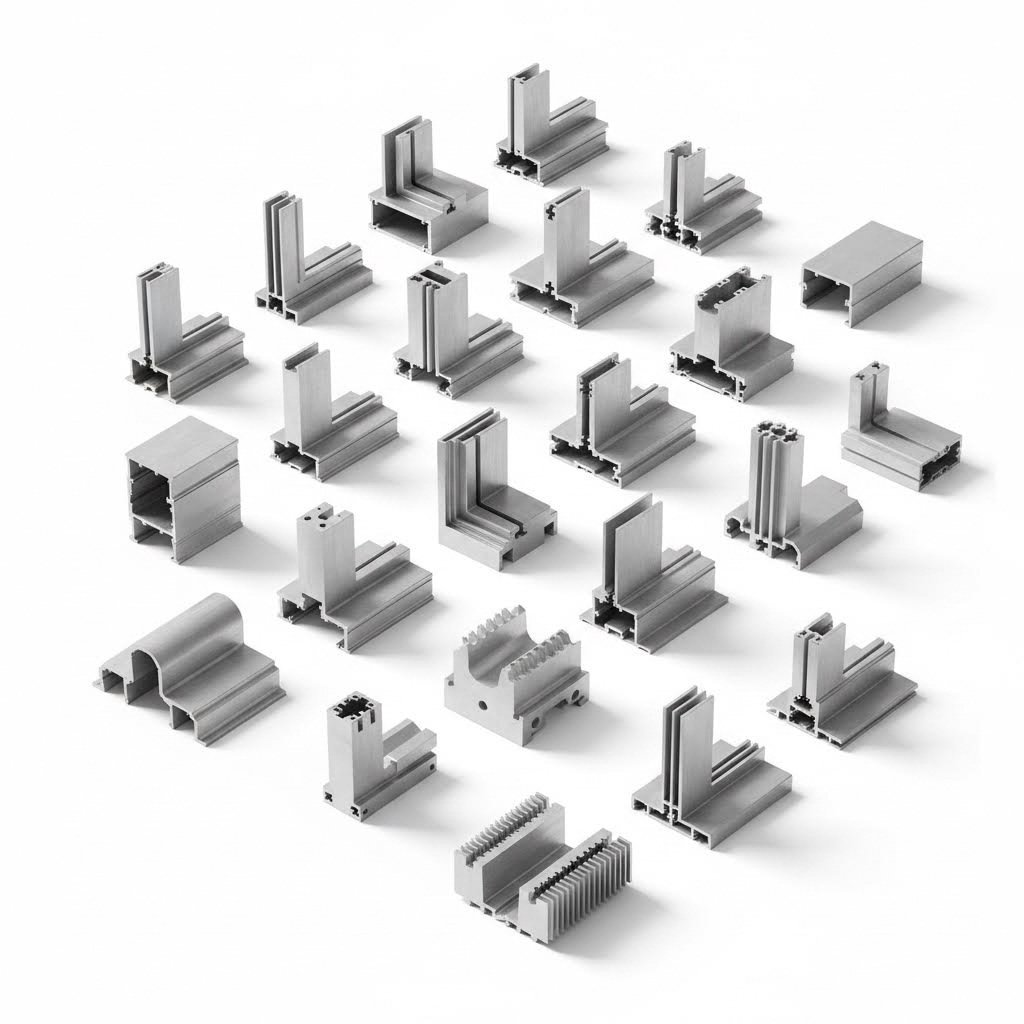
You might assume that antidumping aluminum extrusions duties apply only to raw aluminum profiles, the basic shapes that come directly off an extrusion press. That assumption could cost you significantly. The scope of these trade orders extends far beyond simple bars, tubes, and profiles, reaching into finished products, subassemblies, and goods you might never associate with aluminum trade remedies.
Understanding exactly what products fall within scope isn't just an academic exercise. It determines whether your imports face duties ranging from a few percent to over 500%, or whether they clear customs without additional charges. Let's break down what the orders actually cover and how the aluminum extrusion definition applies in practice.
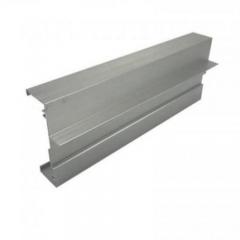
The scope language in these trade orders reads like a comprehensive catalog of aluminum applications. According to Commerce Department definitions, subject merchandise includes aluminum extrusions made from alloy series 1, 3, and 6, produced through an extrusion process. But the real complexity lies in how broadly that definition extends.
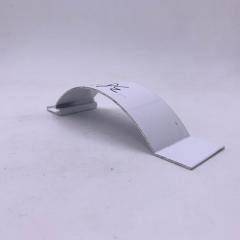
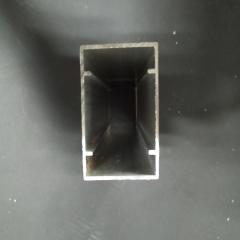
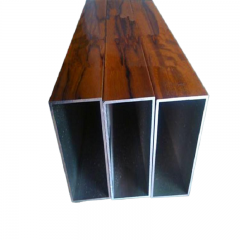
Subject aluminum extrusions come in virtually every imaginable form:
Sounds complex? It gets more intricate. The orders don't stop at standalone extrusions. They reach into assembled and unassembled products where aluminum extrusions serve as components. The expanded 2024 scope specifically covers:
Even aluminum extrusions for panels used in construction, signage, or industrial applications fall squarely within scope. If your product contains an extruded aluminum component from a subject country, you need to evaluate whether duties apply.
The HTS classifications tell the story of just how broadly these orders reach. Primary classifications include codes like 7604.21.00 (aluminum bars and rods), 7608.20.00 (aluminum tubes and pipes), and 7610.90.00 (aluminum structures). But subject merchandise also enters under codes spanning chapters 76 through 95, including 7616.99.5190 for miscellaneous aluminum articles, 8418.99.80 for refrigerator parts, 9403.90 for furniture components, and 9506.99 for sporting goods.
Imagine you're importing aluminum railing extrusions for a deck system. The extrusions themselves are clearly subject merchandise. But what about a complete railing kit that includes aluminum extrusions plus stainless steel fasteners and plastic end caps? The answer depends on how Commerce interprets the assembly and whether it qualifies for an exclusion.
The orders include specific exclusion criteria that savvy importers should understand:
The multiple subassembly exclusion adds another layer. Merchandise containing multiple subassemblies may be excluded if at least one subassembly would not be subject to the scope independently, and the aluminum extrusions account for 50% or less of both the total weight and the number of pieces.
When you're uncertain whether your product falls within scope, Commerce offers a formal scope ruling process. Importers can request a scope determination by submitting detailed product information, manufacturing specifications, and technical drawings. However, this process takes time, often several months, and the outcome isn't guaranteed to favor the importer.
For products falling in gray areas, proactive classification is essential. Working with experienced customs brokers who understand aluminum trade orders can help you identify potential scope issues before goods reach the port. Documentation proving alloy composition, manufacturing process, and assembly status becomes critical evidence if Customs questions your classification.
The bottom line? Never assume a product is outside scope simply because it's a finished good or contains other materials. The orders deliberately cast a wide net, and the burden falls on importers to demonstrate exclusion eligibility. With the scope framework now clear, understanding how these orders get reviewed and potentially revoked becomes the next critical piece of your compliance strategy.
Here's something many importers don't realize: antidumping aluminum extrusions orders aren't permanent. Every trade remedy has a built-in expiration mechanism called the sunset review. Understanding this process matters because it determines whether duty orders continue indefinitely or get revoked, potentially reopening markets that were previously cost-prohibitive.
The Uruguay Round Agreements Act mandates that Commerce and the USITC conduct five-year reviews of all outstanding antidumping and countervailing duty orders. These reviews examine a fundamental question: would revoking the order likely lead to continuation or recurrence of dumping (or subsidies) and material injury to the domestic industry?
Think of sunset reviews as periodic health checks on trade orders. The process begins automatically, with Commerce initiating reviews no later than 30 days before the five-year anniversary of any AD/CVD order. For the original China aluminum extrusion orders issued in 2011, sunset reviews have already occurred multiple times, each time determining whether the orders should continue.
Here's how the process unfolds:
The distinction between full and expedited reviews is critical. When the USITC receives adequate responses showing genuine interest from both domestic industry and respondent parties, it conducts a full review. This includes public hearings, questionnaires, and comprehensive investigative activities. Full reviews typically complete within 360 days of initiation.
However, when responses are inadequate, typically because foreign producers or governments don't participate, the USITC conducts an expedited review. Commissioners base their determinations on available facts, prior injury findings, and publicly available data. Expedited reviews complete within just 150 days.
What actually decides whether an order stays in place or gets revoked? Under Section 771 provisions of the Tariff Act, both agencies must make affirmative likelihood findings for an order to continue.
Commerce examines whether revoking the order would likely lead to continuation or recurrence of dumping or subsidies. Factors include:
The USITC analyzes whether revocation would likely lead to continuation or recurrence of material injury. Their assessment considers:
Domestic industry participation dramatically influences outcomes. When U.S. producers actively engage in sunset proceedings, providing data on their current condition and analysis of likely import effects, the USITC has substantive evidence supporting continuation. As demonstrated in recent sunset review proceedings, when respondent interested parties don't participate, Commerce often relies on adverse inferences and prior margins, typically resulting in order continuation.
For importers monitoring cases like A-570-158 or other aluminum extrusion orders, tracking sunset review schedules provides strategic insight. The USITC maintains a public calendar of upcoming reviews, and Federal Register notices announce all initiation and determination dates. Importers can also participate in proceedings by filing responses explaining how revocation might affect their businesses.
Understanding when sunset reviews occur for orders affecting your supply chain allows you to plan ahead. If revocation seems possible based on changed market conditions or reduced domestic industry interest, you might adjust sourcing strategies accordingly. Conversely, if continuation appears certain, building alternative supply relationships becomes more urgent. With the review process now clear, the practical question becomes: how do you actually stay compliant while these orders remain in effect?

Knowing the rules is one thing. Actually implementing them without costly mistakes? That's where many importers stumble. The gap between understanding antidumping aluminum extrusions regulations and successfully navigating customs without penalties can feel enormous, especially when scope determinations span multiple pages of Federal Register text and duty rates vary by specific exporter.
The good news is that compliance becomes manageable with systematic processes. Below you'll find actionable steps that transform complex legal requirements into practical daily operations. Whether you're handling your first AD/CVD entry or refining existing procedures, these strategies address the real-world challenges importers face at the port.
Start with the fundamentals. Before any subject merchandise arrives at a U.S. port, you need documentation and processes in place. According to trade law experts at ArentFox Schiff, importers must be prepared to identify, classify, and deposit duties correctly from the moment goods enter the country.
Here's your compliance checklist:
Documentation requirements deserve special attention. You'll need records proving the condition of merchandise at importation and how it's sold, installed, and used afterward. This documentation becomes critical evidence if you're claiming an exclusion from scope. Keep manufacturer certificates, alloy specifications, and production records readily accessible for potential Customs inquiries.
Bonding considerations add another layer of complexity. Products subject to AD/CVD duties require sufficient bond coverage to protect against final duty assessments that may exceed deposit rates. Since liquidation rates often differ from preliminary rates, sometimes dramatically, your surety bond must anticipate potential increases. Many importers secure enhanced bond amounts specifically for AD/CVD entries to avoid coverage gaps during administrative reviews.
Here's where compliance gets tricky. Foreign producers facing substantial duty rates have strong incentives to restructure operations, and regulators know it. Anticircumvention provisions exist specifically to catch attempts to evade duties through transshipment, minor processing in third countries, or creative assembly arrangements.
The scope language in current aluminum extrusion orders explicitly addresses these concerns. As noted in legal analysis from Neville Peterson, the orders cover aluminum extrusions that have been further processed in third countries, including finishing, fabrication, and assembly, whether with other aluminum components or non-aluminum components. Third-country processing doesn't alter the country of origin of subject extrusions.
What does this mean practically? Consider these scenarios:
To avoid inadvertent circumvention violations, implement supply chain transparency measures. Know where your aluminum originates, not just where your direct supplier operates. Request certificates of origin, mill test reports, and manufacturing declarations from suppliers. If a price seems too good for the claimed origin, investigate further.
Working with experienced customs brokers who specialize in AD/CVD entries provides crucial protection. These specialists understand the nuances of scope language, can identify potential classification issues before goods arrive, and know how to structure entries correctly. They'll also monitor administrative review announcements that might change applicable rates mid-year.
When products fall in gray areas, consider requesting formal scope rulings from Commerce before importation. Yes, the process takes months, but a binding determination eliminates uncertainty. Alternatively, importers sometimes deposit duties conservatively on questionable merchandise while seeking clarification, protecting against potential penalties for underpayment.
The practical reality? Compliance requires ongoing vigilance, not one-time setup. Rates change through administrative reviews. Scope interpretations evolve through rulings. New anticircumvention findings expand coverage. Building relationships with trade counsel and staying informed about regulatory developments positions you to adapt as requirements shift. With compliance foundations in place, the strategic question becomes how to source aluminum extrusions efficiently within these constraints.

With compliance foundations established, the bigger question emerges: where should you actually source aluminum extrusions to balance cost, quality, and regulatory risk? The antidumping aluminum extrusions framework doesn't prohibit imports from subject countries. It simply adds costs that may make alternative sourcing strategies more attractive. Understanding your options helps you make decisions that align with both your budget and your supply chain resilience goals.
The 2025 tariff environment has reshuffled the deck significantly. According to industry analysis, companies now face Section 232 tariffs of 50% on most imported aluminum in addition to any applicable AD/CVD duties. This stacking effect means strategic sourcing isn't just about avoiding trade remedy costs. It's about building supply chains that can weather ongoing policy volatility.
Domestic sourcing offers the clearest path around trade remedy complications. No AD/CVD duties apply to American-made extrusions, and Section 232 tariffs don't affect domestic production. But is domestic supply actually available for your needs?
The answer depends heavily on your volume, specifications, and timing requirements. The Aluminum Extruders Council reports significant investment in U.S. capacity expansion. Recent developments include:
These investments signal growing domestic capacity, particularly for standard profiles and high-volume applications. However, constraints remain. Lead times at domestic extruders can stretch to 12-16 weeks during peak demand periods. Specialty alloys and complex profiles may have limited domestic sources. And pricing, while avoiding trade duties, often runs higher than pre-tariff international options.
What about countries that import precision components from India, Thailand, or Malaysia with relatively low AD rates? These non-subject or low-rate countries offer middle-ground options. Thailand's antidumping rates range from just 2.02% to 4.04%, dramatically lower than Turkey's potential 594.55% or China's 365.19% maximum. Sourcing from producers in these countries adds some duty cost but far less than high-rate origins.
The trade-off involves supply chain complexity. You're still navigating AD/CVD compliance, documenting country of extrusion accurately, and managing rate-specific deposit requirements. But for applications where domestic capacity falls short or specialty requirements exist, low-rate countries provide viable alternatives.
Beyond geography, supplier capability matters enormously in the current environment. Whether sourcing domestically or internationally, working with manufacturers who understand trade compliance and maintain rigorous documentation protects you from downstream problems.
What should you look for in a compliant aluminum supplier? Consider these factors:
Manufacturing scale and technical capability also influence reliability. Larger operations with multiple extrusion presses can accommodate volume fluctuations and provide backup capacity if equipment issues arise. Advanced processing capabilities reduce the need for secondary suppliers, simplifying your supply chain.
For example, established manufacturers like Shengxin Aluminium demonstrate the comprehensive capability profile importers should evaluate. With over 30 years of industry experience, 35 extrusion presses ranging from 600T to 5500T capacity, and integrated CNC machining centers, such manufacturers can handle complex specifications from die development through mass production. Their surface treatment options including anodizing, powder coating, and PVDF provide complete finishing without requiring additional vendors. For importers seeking custom aluminum extrusion services with proper documentation and traceability, partnering with established manufacturers reduces compliance risk while maintaining quality standards.
The October 2024 ITC decision provides important context for aluminum extrusion sourcing strategy. According to BDO's analysis, the Commission determined that U.S. industry is neither materially injured nor threatened with material injury by imports from 14 jurisdictions. As a result, no new AD/CVD orders issued against those imports, and previously deposited duties will be refunded. However, the 2011 AD/CVD orders on Chinese aluminum extrusions remain fully in effect.
This decision reinforces the value of diversified sourcing relationships. Having qualified suppliers in multiple regions provides flexibility when trade policy shifts. Companies that built alternative supply chains during the investigation period now benefit from those relationships, regardless of the final determination.
Qingdao aluminum profile trading operations and other regional hubs continue serving global markets despite policy volatility. The key is ensuring any supplier you work with, regardless of location, maintains the documentation standards necessary for compliant importation. Country of origin certificates, production records, and quality documentation should be standard deliverables, not special requests.
Strategic aluminum extrusion sourcing ultimately requires balancing multiple factors: landed cost including all duties and tariffs, lead time reliability, quality consistency, documentation support, and supply chain resilience. No single sourcing strategy fits every business. But understanding your options across domestic, low-rate, and high-rate countries positions you to make informed decisions as the trade landscape continues evolving.
Ever read a Commerce Department notice and felt like you needed a translator? You're not alone. Trade remedy terminology can feel like a foreign language, even for experienced importers. Whether you're evaluating aluminum boat extrusions for marine applications, sourcing aluminum railing extrusions for construction projects, or importing components like sectional ladders for window cleaning equipment, understanding these terms is essential for navigating compliance successfully.
This glossary consolidates the key terminology you'll encounter when dealing with antidumping aluminum extrusions cases. Bookmark it for quick reference when reviewing Federal Register notices or communicating with customs brokers.
The table below defines the core concepts that appear throughout AD/CVD proceedings. These definitions draw from official sources including the Commerce Department's Petition Counseling glossary and 19 CFR Part 351 regulatory definitions.
| Term | Definition |
|---|---|
| Dumping Margin | The amount by which normal value exceeds the export price or constructed export price of subject merchandise. Calculated as: (Normal Value - Export Price) ÷ Export Price. A positive margin indicates merchandise is being sold at less than fair value. |
| Countervailing Duty (CVD) | A special duty imposed to offset government subsidies provided to foreign producers or exporters. Unlike antidumping duties that address company pricing practices, CVD addresses government financial support programs. |
| Sunset Review | A five-year review conducted by Commerce and the ITC to determine whether revoking an AD/CVD order would likely lead to continuation or recurrence of dumping, subsidies, and material injury to the domestic industry. |
| Scope Determination | A formal ruling by Commerce determining whether specific merchandise falls within the scope of an existing AD/CVD order. Importers can request scope rulings when product coverage is unclear. |
| Circumvention | Actions taken to evade AD/CVD duties, including transshipment through third countries, minor processing abroad, or assembly arrangements designed to avoid duty coverage. |
| Bonding | The financial security required by U.S. Customs and Border Protection to guarantee payment of duties. AD/CVD entries typically require enhanced bond amounts due to potential rate changes during administrative reviews. |
| Liquidation | The final computation and assessment of duties owed on imported merchandise. Entries remain unliquidated until Commerce completes administrative reviews and issues final duty assessment rates. |
| Normal Value | The adjusted price of the foreign like product in the home market or third-country market, or the constructed value. Commerce compares normal value to export price to determine dumping margins. |
| Constructed Value | The cost of materials and fabrication plus selling, general, and administrative expenses, profit, and packing costs. Used when no suitable home market sales exist for comparison. |
| Administrative Review | An annual proceeding under section 751(a)(1) of the Act where Commerce recalculates duty rates based on actual sales data during the review period, potentially changing cash deposit requirements. |
| Cash Deposit Rate | The estimated duty rate that importers must pay at time of entry. This preliminary rate may differ from the final assessed rate determined after administrative review and liquidation. |
| Adverse Facts Available (AFA) | Information or inferences used by Commerce when a party fails to cooperate, withholds information, or provides unverifiable data. AFA rates are typically the highest alleged or calculated margins. |
| Nonmarket Economy (NME) | A country that Commerce determines does not operate on market principles of cost and pricing. China is designated as an NME, affecting how normal value is calculated for Chinese merchandise. |
| Separate Rate | An individual rate granted to exporters from NME countries who demonstrate sufficient independence from government control, rather than receiving the country-wide NME entity rate. |
Trade documents overflow with abbreviations that can confuse newcomers. Here's your quick reference for the acronyms you'll encounter most frequently:
| Acronym | Full Term | What It Means for Importers |
|---|---|---|
| AD | Antidumping Duty | Additional tariff imposed when foreign goods are sold below fair value in the U.S. market |
| CVD | Countervailing Duty | Additional tariff offsetting foreign government subsidies to producers or exporters |
| ITC | International Trade Commission | Agency determining whether imports cause or threaten material injury to domestic industry |
| DOC | Department of Commerce | Agency calculating dumping margins and countervailable subsidy rates |
| CBP | U.S. Customs and Border Protection | Agency collecting duties and enforcing trade orders at ports of entry |
| APO | Administrative Protective Order | Legal mechanism controlling disclosure of business proprietary information to authorized parties |
| HTS | Harmonized Tariff Schedule | Classification system determining duty rates based on product type and characteristics |
| POI | Period of Investigation | Timeframe examined during initial investigations to determine dumping margins or subsidy rates |
| POR | Period of Review | Timeframe examined during administrative reviews to update duty rates |
| LTFV | Less Than Fair Value | Merchandise sold at prices below normal value, triggering potential antidumping duties |
| CEP | Constructed Export Price | U.S. price calculation method used when first sale to unaffiliated party occurs before importation |
| FOP | Factors of Production | Method for calculating normal value in NME cases using surrogate country values for inputs |
Understanding these terms transforms confusing government documents into actionable intelligence. When you see "Commerce issued preliminary CVD rates based on AFA for non-cooperating respondents," you'll know exactly what happened: the Department of Commerce calculated countervailing duty rates using the highest available information because certain foreign companies didn't provide requested data.
Keep this glossary handy as you navigate the AD/CVD landscape. With terminology mastered, the final piece of your compliance toolkit involves staying informed about regulatory changes and building systems for long-term trade compliance success.
Trade policy never stands still. The aluminum trade regulations 2024 landscape looked dramatically different from 2023, and 2025 has already brought fresh developments including ongoing administrative reviews and new preliminary determinations. How do you stay ahead of changes that could reshape your cost structure overnight?
Building sustainable aluminum extrusion compliance requires more than mastering current rules. It demands systems for monitoring regulatory shifts, relationships with informed partners, and organizational readiness to adapt when conditions change. Let's close with practical strategies for long-term success in this dynamic environment.
The most common compliance failures stem not from ignorance but from outdated information. Rates change through administrative reviews. Scope interpretations evolve through rulings. New investigations target additional products or countries. Staying current requires intentional monitoring across multiple official channels.
Here are the essential resources for trade remedy monitoring:
According to the AIM system documentation, the import monitor updates every Wednesday with new license data received during the preceding seven days. Monthly updates follow Census data releases, with the calendar published in advance. Setting calendar reminders around these update schedules helps you catch changes promptly.
Beyond official sources, industry associations and trade law firms often synthesize complex developments into actionable summaries. The Aluminum Extruders Council, trade-focused law practices, and customs broker newsletters can provide interpretation and context that raw government notices lack. Building a curated information feed from multiple sources ensures you catch developments relevant to your specific import profile.
Effective aluminum import requirements management extends beyond monitoring into organizational capability. Companies that navigate AD/CVD orders successfully share common characteristics: clear internal processes, knowledgeable personnel, reliable external partners, and documented procedures that survive staff turnover.
Consider building these compliance foundations:
Working with manufacturing partners who understand trade compliance creates additional protection. When your aluminum extrusion supplier proactively provides mill certificates, alloy specifications, and production traceability documentation, your compliance burden decreases substantially. Manufacturers with export experience understand what U.S. importers need and build those deliverables into standard processes.
Established manufacturers like Shengxin Aluminium exemplify this partnership approach. With over 30 years of industry experience and comprehensive capabilities spanning 35 extrusion presses, advanced CNC machining, and diverse surface treatments including anodizing and powder coating, such manufacturers provide end-to-end support from die development through mass production. For importers seeking compliant custom extrusion solutions, partnering with experienced manufacturers who maintain proper documentation and traceability reduces both compliance risk and operational complexity.
The antidumping aluminum extrusions landscape will continue evolving. Administrative reviews will adjust rates. Sunset reviews will determine order continuations. New investigations may target additional countries or products. But importers who build robust monitoring systems, maintain documented compliance processes, and work with capable manufacturing partners position themselves to adapt successfully regardless of policy shifts.
Your next move? Start with the resources listed above. Audit your current import records against scope definitions. Evaluate whether your suppliers provide the documentation you need. And consider whether domestic or alternative-country sourcing deserves a fresh look given current duty structures. The companies that thrive in this environment are those that treat trade compliance not as a burden but as a competitive capability worth investing in.
In October 2024, the U.S. International Trade Commission determined that U.S. industry is not materially injured by imports from 14 countries including China, Colombia, Ecuador, India, Indonesia, Italy, Malaysia, Mexico, South Korea, Taiwan, Thailand, Turkey, UAE, and Vietnam. This means no new AD/CVD orders issued against these imports under the 2023 investigation, and deposited duties will be refunded. However, the original 2011 AD/CVD orders on Chinese aluminum extrusions (A-570-967 and C-570-968) remain fully in effect.
The scope covers an exceptionally broad range of products beyond basic profiles. Subject merchandise includes hollow profiles (tubes, pipes), solid profiles (bars, rods), fabricated extrusions that have been cut, machined, or bent, and finished extrusions with coatings. It also extends to assembled products containing aluminum extrusions, including window frames, solar panel racking, heat sinks, vehicle components, furniture parts, and consumer goods like flagpoles and sporting equipment.
Duty rates vary dramatically by country and specific exporter. The Commerce Department calculates dumping margins by comparing normal value (home market price or production cost) to export price. Cooperating exporters who provide complete information typically receive lower rates, while non-cooperating companies face Adverse Facts Available rates. Current ranges span from Thailand's low 2.02%-4.04% to Turkey's extreme 45.41%-594.55%, with China rates reaching up to 365.19%.
Antidumping duties (AD) address unfair pricing by foreign companies selling below fair market value, targeting company-specific practices. Countervailing duties (CVD) offset government subsidies provided to foreign producers. Both can apply simultaneously. Currently, four countries face both duty types: China, Indonesia, Mexico, and Turkey. This stacking effect means imports could face combined rates of 40% or more before standard tariffs apply.
Essential compliance steps include identifying all aluminum extrusion components in products, determining the country of extrusion (where metal is pressed through a die), verifying alloy series designation for scope coverage, entering merchandise as Type 03 entries, and depositing estimated duties at entry. Maintain documentation proving alloy composition, manufacturing process, and assembly status. Working with experienced customs brokers who specialize in AD/CVD entries and partnering with manufacturers like Shengxin Aluminium who provide complete traceability documentation reduces compliance risk significantly.



 บริการออนไลน์
 0086 136 3563 2360
 sales@sxalu.com
 +86 136 3563 2360
 ไทย
ไทย English
 français
 Deutsch
 русский
 español
 português
 العربية
 Việt
Việt Українська