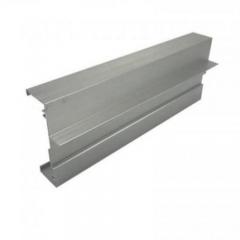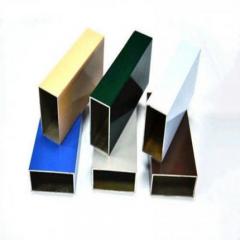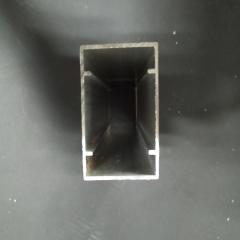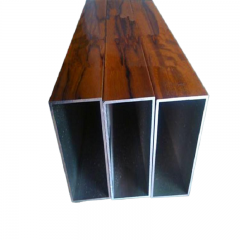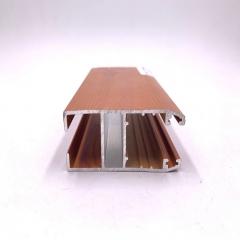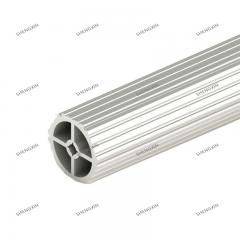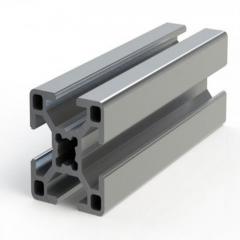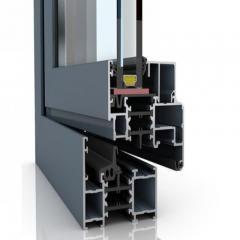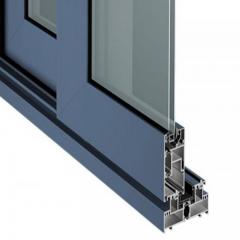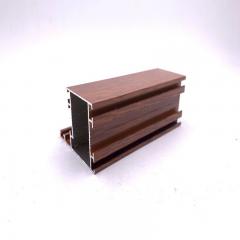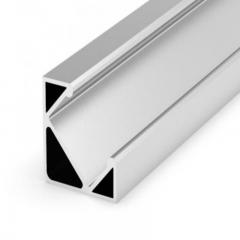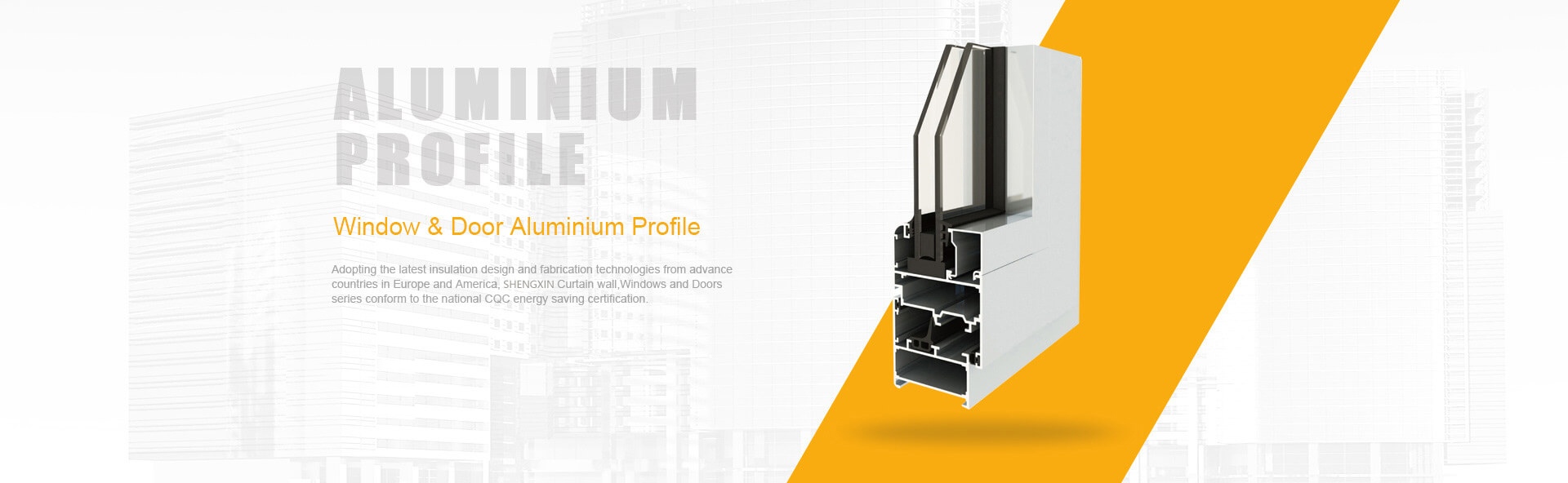
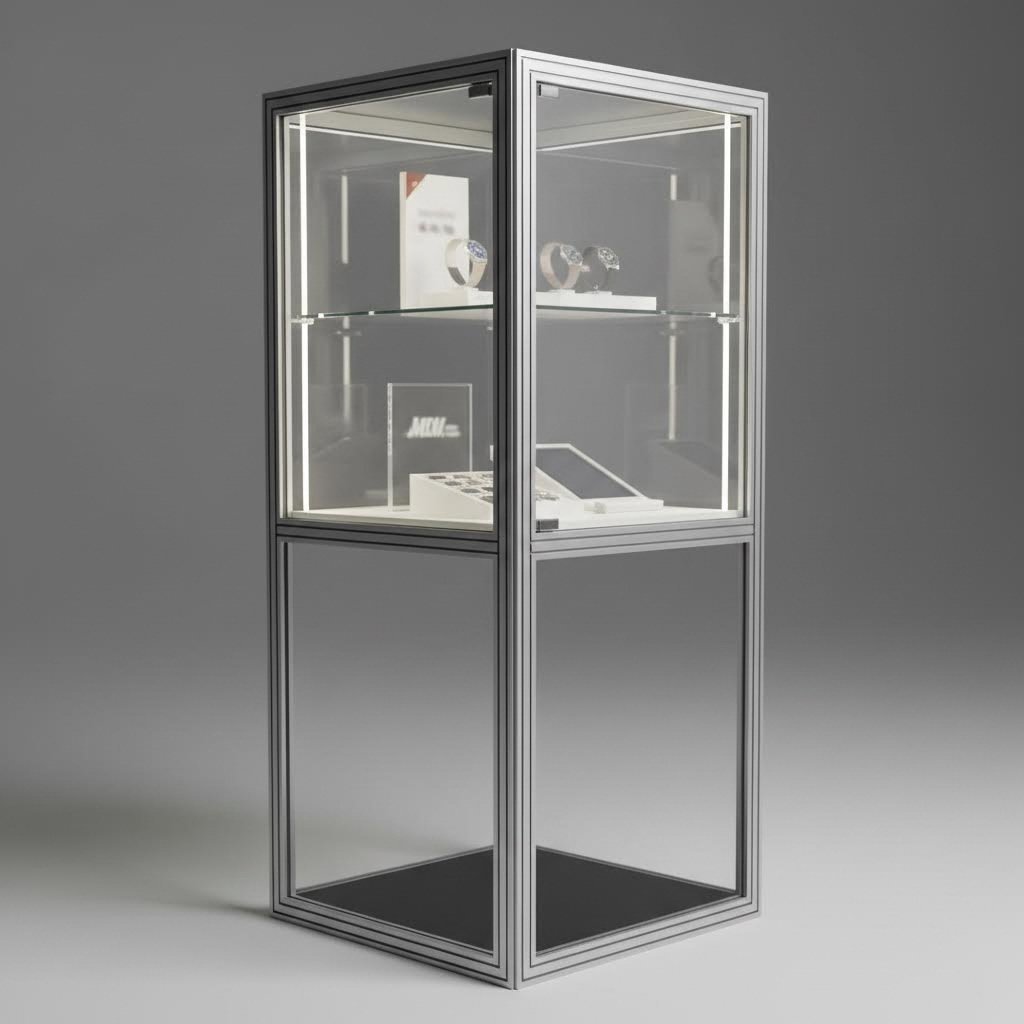
Ever wondered how those sleek retail display cases or museum exhibit frames achieve such clean, precise lines? The answer lies in aluminum showcase extrusions—specialized profiles created by forcing heated aluminum through custom-shaped dies to produce uniform cross-sections perfect for display applications.
Think of it like a sophisticated pasta maker. When you push dough through a shaped opening, it emerges in that exact form. Aluminum extrusions work the same way, except instead of pasta, you get structural profiles designed for frames, tracks, channels, and supports that form the backbone of modern display systems.
The journey from raw material to finished showcase frame begins with an aluminum billet—a solid cylindrical or rectangular block of aluminum alloy. According to the Aluminum Extruders Council, these billets are preheated to temperatures between 700°F and 930°F (375°C to 500°C), making the aluminum soft and malleable while remaining solid.
Once heated, powerful hydraulic presses—capable of exerting anywhere from 100 to 15,000 tons of pressure—force the softened aluminum through a precision-engineered steel die. As the billet is crushed against the die opening, the aluminum has nowhere to go but through the shaped opening, emerging on the other side as a fully formed profile with the exact cross-section designed into the die.
Here's what happens in just a few seconds of extrusion:
The ram applies pressure, crushing the billet until it fills the container. With nowhere else to go, the aluminum squeezes through the die opening. The profile emerges with a precise, uniform shape—whether that's a tube, channel, angle, or complex custom design. After exiting the die, each item extruded aluminium undergoes cooling, stretching for straightness, and cutting to specified lengths.
This process allows manufacturers to create virtually any cross-sectional shape imaginable, from simple rectangular frames to intricate profiles with built-in channels for glass, LED strips, or cable management.
You might ask: why not steel, wood, or plastic? Aluminum extrusions have become the material of choice for display cases and showcase systems because they deliver an unmatched combination of properties:
These characteristics explain why aluminum extrusions form the structural core of everything from simple retail product displays to sophisticated museum exhibits. Whether you need a minimalist floating shelf system or a fully enclosed jewelry showcase, extruded aluminum profiles provide the foundation for versatile, professional-grade display solutions.
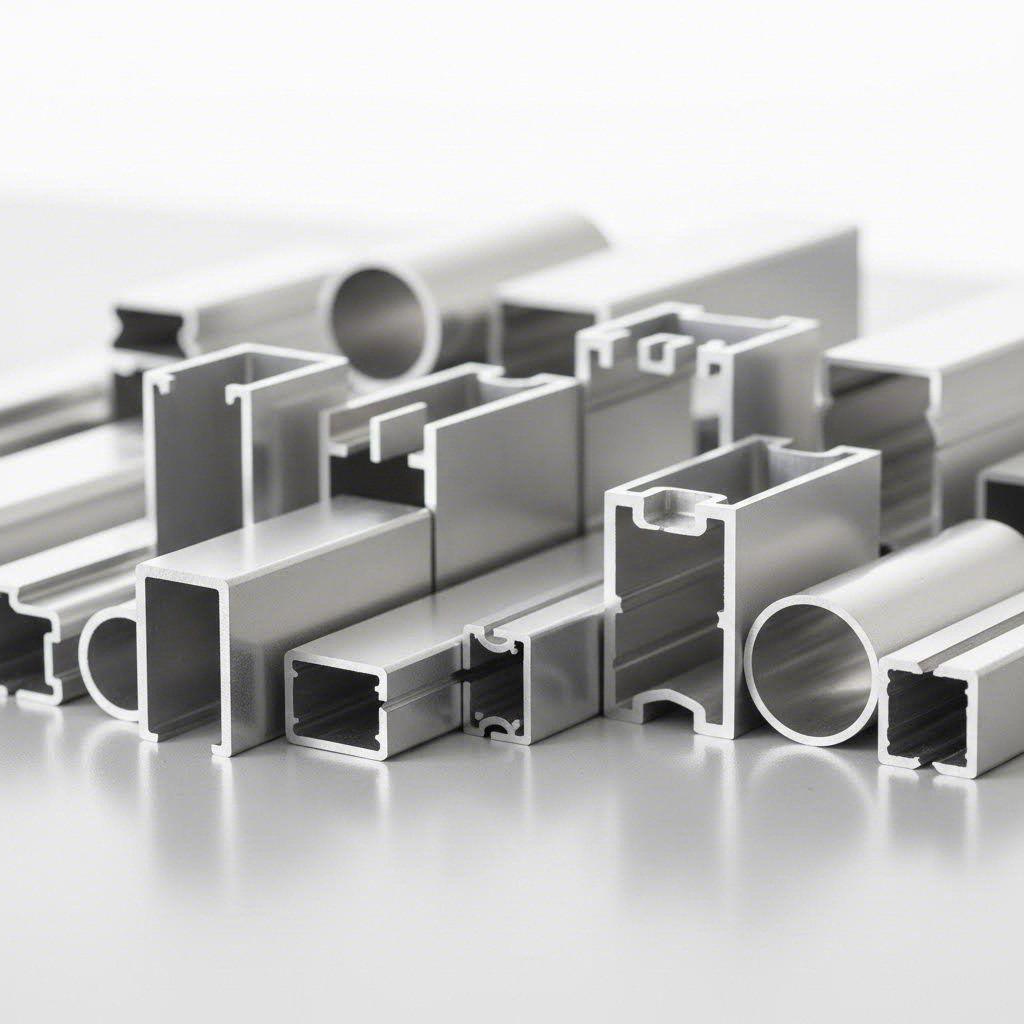
Now that you understand how aluminum profile extrusions are created, the next question becomes: which aluminum alloy should you choose? Not all aluminum is created equal, and selecting the right alloy can mean the difference between a showcase that performs flawlessly for decades and one that falls short of expectations.
For display case applications, two alloys dominate the conversation: 6063 and 6061. Both belong to the 6000 series aluminum family, meaning they contain magnesium and silicon as primary alloying elements. However, their subtle compositional differences create distinct performance characteristics that matter for your specific project.
Imagine you're specifying aluminum frame extrusions for a high-end jewelry showcase. Should you prioritize strength or surface finish? The answer determines which alloy you need.
6063 aluminum—often called "architectural aluminum"—has earned its reputation as the industry standard for showcase applications. According to Industrial Metal Supply, this alloy offers superior surface quality and excellent corrosion resistance, making it ideal for visible applications where appearance matters. Its higher thermal conductivity and melting temperature also contribute to better performance during the extrusion process, allowing for more intricate profile designs.
6061 aluminum—known as "structural aluminum"—steps in when strength becomes the priority. This alloy delivers a higher yield strength and fatigue strength compared to 6063, making it suitable for extruded aluminum sections that must support heavier loads or withstand repeated stress. However, this strength comes with trade-offs: 6061 is slightly less corrosion resistant and produces a less refined surface finish.
For most showcase applications, 6063 wins the selection battle. Why? Display cases prioritize aesthetics, precise tolerances, and long-term appearance retention over maximum structural capacity. When you need aluminum extrusion bar stock or custom profiles for visible frames, 6063 delivers the clean lines and smooth surfaces your clients expect.
Before finalizing your alloy selection, consider how each property affects real-world showcase performance:
| Property | 6063 Aluminum | 6061 Aluminum | Impact on Showcases |
|---|---|---|---|
| Surface Finish | Excellent | Good | 6063 produces smoother profiles ideal for visible frame extrusions |
| Corrosion Resistance | Superior | Good | 6063 weathers better in retail and outdoor applications |
| Yield Strength (T6) | ~31,000 psi | ~40,000 psi | 6061 handles heavier glass panels and structural loads |
| Formability | Excellent | Good | 6063 allows more complex profile shapes in extruded aluminum shapes catalogs |
| Anodizing Quality | Excellent | Good | 6063 accepts anodized finishes more uniformly |
| Weldability | Good | Excellent | 6061 preferred when welded connections are required |
| Typical Applications | Window frames, door frames, display cases, furniture | Structural components, machinery, heavy-duty frames | Match alloy to primary function |
You'll notice alloy specifications often include a temper designation like "6063-T5" or "6061-T6." What do these codes mean for your showcase project?
Temper designations indicate how the aluminum was heat-treated after extrusion, directly affecting its final strength and hardness. According to Engineering Express, the process involves dissolving alloying elements into a solid solution at approximately 980°F, then controlling the cooling and aging process to achieve specific mechanical properties.
The practical difference? T6 temper delivers roughly 10-15% higher yield strength than T5. For lightweight retail displays, T5 provides adequate performance at better value. For museum cases holding heavy artifacts or floor-standing showcases with large glass panels, T6 temper offers the extra structural margin you need.
With your alloy and temper selected, the next consideration becomes equally important: how will your chosen profiles accommodate the glass panels that define modern showcase design?
Your aluminum alloy is selected and your temper designation is locked in—but here's where showcase design gets really interesting. How do those precision-extruded profiles actually hold glass panels securely while maintaining the clean, unobstructed views your display demands?
The answer lies in specialized profile geometries engineered specifically for glazing applications. Whether you're creating a glass showcase for retail jewelry or a museum exhibit case requiring maximum visibility, understanding glass integration techniques separates amateur assemblies from professional-grade display systems.
Imagine sliding a glass panel into a channel that grips it firmly without adhesives, screws, or visible hardware. That's exactly what properly designed aluminum glazing extrusions accomplish through integrated channel profiles and gasket systems.
According to Warren Group Windows, rubber or synthetic gaskets act as the primary barrier between glass and aluminum frames. These gaskets seat firmly in pre-machined grooves within the extrusion profile, creating a cushioned interface that absorbs stress, prevents rattling, and provides weather sealing.
The beauty of this approach? Glass panels can be installed or replaced without specialized tools or permanent modifications. For retail environments where display configurations change seasonally, this flexibility proves invaluable.
Modern aluminum window frame extrusions designed for showcase applications typically feature:
Here's where precision matters most. A profile designed for 1/4-inch glass won't properly secure 3/8-inch tempered panels—and forcing the wrong combination creates safety risks and aesthetic problems.
Standard showcase glass thicknesses range from 3/16 inch for lightweight displays to 1/2 inch for heavy-duty security applications. Your extrusion profile's channel depth and gasket compression range must accommodate your specific glass thickness while maintaining proper tension.
When specifying profiles for a glass show case, consider these critical factors:
Not all glass installations use the same technique. Your choice of glazing method affects installation complexity, long-term maintenance, and visual appearance.
Dry glazing relies exclusively on rubber gaskets and mechanical pressure to secure glass panels. This method allows easy glass replacement and works well for standard showcase applications. The gaskets compress against the glass when glazing beads are installed, creating a secure hold without adhesives.
Wet glazing incorporates sealants or specialized adhesives applied directly onto the glass gasket interface. According to professional glazing techniques, this approach prevents glass rattle and provides an extra layer of insulation against drafts and moisture ingress. Wet glazing creates a more permanent installation but offers superior weatherproofing for outdoor or high-humidity environments.
Structural glazing delivers the frameless aesthetic increasingly popular in contemporary retail design. This technique uses high-strength silicone adhesives to bond glass directly to the aluminum structure, eliminating visible frame elements from the exterior. While structural glazing maximizes visual impact, it requires precise engineering and professional installation.
For applications requiring plexiglass aluminum frame construction instead of glass, acrylic offers distinct advantages. According to conservation specialists, acrylic sheet is up to 17 times more break resistant than glass while weighing half as much—making it ideal for portable displays, traveling exhibits, or child-safe environments.
With your glass integration strategy defined, the natural question becomes: how does aluminum compare to other framing materials you might consider?
So you've explored how aluminum showcase extrusions work and how glass integrates with these profiles—but here's the question many buyers ask: why aluminum specifically? What about steel, wood, plastic, or acrylic alternatives?
The honest answer is that no single material wins every category. Each option brings distinct strengths and limitations to display case construction. Understanding these trade-offs helps you make an informed decision based on your specific requirements—whether that's a high-end jewelry showcase, a museum exhibit case, or a modular retail display system.
Imagine moving a floor-standing display case during a store renovation. With steel framing, you might need multiple staff members and risk scratching floors. With aluminum display cases, the same unit could weigh 60% less while maintaining comparable structural integrity.
This weight advantage stems from aluminum's exceptional strength-to-weight ratio. According to material performance data from Rhea Windows, aluminum frames allow for larger glass areas with minimal frame visibility while maintaining structural performance—a critical consideration for showcase applications where product visibility drives sales.
Steel certainly offers superior raw strength, making it ideal for security-focused applications or extremely heavy loads. However, that strength comes with significant weight penalties that affect shipping costs, installation complexity, and floor load requirements.
Wood provides adequate structural support for smaller displays but introduces consistency challenges. Natural wood varies in density and grain pattern, creating potential weak points that engineered materials avoid. For aluminum extrusion furniture and display applications requiring precise tolerances, this variability becomes problematic.
Plastic and acrylic frames occupy the lightweight end of the spectrum but sacrifice structural rigidity. These materials work well for temporary displays or light-duty applications but struggle to support heavy glass panels or withstand the daily stress of commercial retail environments.
Initial purchase price tells only part of the story. What happens over five, ten, or twenty years of use?
Steel frames require ongoing maintenance to prevent rust, particularly in humid retail environments or coastal locations. According to Fairwill Display, aluminum's natural corrosion resistance eliminates these concerns—anodized aluminum maintains its appearance for decades without repainting or rust treatment.
Wood demands the most intensive maintenance schedule. Regular refinishing, moisture protection, and inspection for warping or pest damage add ongoing costs that compound over time. The same source notes that store owners using wood-based fixtures often face issues like sagging, splitting, or swelling that aluminum simply doesn't experience.
Plastic materials degrade under UV exposure, becoming brittle and discolored over time. For long-term installations, this degradation creates replacement cycles that increase total ownership costs despite lower initial prices.
An aluminum extrusion cabinet or display system, by contrast, typically outlasts the store itself. Many retailers report using the same aluminum-framed displays for a decade or more with nothing more than occasional cleaning.
The following table provides a side-by-side analysis of key performance factors across common display materials:
| Criteria | Aluminum Extrusions | Steel | Wood | Plastic/Acrylic |
|---|---|---|---|---|
| Weight-to-Strength Ratio | Excellent—one-third the weight of steel with comparable strength | Good strength but heavy | Moderate—varies by species | Lightweight but limited strength |
| Corrosion Resistance | Excellent—natural oxide layer prevents rust | Poor—requires protective coatings | Moderate—susceptible to moisture damage | Excellent—no corrosion concerns |
| Customization Options | Extensive—extrusion allows complex profiles | Limited—welding and cutting required | Good—traditional woodworking techniques | Moderate—molding constraints apply |
| Recyclability | 100%—infinitely recyclable without quality loss | High—widely recycled | Limited—often downcycled | Low—difficult to recycle effectively |
| Initial Cost | Moderate | Low to Moderate | Moderate to High | Low |
| Lifetime Cost | Low—minimal maintenance required | Moderate—rust prevention adds costs | High—regular refinishing needed | Moderate—replacement cycles expected |
| Aesthetic Versatility | High—accepts anodizing, powder coating, wood-grain finishes | Moderate—paint or powder coat options | High—natural beauty, staining options | Moderate—color options but limited finishes |
| Best Applications | Retail displays, museum cases, modular systems | High-security cases, industrial applications | Boutique displays, traditional aesthetics | Temporary displays, budget applications |
Let's examine each material's honest pros and cons for display applications:
Pros:
Cons:
Pros:
Cons:
Pros:
Cons:
Pros:
Cons:
So which material should you choose for your aluminum extrusion display case project? Consider these decision factors:
Choose aluminum when you need professional-grade displays that balance aesthetics, durability, and long-term value. The modular nature of extruded profiles makes aluminum ideal for retail environments where configurations change over time.
Choose steel when security requirements outweigh weight considerations, or when displays must support exceptionally heavy items without any structural compromise.
Choose wood when traditional aesthetics drive the design—perhaps for antique shops, wine displays, or boutique environments where natural warmth enhances the merchandise presentation.
Choose plastic or acrylic for temporary installations, trade show displays that ship frequently, or budget-limited projects where longevity isn't the primary concern.
For most commercial display applications, aluminum extrusions deliver the optimal balance of performance, appearance, and lifetime value. But understanding what you're comparing against helps you appreciate why these profiles have become the industry standard.
With your material selection finalized, the next consideration becomes equally important: what surface finish will best showcase your products while protecting the aluminum for years to come?
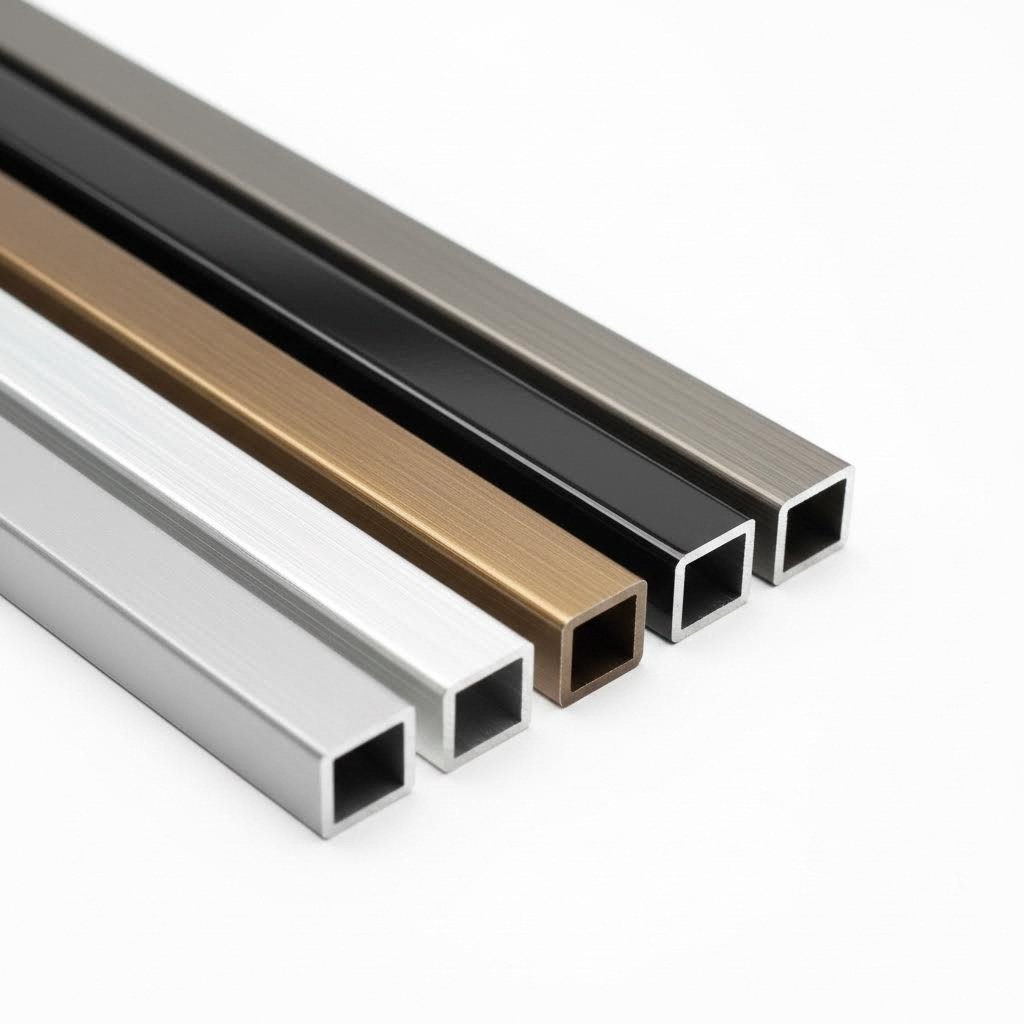
You've selected your aluminum alloy, chosen the right temper, and planned your glass integration strategy. Now comes the decision that most affects how your showcase actually looks: which surface finish will protect your profiles while delivering the aesthetic your brand demands?
Surface finishing transforms raw aluminum extrusion trim from industrial components into polished display elements. But here's what competitors rarely explain—each finishing method offers distinct performance characteristics that matter beyond appearance. Understanding these differences helps you specify finishes that look great on day one and still impress years later.
Anodizing isn't just a coating—it's an electrochemical transformation that changes the aluminum's surface into a durable oxide layer. According to Accurate Metal, this oxide layer acts as an insulator that can be dyed in a wide variety of colors while providing excellent corrosion protection.
The military specification MIL-A-8625F categorizes anodizing into types and classes that determine performance characteristics:
What makes anodized finishes particularly valuable for white aluminum profile applications? As noted by BRT Extrusions, anodizing significantly enhances natural corrosion resistance while offering fade-resistant color durability. The anodic oxide layer becomes an integral part of the aluminum surface rather than sitting on top—meaning it won't chip, peel, or flake like applied coatings can.
However, anodizing does have limitations. Color options, while varied, don't match powder coating's extensive palette. And critically, you cannot hardcoat over existing hardcoat or build additional thickness onto previously anodized surfaces—proper specification upfront is essential.
Powder coating takes a different approach entirely. Rather than modifying the aluminum surface, this dry finishing process electrostatically applies powder particles that are then heat-cured into a durable protective layer.
According to Master Craft Finishers, advances in powder formulation have led to AAMA 2605-certified finishes now offering warranties of 20 to 30 years—placing powder coatings on par with traditional PVDF paints in durability.
Why consider powder coating for your aluminum shapes catalog selection?
Powder coating does present some trade-offs. Color matching often requires larger order quantities than liquid paints. Surface preparation must be meticulous—any fingerprints or debris create adhesion problems. And touch-up of damaged areas proves more challenging than with traditional paints.
For architectural applications and aluminum panel extrusions requiring premium performance, PVDF (polyvinylidene fluoride) coatings—commonly known by the trade name Kynar—represent the gold standard. Used since 1965, PVDF offers decades of proven color and UV stability that makes it preferred for exterior applications.
According to industry analysis, PVDF paints maintain their color and finish under prolonged sunlight exposure while providing consistent, predictable results. Many major manufacturers offer 20-year warranties backed by historical performance data. However, PVDF requires licensed applicators, higher curing temperatures, and carries premium pricing.
Beyond these primary finishing methods, specialty finishes expand your design possibilities:
Which finish should you specify? Match your selection to the installation environment and functional requirements:
Indoor Retail Applications:
Outdoor or High-Humidity Environments:
High-Traffic Areas:
Brand Aesthetic Matching:
The finish you choose affects not just appearance but long-term performance and maintenance requirements. Consider how your showcase will be used, where it will be installed, and how it supports your overall brand presentation before finalizing specifications.
With your surface finish determined, the next question becomes: how will you integrate lighting to bring your display to life?
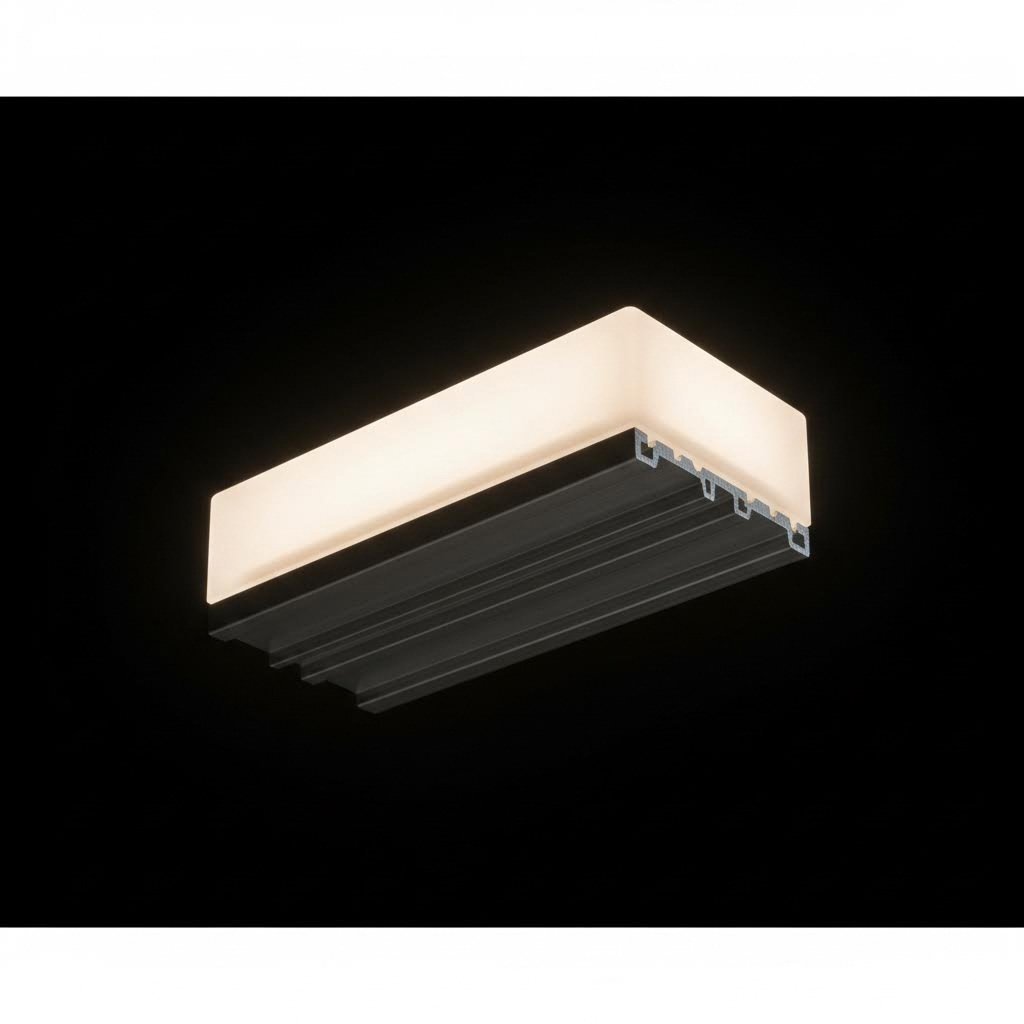
Your aluminum profiles are finished, your glass integration is planned—but here's what truly transforms a showcase from functional to captivating: lighting. How do those sleek extrusion profiles actually accommodate LED strips, manage cables, and dissipate heat without compromising the clean aesthetic you've worked to achieve?
The answer lies in purposeful profile design. Modern aluminum showcase extrusions aren't just structural frames—they're engineered systems that integrate lighting, power routing, and thermal management into unified solutions. Understanding these integration techniques helps you specify displays that illuminate products beautifully while hiding the technical infrastructure behind the scenes.
Imagine running LED strip lighting along the interior of your display case. Without proper channels, you'd see exposed strips, visible wires, and uneven light distribution. With purpose-designed extrusion profiles, those same LEDs disappear into the frame while delivering smooth, professional illumination.
According to 80/20 Inc., LED lights fit directly within T-slot aluminum channels, drawing attention to key parts of displays while remaining virtually invisible to viewers. This integration works because the T-slot geometry—originally designed for modular assembly—happens to create perfect recesses for LED strip housing.
The typical extruded aluminum housing for LED integration includes several key elements:
The diffuser component deserves special attention. Without diffusion, LED strips create visible "hot spots"—bright points of light that distract from displayed merchandise. Quality aluminium extrusion box profiles include provisions for frosted or opal diffuser lenses that spread light evenly across the entire channel length.
Where you position lighting matters as much as how you integrate it. Strategic placement transforms ordinary displays into attention-grabbing showcases that guide viewer focus exactly where you want it.
Consider these placement strategies based on display type:
The goal is directing attention without revealing the light source itself. When viewers notice beautiful products rather than visible LEDs or wiring, your lighting integration has succeeded.
Sounds complex? Here's the practical reality: every LED installation requires power delivery, and those cables need to go somewhere. Poorly planned cable management creates tangled messes that undermine otherwise professional displays.
Modern modular display systems address this challenge through integrated wire management accessories. As noted by 80/20's display solutions documentation, T-slot channels accommodate tubes and cords directly within the profile cavity, with snap-on covers hiding everything from view.
Effective cable management within aluminum showcase systems involves:
For cable-suspended display configurations—popular in retail and museum applications—additional considerations apply. Tension cables must support both the display weight and any lighting components while maintaining precise positioning. Many suspended systems route power directly through the support cables themselves, eliminating visible wiring entirely.
LEDs generate heat—and that heat affects both light output and component longevity. Without adequate thermal management, LED strips can dim prematurely or fail years before their rated lifespan.
Aluminum's excellent thermal conductivity makes it ideal for LED applications. When LED strips mount directly to aluminum extrusion panels or channels, the metal acts as a heat sink, drawing thermal energy away from light-emitting components and dispersing it across the frame structure.
Critical thermal management considerations include:
Your lighting integration can range from basic to highly advanced depending on project requirements and budget:
The right choice depends on your application. A simple retail shelf display might need only basic warm-white LED channels. A museum exhibit showcasing light-sensitive artifacts might require precisely tunable systems with UV filtration. A trade show booth might benefit from programmable color-changing effects that attract attention across a crowded exhibition hall.
Proper lighting transforms showcase effectiveness from adequate to exceptional. When products glow under perfectly positioned illumination—with no visible wires, exposed strips, or distracting hot spots—customers focus entirely on what matters: the merchandise you're presenting.
With your lighting integration planned, the next step involves bringing all these components together through proper assembly and installation techniques.
You've selected your alloy, planned your glass integration, chosen the perfect finish, and mapped out your LED lighting strategy. Now comes the moment of truth: how do you actually assemble all these components into a professional-grade display system?
Here's what most suppliers won't tell you—the quality of your aluminum extrusion assembly determines whether your showcase looks showroom-ready or cobbled together. Understanding modular connection systems, proper hardware selection, and correct assembly sequence transforms a pile of parts into a polished display that impresses clients for years.
Think of modular aluminum framing like adult building blocks. The magic lies not in the profiles themselves, but in how they connect. According to Anglelock, it's the ability to add nuts, T-bolts, and other accessories that makes these systems so versatile—enabling swift and straightforward building, breakdown, and modification.
Your extrusion frame connects through several hardware categories, each serving specific purposes:
T-Nuts and Drop-In Nuts:
Connection Bolts and Screws:
Understanding the difference between bolts and screws matters for your aluminum extrusion kit:
| Fastener Type | Design | Strength | Best Application |
|---|---|---|---|
| Bolts | Requires a nut; inserted through holes | Handles higher stress loads | Structural joints where strong, secure connections are essential |
| Screws | No nuts necessary; threads directly into material | Less structural capacity | Light applications requiring quick, easy assembly |
Brackets and Joining Plates:
Joining plates reinforce aluminum extrusion joints at various angles without machining. According to modular framing specialists, they're commonly found on machine bases and industrial structures where vibration creates durability risks. Common types include:
When selecting brackets, consider profile size compatibility, load requirements, and whether aesthetic visibility matters for your application.
Before picking up a single tool, gather everything you'll need. Rushing to find missing hardware mid-assembly creates frustration and mistakes.
Required Tools:
Optional Tools for Complex Installations:
Now, follow this proven assembly sequence for professional results:
Many retail showcase systems incorporate slatwall panels for merchandising flexibility. These grooved panels accept hooks, shelves, and display accessories that can be repositioned instantly without tools.
According to AAA Displays, slatwall installation requires attention to wall stud locations and proper fastening. When integrating slatwall with aluminum framing systems:
The combination of rigid aluminum showcase frames with flexible slatwall merchandising creates display systems that adapt as product lines and seasons change. An extruded aluminum slide mechanism or aluminum track extrusion can connect movable elements within this hybrid system, allowing components to reposition along fixed rails.
Professional assembly requires understanding what precision means for your specific application.
Standard aluminum extrusions maintain dimensional tolerances of approximately ±0.012 inches per foot. For most display applications, this precision exceeds requirements. However, when joining multiple profiles to create large showcase structures, small variations can accumulate. Test-fit components before final assembly and adjust bracket positions to compensate for any cumulative deviation.
Weight capacity depends on several factors:
When specifying components for an extruded aluminium track system or slider mechanism, verify manufacturer load ratings match your requirements. Don't assume—check specifications before finalizing designs.
Nothing undermines a beautiful showcase faster than visible misalignment. Even slight deviations from level become obvious when viewing glass panels or long horizontal surfaces.
Professional leveling involves:
Take your time during leveling. This step determines whether your finished showcase looks professionally installed or hastily assembled. The few extra minutes invested here pay dividends every time someone views your display.
With your modular showcase properly assembled and leveled, you're ready to explore the diverse applications where these versatile aluminum systems excel.
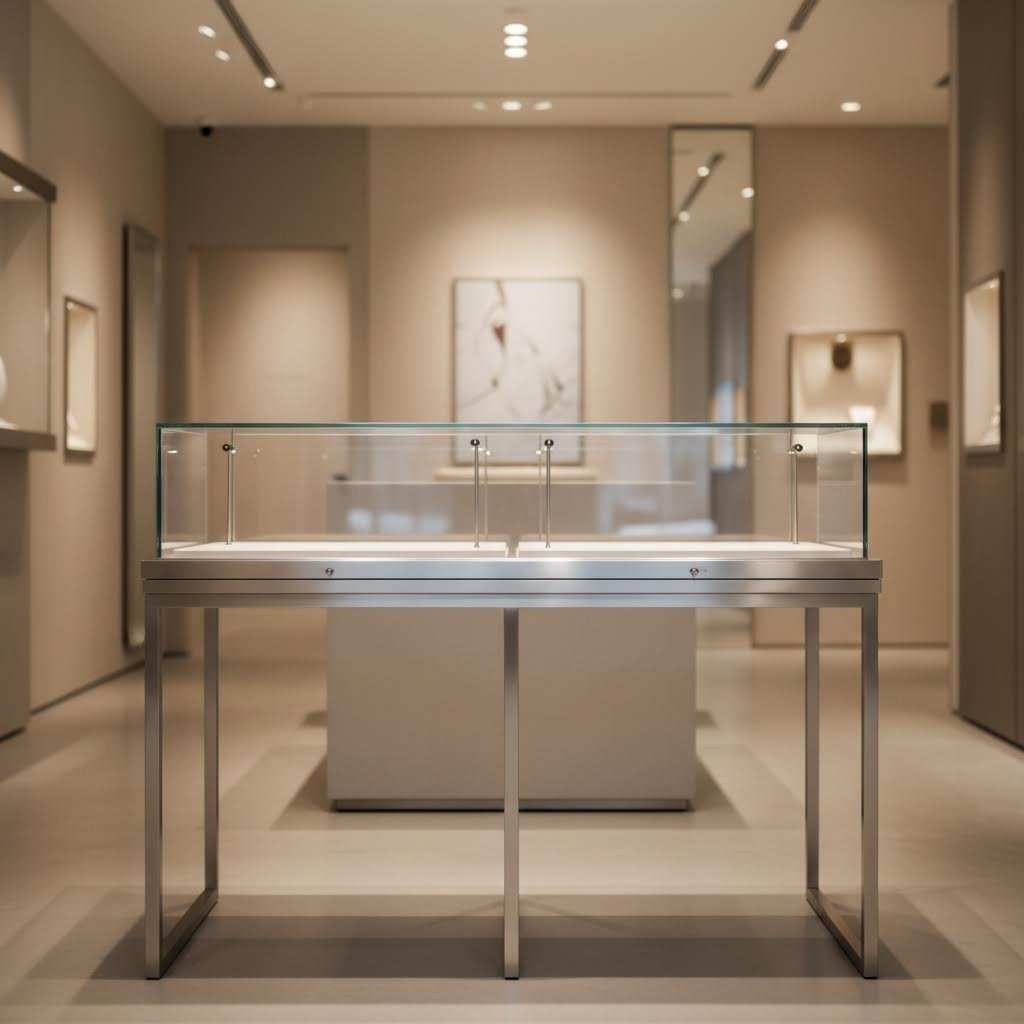
Your modular aluminum showcase system is assembled, leveled, and ready for action. But here's where things get exciting—where exactly do these versatile profiles find their home? The answer spans virtually every industry that values product presentation, from high-security jewelry vaults to temporary trade show installations that ship across the country.
Understanding how different sectors apply aluminum showcase extrusions helps you envision possibilities for your own projects. Whether you're designing a single retail display or planning an entire museum gallery, these real-world applications demonstrate the remarkable adaptability of extruded aluminum framing systems.
Walk through any modern shopping center, and you'll encounter aluminum-framed displays at nearly every turn. Retailers choose these systems for reasons that directly impact their bottom line: flexibility, durability, and the ability to showcase merchandise without distracting from it.
Jewelry and Watch Retail:
High-value merchandise demands display cases that balance security with visibility. According to display industry specialists, jewelry showcases typically feature aluminum profiles with integrated lighting channels, lockable access panels, and provisions for security systems. The slim profile faces maximize viewing area while accommodating tempered glass thick enough to deter smash-and-grab attempts.
Electronics and Technology Stores:
Tech retailers face unique challenges—products need hands-on interaction while remaining secured against theft. Modular aluminum systems accommodate this balance through:
Fashion and Apparel:
Clothing retailers increasingly use aluminum-framed window extrusion systems to create dramatic storefront presentations. These configurations showcase seasonal collections while supporting mannequins, lighting rigs, and decorative elements that change frequently.
The modularity proves especially valuable here—when spring inventory arrives, displays reconfigure in hours rather than requiring complete reconstruction. Aluminum window extrusion profiles frame glass storefronts while integrating seamlessly with interior merchandising systems.
Food Service and Hospitality:
Bakeries, delis, and restaurant display counters rely on aluminum framing for hygiene-friendly presentations. The corrosion-resistant properties matter in humid environments, while easy-clean surfaces meet health code requirements. Countertop showcases with aluminum profiles protect baked goods and prepared foods while inviting customer selection.
Beyond everyday retail, aluminum showcase extrusions serve demanding specialized applications where standard solutions fall short.
Museum and Gallery Installations:
Museums present unique challenges—artifacts require climate control, UV protection, and security while remaining visible to visitors. According to IDF Design's museum display catalog, specialized museum showcases incorporate metal structures with integrated spotlights, adjustable glass shelving, and provisions for humidity control systems.
Aluminum window extrusion profiles designed for museum applications typically include:
The aluminum's stability over time matters critically here—wooden cases expand and contract with humidity changes, potentially damaging mounted artifacts. Aluminum maintains dimensional stability decade after decade.
Trade Show and Exhibition Displays:
Trade shows demand displays that assemble quickly, survive repeated shipping, and still look impressive after dozens of setups. According to 80/20 Inc., T-slot aluminum profiles create tradeshow exhibits that are customizable, durable, reconfigurable, and aesthetic—exactly what exhibitors need.
What makes aluminum ideal for trade show applications?
As 80/20 notes, 81% of tradeshow attendees remember visiting a company's exhibit—making that first impression critical. Aluminum-framed displays signal that your company is exciting and innovative.
Corporate and Office Environments:
Beyond retail and exhibitions, aluminum profiles create professional display solutions for corporate settings:
The true power of aluminum showcase extrusions lies in customization. Unlike off-the-shelf display solutions, extruded aluminum systems adapt to virtually any requirement through profile selection, finishing options, and accessory integration.
Window and Storefront Systems:
Commercial storefronts increasingly rely on aluminium window extrusions that integrate display capabilities with architectural requirements. These systems combine structural glazing support with provisions for interior merchandising—creating seamless transitions from exterior architecture to interior retail environment.
Cabinet and Millwork Integration:
Aluminum profiles integrate with traditional cabinetry to create hybrid solutions. Wood-grain finished aluminum door frame extrusions mount glass panels within otherwise conventional cabinet systems, adding display functionality without sacrificing the warmth of wood aesthetics.
Architectural Elements:
Beyond standalone showcases, aluminum extrusions create architectural display elements:
Industry-Specific Configurations:
Different sectors require specialized configurations that standard display cases cannot accommodate:
| Industry | Typical Configuration | Special Requirements |
|---|---|---|
| Jewelry | Counter cases, tower displays, wall-mounted cabinets | High-security locks, integrated lighting, rotating platforms |
| Museums | Pedestal cases, wall vitrines, table-top displays | Climate control, UV protection, artifact mounting systems |
| Electronics | Interactive demo tables, locked accessory cases | Cable management, power integration, anti-theft provisions |
| Trade Shows | Modular booth systems, banner stands, product displays | Quick assembly, shipping durability, reconfigurability |
| Food Service | Counter displays, refrigerated cases, bakery showcases | Easy cleaning, humidity resistance, food-safe materials |
| Optical | Wall-mounted eyewear displays, rotating stands | Mirror integration, adjustable shelving, security features |
Each application demands specific profile geometries, connection systems, and finishing options. The flexibility of aluminum extrusion manufacturing—where custom dies create precisely the cross-section needed—enables solutions that prefabricated displays simply cannot match.
Whether you're outfitting a boutique jewelry store, designing a traveling museum exhibition, or building a modular trade show presence, aluminum showcase systems provide the foundation for professional display solutions that perform year after year.
With these applications in mind, the final consideration becomes practical: how do you source quality aluminum extrusions and select suppliers capable of delivering the precision your project demands?
You've mapped out your showcase design, specified alloys and finishes, and planned every detail from glass integration to LED lighting. Now comes a question that determines whether your vision becomes reality: where do you actually source aluminum extrusions for sale that meet your quality standards and project timeline?
Selecting the right extrusion supplier impacts far more than price. Manufacturing capabilities, quality systems, lead times, and technical support all influence whether your project succeeds or stalls. Whether you're sourcing standard profiles from established distributors like CRL US Aluminum or CR Laurence Aluminum, or developing custom extrusions for unique applications, understanding how to evaluate suppliers saves time, money, and frustration.
Imagine ordering aluminum extrusion track profiles for a major retail rollout—only to discover your supplier can't maintain dimensional consistency across production runs. Or finding that their limited press capacity creates six-month lead times that derail your project schedule. These scenarios happen when buyers focus solely on price without evaluating manufacturing capabilities.
According to industry analysis from Aluphant, a supplier's extrusion press range defines what profiles they can produce:
A supplier with multiple press capacities can handle diverse project requirements and maintain flexibility as your needs evolve. For example, Shengxin Aluminium operates 35 extrusion presses ranging from 600T to 5500T—covering everything from delicate showcase profiles to robust architectural sections under one roof.
Beyond press capacity, evaluate these critical capability areas:
Quality Control Systems:
A supplier's QC infrastructure reflects their ability to deliver consistent results. Look for:
Machining and Post-Processing Integration:
Suppliers offering integrated CNC machining and surface finishing deliver finished components directly to your assembly line. This integration reduces transportation between subcontractors, prevents handling damage, and shortens overall lead time. Shengxin's facility, for instance, includes state-of-the-art CNC machining centers capable of precise cutting, drilling, and bending to exact specifications—eliminating the need for separate fabrication vendors.
Surface Treatment Options:
Your finishing requirements should match supplier capabilities. Comprehensive manufacturers offer multiple treatment options including anodizing in custom colors, powder coating, PVDF coatings for architectural applications, and specialty processes like micro-arc oxidation for superior durability. Having these capabilities in-house ensures batch consistency in both dimension and color—critical for multi-unit retail installations.
Standard profiles work for many applications, but showcase designs often demand custom cross-sections. Understanding the die development process helps you plan timelines and budgets realistically.
According to KMC Aluminium's analysis, die manufacturing typically requires 10–20 days depending on complexity. The die itself—a precision-machined steel disk with your profile shape cut through it—represents a significant upfront investment that amortizes across production volume.
Die types affect both cost and capability:
Here's what many buyers don't realize: suppliers with in-house die workshops can modify or repair dies quickly when problems arise. Outsourced die manufacturing creates longer lead times and slower problem resolution. When a die produces inaccurate dimensions, delays ripple across your entire project. Choose suppliers who control this critical capability internally.
Minimum order quantities (MOQs) often surprise first-time buyers. These requirements exist for legitimate economic and technical reasons, not simply to extract larger orders.
As KMC Aluminium explains, several factors drive MOQ requirements:
Lead time expectations for custom aluminum extrusion track or showcase profiles typically break down as follows:
| Production Phase | Typical Duration | Variables |
|---|---|---|
| Die Manufacturing | 10–20 days | Profile complexity, die type, supplier backlog |
| Extrusion Production | 7–15 days | Order volume, press scheduling, quality verification |
| Surface Finishing | 5–10 days | Finish type, color matching requirements, batch size |
| Total Project Time | 4–6 weeks | Standard projects; complex orders may extend timeline |
Suppliers using ERP-based production systems generally deliver more consistently because they can accurately forecast capacity and schedule orders efficiently. Ask potential suppliers how they manage production scheduling, especially during peak seasons when capacity tightens.
Before committing to any extrusion supplier, systematically evaluate these critical factors:
Here's what separates good suppliers from great ones: comprehensive support from initial concept through mass production.
When you work with a vertically integrated manufacturer, you gain several advantages that fragmented supply chains cannot match:
Shengxin Aluminium exemplifies this integrated approach, offering die development, extrusion across 35 press lines, CNC machining, and comprehensive surface treatments—all within their manufacturing facility. This end-to-end capability, backed by over 30 years of industry experience, means your showcase profiles move from concept to finished components under unified quality control.
Whether you're sourcing standard profiles from established distributors like FHC Aluminum or developing custom solutions, invest time in supplier evaluation before placing orders. The supplier you choose becomes your manufacturing partner—their capabilities, quality systems, and communication style directly impact your project success.
For projects requiring custom aluminum extrusions with precision finishing, explore Shengxin Aluminium's deep processing and custom extrusion services to understand how integrated manufacturing capabilities translate to better outcomes for showcase applications.
6063 aluminum is the preferred alloy for most showcase applications due to its superior surface finish, excellent corrosion resistance, and outstanding formability. Often called 'architectural aluminum,' 6063 accepts anodized finishes uniformly and allows complex profile designs. For applications requiring higher strength—such as heavy glass panel support—6061 aluminum offers approximately 30% greater yield strength, though with slightly reduced surface quality. Most display case manufacturers recommend 6063-T5 or 6063-T6 temper for standard retail and museum showcases.
Aluminum extrusions secure glass panels through specialized channel profiles and gasket systems. U-channel profiles accept glass edges with rubber or synthetic gaskets on both sides, creating a cushioned interface that absorbs stress and prevents rattling. Snap-in glazing beads lock panels in place and can be easily removed for glass replacement. The extrusion profile must match your glass thickness—standard showcases use 1/4-inch to 1/2-inch glass—with proper setting blocks supporting weight at the bottom channel and adequate clearance (typically 1/8 inch minimum) for thermal expansion.
Anodizing electrochemically transforms the aluminum surface into a durable oxide layer that becomes part of the metal itself, providing excellent corrosion protection with a metallic appearance. It won't chip or peel but offers limited color options. Powder coating applies dry powder particles that are heat-cured into a protective layer, offering virtually unlimited color choices and superior impact resistance. For indoor retail displays, either finish works well. For outdoor or high-traffic applications, AAMA 2605-certified powder coatings or Type III hardcoat anodizing provide maximum durability with 20-30 year warranties.
LED integration requires extrusion profiles with built-in mounting channels sized for standard LED strip widths (8mm, 10mm, or 12mm). These channels include parallel tracks for snap-in polycarbonate diffuser covers that transform point-source LEDs into smooth, even illumination. Internal wire routing cavities conceal power cables from view, while the aluminum profile itself acts as a heat sink, drawing thermal energy away from LED components to extend their lifespan. Strategic placement—top-down for even coverage, perimeter for accent effects, or under-shelf for dramatic uplighting—depends on your display objectives.
Evaluate suppliers based on press range (600T-5500T covers most showcase needs), quality certifications (ISO 9001), in-house die manufacturing capability, and integrated machining and finishing services. Comprehensive manufacturers like Shengxin Aluminium offer end-to-end support from die development through mass production, with surface treatment options including anodizing, powder coating, PVDF, and micro-arc oxidation. Check lead time reliability, technical support availability, and whether they provide DFM feedback. Vertically integrated suppliers eliminate markup layers between process steps and ensure consistent quality across production runs.



 บริการออนไลน์
 0086 136 3563 2360
 sales@sxalu.com
 +86 136 3563 2360
 ไทย
ไทย English
 français
 Deutsch
 русский
 español
 português
 العربية
 Việt
Việt Українська