Small hardware can decide whether a door feels smooth, drags, or wears out sooner than expected. That is why the basics matter before you compare product pages.
An aluminum hinge is a pivoting connector made primarily from aluminum that joins a moving panel to a fixed frame, letting doors, gates, lids, windows, and enclosures open and close in a controlled way.
In plain language, it is the part that allows movement where two solid pieces meet. Many aluminum hinges are used in door and window systems, but the same idea applies to equipment covers, access panels, storage lids, and lightweight gates. An industry overview notes their common use in residential and commercial door and window hardware because aluminum is lightweight and corrosion-resistant.
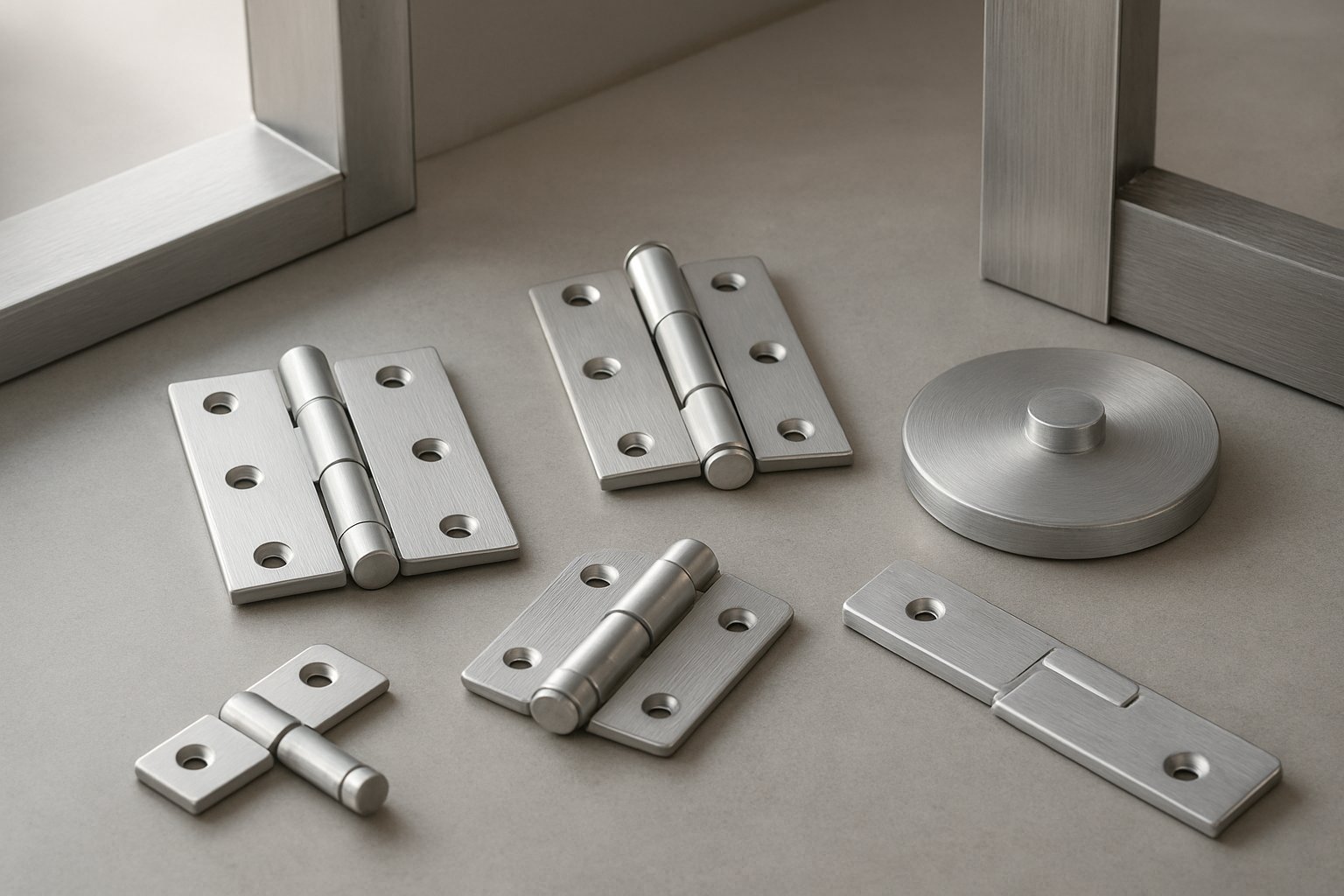
A typical hinge has two flat sides. One mounts to the moving panel, and the other mounts to the frame. Those sides meet at a central pivot, so the panel swings instead of scraping against the frame edge. That simple motion is what makes aluminum door hinges useful on everything from cabinet-like enclosures to entry doors. The exact shape may change by application, but the working principle stays familiar.
The basic anatomy is fairly consistent across many hinge styles, and Essentra's hinge guide is a solid reference for the standard terms buyers see in drawings and specs.
This article is an educational decision guide, not a catalog page. The goal is to help you read supplier filters and product sheets with more confidence. Once the anatomy makes sense, the real buying choices start to come into focus: whether aluminum is the right material, which hinge type fits the job, what dimensions to confirm, which finish makes sense, and how the hinge will be installed.
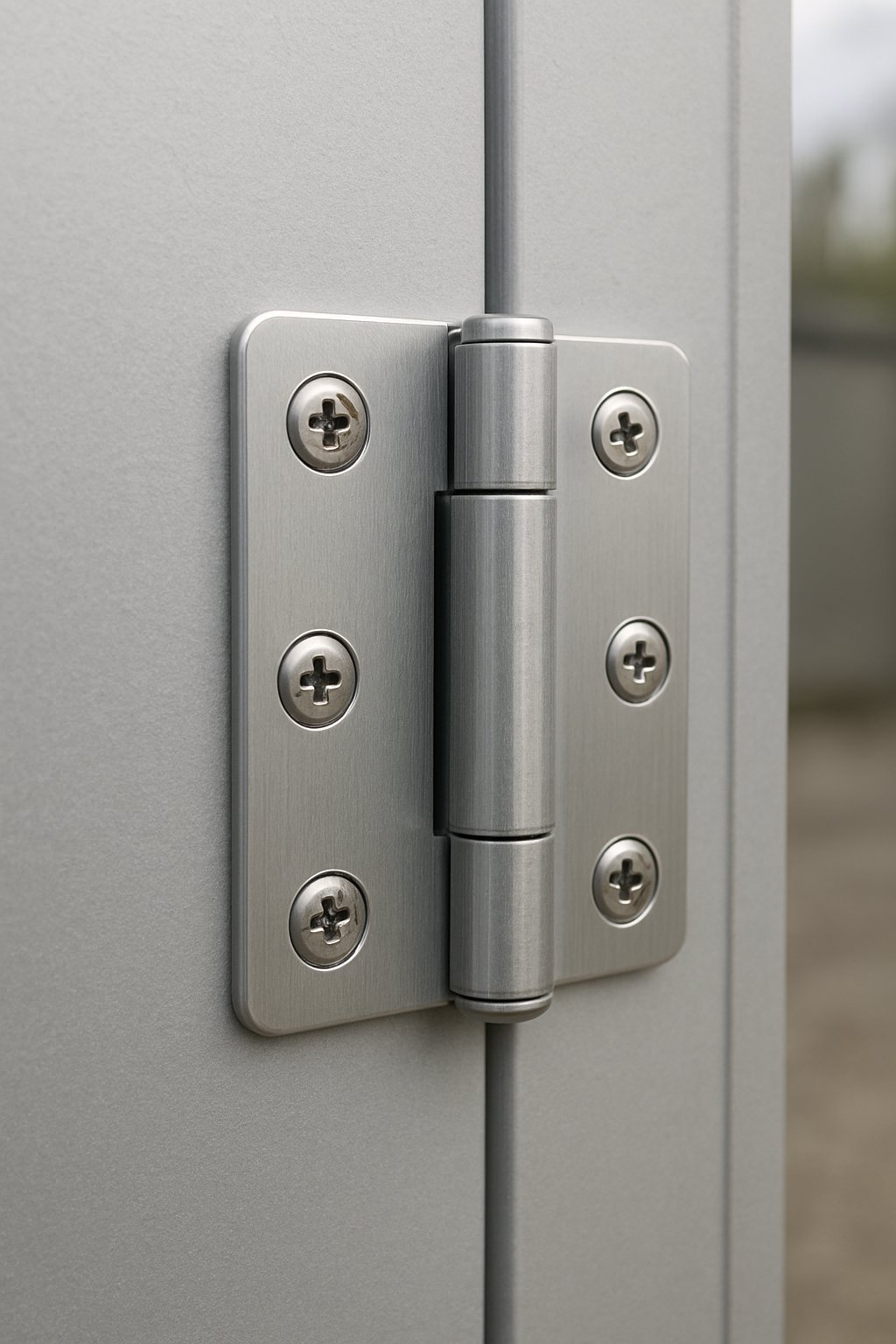
Material choice changes the buying decision more than many product listings suggest. Two hinges can look similar on a screen, yet behave very differently once installed on a door, lid, frame, or enclosure. For many buyers, aluminum stands out for one simple reason first: it reduces weight without giving up everyday usability.
An aluminum hinge is often a practical fit when corrosion exposure matters, appearance counts, and the moving panel should stay as light as possible. Guidance from Essentra and Weber Knapp highlights several consistent advantages.
Weight savings are valuable, but they are not the same as maximum toughness. That distinction is where many buying mistakes begin.
In practice, aluminum heavy duty hinges can be a strong match for some doors, frames, and enclosures, but not automatically for every security door or hard-used gate. The real question is whether your priority is lower weight, better corrosion resistance, easier fabrication, or maximum structural toughness.
| Material | Corrosion resistance | Weight | Strength tradeoffs | Maintenance demands | Common use environments |
|---|---|---|---|---|---|
| Aluminum | Good natural resistance | Light | Lower toughness than stainless steel and many steels | Usually low, but finish still matters | Outdoor doors, enclosures, lids, vehicles, some storm doors |
| Stainless steel | Excellent | Heavier | Better for high-load and high-wear use | Generally low | Marine, medical, exterior heavy-use hardware, security doors |
| Coated steel | Moderate to good, depends on coating | Heavier | Strong and cost-effective | Coating condition should be monitored | Indoor equipment, appliances, cabinetry |
| Brass or bronze | Good | Moderate | Often chosen for appearance over raw strength | May need polishing or finish upkeep | Decorative hardware, specialty furniture, some marine cabinetry |
The material may be right, yet the wrong hinge style can still turn into an expensive mistake. Continuous, butt, gate, and weld-on designs solve very different problems, even before dimensions enter the picture.
A good material choice can still fail in practice if the hinge category is wrong. This is where many buyers get tripped up. Product names sound similar, but each type solves a different mounting and movement problem.
When buyers search for an aluminum piano hinge or an aluminum continuous hinge, they are often looking at full-length designs. A McKinney guide describes the piano hinge as a hinge that runs the full length of the door. In plain language, "piano hinge" usually points to the familiar long strip with repeating knuckles and a pin, while "continuous hinge" is the broader full-length category that can also include geared door designs. The big buying advantage is load spread. Instead of asking two or three small hinge points to carry the panel, the support runs along the edge. That can help on access doors, equipment lids, utility compartments, and tall narrow frames where alignment matters.
Butt hinges are the standard two-leaf, center-pivot style most people recognize. The same McKinney source notes they are common in both residential and commercial applications, with mortise and surface variants available. They make sense when the door or panel uses a familiar frame setup and does not need full-length support.
Gates are a different story. The gate guide from HardwareSource shows how fast the category changes once width, weight, swing direction, and post material enter the decision. For aluminum gate hinges, surface-mounted strap or tee styles can suit lighter gates, while pintle and heavy-duty options are more common where wider swing range, removability, or heavier use matters.
Some hinges are chosen mainly by installation method. Weld-on hinges are fused to metal gates or posts rather than screwed in place, which makes them a fit for metal fabrication work and heavier gate setups. If you are reviewing aluminum weldable hinges, confirm first that the surrounding assembly is actually designed for welding and not for standard fasteners.
Specialty configurations cover cases where motion or clearance is unusual. That includes pivot hinges, spring hinges, concealed designs, and continuous geared options. These show up on security doors, access panels, or applications where appearance, self-closing action, or swing path matters as much as the material itself.
| Hinge type | How it mounts | How it distributes load | Common uses | What to double-check before ordering |
|---|---|---|---|---|
| Aluminum piano hinge or aluminum continuous hinge | Fastened along most or all of one edge | Spreads support across the panel length | Equipment lids, access doors, utility compartments, long panels | Full length, open width, hole pattern, cut-to-length needs, pin style |
| Butt hinge | Usually mortised or surface mounted at separate points | Concentrates support at two or more hinge locations | Standard doors, frames, cabinets, lighter panels | Leaf size, mortise requirement, handedness if applicable, frame clearance |
| Strap or tee gate hinge | Surface mounted with screws or bolts | Spreads force across a wider face area of the gate | Lighter gates, decorative gates, wood or composite gates | Gate width, post thickness, visible hardware look, outdoor finish |
| Pintle gate hinge | Pin on post with mating strap on gate | Transfers load through a vertical pivot point | Farm gates, removable gates, frequently used gates | Lift-off design, swing range, alignment, post compatibility |
| Weld-on hinge | Welded directly to metal gate and post | Handles load through a fixed welded connection | Metal gates, heavy-duty gate builds, fabrication projects | Metal type, welding method, finish repair after welding, installer capability |
| Specialty hinge | Varies by design | Depends on pivot path or mechanism | Concealed doors, self-closing gates, access-control doors | Movement limits, closing action, clearance, extra hardware integration |
Category comes before fine specs because it decides the basic way the panel is supported, mounted, and expected to move. Even within the right category, exact dimensions, hole patterns, leaf profiles, and pin details vary by manufacturer, so the drawing or reference sheet still needs a close read. That is where small specification terms start carrying much bigger consequences.
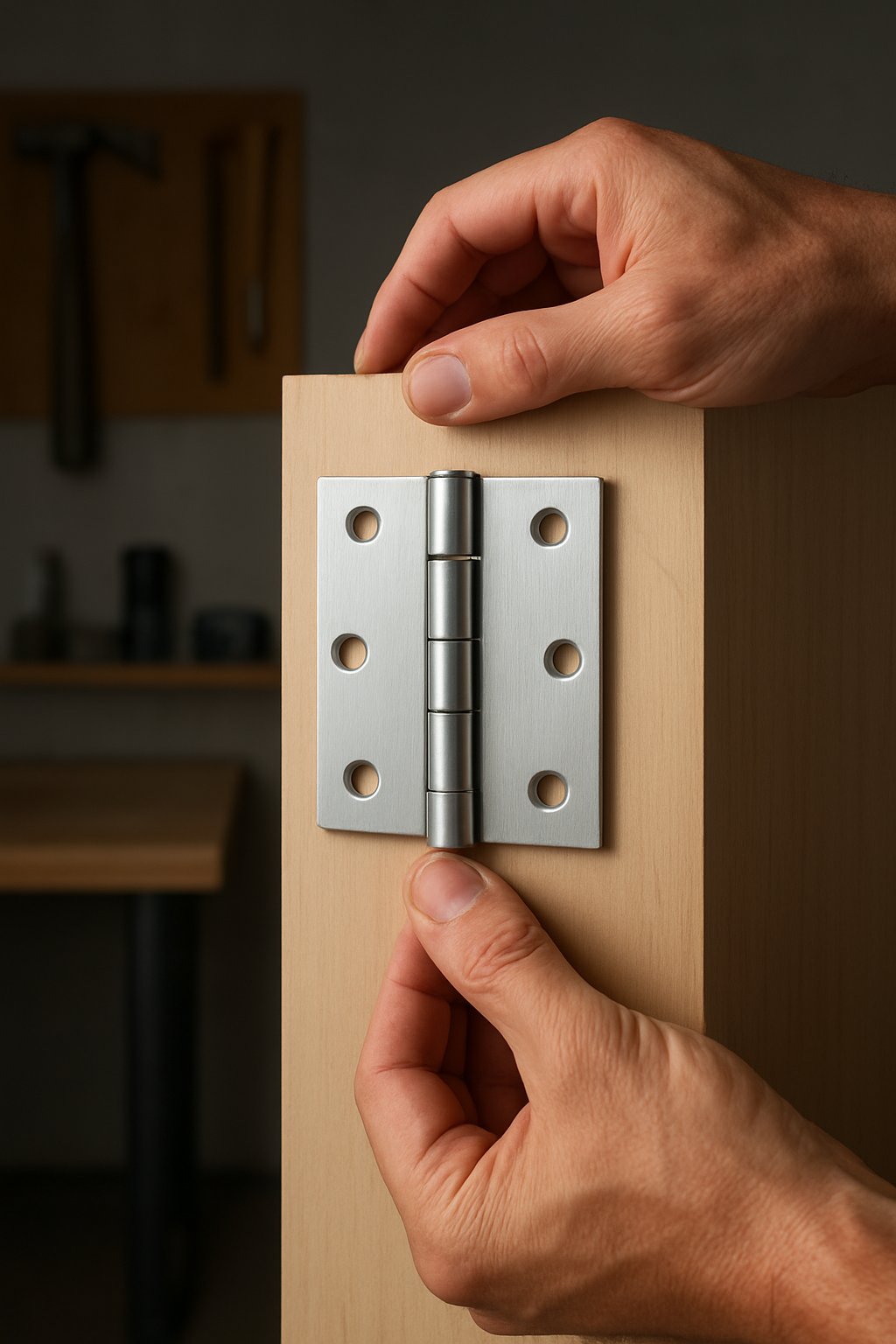
They do. A buyer can choose the right hinge category and still end up with the wrong part by misreading one line on the drawing. Specs like width, thickness, hole layout, and pin details look minor in a catalog, but they decide whether the hinge clears the frame, mounts cleanly, and moves without binding.
Two measurements create a lot of confusion. Guden defines open width as the distance across both leaves when the hinge is laid open, measured perpendicular to the pin. The same source explains that leaf width is measured from the center of the pin to the edge of one leaf, and unequal-leaf designs break the simple half-and-half rule. DK Hardware also notes that hinge height, or length, is the top-to-bottom dimension when the hinge is upright.
In real buying terms, leaf thickness is not just a number. On a light enclosure door, a thinner leaf may fit neatly without much build-up. On a more demanding panel, extra thickness may be worth the added space it takes. Pin material deserves the same attention. Guden's glossary notes that an extruded hinge is made by aluminum extrusion by milling, and its aluminum leaves are frequently paired with stainless steel pins. That combination is often chosen for a good strength-to-weight balance, though Guden also notes that this style costs more than ordinary hinges.
Finish is where many buyers oversimplify. If the hinge will stay visible on a door frame, cabinet face, or enclosure, finish affects appearance right away. If the hinge will live outdoors or in a washdown area, the finish should be checked against the supplier's corrosion and maintenance guidance rather than guessed from the color alone.
Hole layout is often the difference between a quick installation and field rework. A hinge can have the correct length and open width yet still fail the job because the mounting holes do not line up with the frame, the panel is too thin, or a custom pattern is required.
This is also where aluminum extrusion hinges and profile-based designs deserve a closer look. Because an extruded aluminum hinge is formed by extrusion and then milled, buyers often look at it not only for weight savings but also for a more defined profile. If you are sourcing aluminum extrusion hinges for modular frames, or searching for a 2020 aluminum profile hinge, confirm the profile shape, hole pattern, and pin details from the drawing instead of assuming compatibility from the name alone.
| Specification | Buyer question | Why it matters |
|---|---|---|
| Length | How much edge support does the panel need? | Changes load distribution and mounting coverage. |
| Open width | Will the panel clear the frame and open far enough? | Controls swing path and clearance. |
| Leaf thickness | Is the mounting area thin, recessed, or flush-fit? | Affects fit, mortise depth, and rigidity. |
| Hole configuration | Do the existing holes match, or is a custom pattern needed? | Determines installation ease and replacement fit. |
| Finish | Will the hinge be visible or exposed to moisture? | Impacts appearance and environment suitability. |
| Pin material | Is corrosion or long-term wear a concern? | Influences pivot durability and material pairing. |
| Extruded profile | Is higher cost justified by the application? | May offer a favorable strength-to-weight balance. |
On paper, many hinges can look close enough. In use, the better choice usually depends on the panel type, the mounting surface, the environment, and how often that panel will move.
Spec sheets only get you so far. The real choice becomes clearer when you picture the actual panel in motion. A light screen door, a framed gate, and a service hatch may all use aluminum hardware, but they do not ask the same thing from it. Essentra sorts enclosure hinges by how they mount, while HardwareSource puts gate width and weight at the center of the decision. That is a useful way to buy: start with the application, then narrow the hinge.
Begin with the moving part itself. Ask what it is made of, how its edge is built, and whether the frame already dictates a mounting style. External, concealed, and embedded designs solve different problems, especially on enclosures and access panels. For lighter openings such as aluminum screen door hinges, simple screw-mounted options may be easier to fit and replace. An aluminum glass door hinge usually deserves closer attention to the door system's mounting prep and visible finish. Gates are less forgiving. HardwareSource notes that width and weight are the main gate-hinge considerations, and metal gates typically point buyers toward weld-on options rather than standard screw-on styles.
Use conditions matter just as much as shape. Essentra distinguishes indoor from outdoor service by exposure to moisture, dust, UV, and temperature changes, so weather resistance needs to be part of the buying decision. Frequency changes the picture too. Continuous hinges are often chosen because they distribute support along the full length of a door or panel, which can help with alignment on regularly used openings. That is why aluminum trailer door hinges and utility compartment hinges are often filtered by mounting method and use pattern before finish color even matters. If the opening is a gate, an aluminum gate hinge should also be screened for post compatibility, swing direction, and whether self-closing action is needed.
| Application | Hinge traits to prioritize |
|---|---|
| Aluminum screen door hinges | Low weight, corrosion resistance, easy replacement, and a finish that suits a visible frame |
| Aluminum glass door hinge | Correct mounting prep, clean appearance, and compatibility with the door and frame system |
| Aluminum gate hinge | Gate width and weight support, outdoor exposure, post compatibility, and the right mounting method |
| Aluminum trailer door hinges | Secure mounting, resistance to outdoor grime and moisture, and support for frequent service use |
| Standard doors | Frame prep, open width, visible finish, and whether butt or continuous support makes more sense |
A shortlist becomes much more reliable when it is built around the door, the environment, and the way the opening is used. The remaining questions are less about product names and more about execution: surface condition, fastener fit, alignment, and swing clearance decide whether the chosen hinge will actually perform as intended.
A well-chosen hinge can still disappoint if the install is rushed. Small setup errors turn into drag, noise, loose screws, or a door that never sits quite right. Practical guidance from this installation guide points to the same pattern again and again: square framing, accurate marking, proper pilot holes, the right screws, and test movement before final tightening matter more than most buyers expect.
Start with the frame and mounting edge, not the screws. If the surface is uneven, out of square, or already damaged, the hinge will only copy that problem. This is especially important on replacement jobs, including aluminum screen door hinge replacement, where old holes, worn edges, or a slightly shifted frame can throw off the new hardware.
Good alignment is more than making the holes line up. The door also needs to swing freely once weight is on the hinge. When drilling into aluminum, slow drill speed and steady pressure help reduce stripping. If the hinge has adjustment screws, minor aluminum door hinge adjustment is usually easier before every fastener is fully tightened. On new installs and repair work alike, do not force a screw into a poorly matched hole pattern. That often creates the very sagging or binding the hinge later gets blamed for.
For aluminum door hinge repair, start with symptoms rather than assumptions. Squeaking, dragging, loose screws, or a door that refuses to close properly can come from misaligned hinges, incorrect screw depth, a warped frame, or simple wear over time. Routine care is usually straightforward: inspect movement, check that screws remain secure, watch for bending or gap changes, and follow the manufacturer's instructions if the hinge design allows adjustment or requires specific lubrication practices. Installation becomes much easier when the supplier's drawings, hole details, and profile consistency are clear from the start.

A clean installation often starts earlier than most buyers expect. It starts with the supplier. Two hinges can look similar in photos yet arrive with very different profile consistency, finish quality, and paperwork. For wholesale and custom orders, this is where an aluminum hinge manufacturer proves whether it can support the job beyond a sample.
The best questions are technical. TDC's OEM guide puts load testing, cycle testing, salt spray testing, and tolerance control at the center of supplier evaluation, along with material traceability and design support. That matters even more with extruded products. Guden notes that extruded hinges use solid leaves with milled knuckles and a drilled pin path, so loose process control can show up fast in fit and swing quality. Ask whether the factory handles extrusion, machining, finishing, and inspection in-house, and request drawings, raw material certificates, batch records, and test reports instead of relying on sales language.
When comparing aluminum hinge manufacturers, price is only one screen. A stronger filter is whether the supplier can explain how the hinge is made, protected, measured, and documented.
| Supplier example | Manufacturing capability | Extrusion precision | Corrosion-resistance approach | Profile consistency | Catalog clarity | Customization support | QC documentation |
|---|---|---|---|---|---|---|---|
| Shengxin Aluminum | Professional aluminum manufacturer for window and door hinges | Highlights high-precision extrusion technology | Uses corrosion-resistant profiles | Buyers should still confirm drawings and sample-to-batch consistency | Dedicated hinge catalog helps compare options quickly | Suitable to discuss wholesale and custom manufacturing needs | Ask for inspection records, dimension checks, and QC evidence |
| Full-service OEM factory | Produces and finishes hinges internally | Can explain tooling, tolerances, and measurement methods | Provides finish details and corrosion test evidence | Shows repeatable dimensions across batches | Clear part numbers, drawings, and hole-pattern details | Supports custom lengths, holes, or profiles | Shares test reports, traceability, and calibration logs |
| Reseller or light-assembly supplier | May outsource multiple process steps | Limited visibility into extrusion source | General claims with less finish detail | Harder to confirm repeatability before reorder | Sparse listings and thinner technical detail | Custom requests may be slower or more limited | Often provides samples, but less process documentation |
Among aluminum hinges suppliers, the strongest signs are specific and verifiable: calibrated measuring tools, batch logs that match the parts in front of you, access to load, cycle, corrosion, and dimensional testing, plus catalogs detailed enough to confirm profiles and hole patterns before ordering. TDC also recommends cross-checking documents with physical records during audits rather than trusting paperwork alone. When an aluminum hinge manufacturer can answer those points clearly, catalogs become far easier to use, and the stock-versus-custom decision comes into focus much faster.
By this point, the real advantage is clarity. You do not need to memorize every hinge term. You need a short decision path you can use before comparing supplier pages, requesting samples, or sorting through aluminum hinges for sale.
Aluminum is often the right fit when low weight, corrosion resistance, and a clean appearance matter, but some high-load or high-abuse applications are better served by other materials or more specialized hinge designs.
Catalog filters work better when you search in the right order. Start with application and hinge type, then screen for dimensions, finish, and mounting details. That approach is far more useful than jumping straight into color or browsing aluminum hinge stock without a drawing in hand. For aluminum door hinges commercial buyers, this also helps separate light-duty options from hardware intended for frequent use.
Custom manufacturing becomes worth the extra planning when the frame is non-standard, the hole pattern must match an existing system, or appearance and profile consistency are part of the project brief. If you have already narrowed the need to window or door hardware, Shengxin Aluminum is one example of a supplier catalog worth reviewing for wholesale or custom sourcing, especially where extrusion accuracy, corrosion-resistant profiles, and QC matter. A careful shortlist beats a fast guess every time.
An aluminum hinge joins a moving panel to a fixed frame so the panel can pivot open and closed. It is commonly used on doors, windows, gates, lids, access panels, trailers, and enclosures. Buyers often consider aluminum when they want a lighter hardware option with a clean look and solid resistance to everyday moisture exposure.
They can be a very practical outdoor choice because aluminum does not rust in the same way as iron-based hardware. Still, outdoor performance depends on more than the hinge body alone. Buyers should also check the finish, pin material, fasteners, and overall exposure conditions, especially where rain, humidity, washdown, or coastal air may affect the full assembly.
Start with the way the panel needs support. A continuous or piano-style hinge runs along most or all of the edge, which makes it useful for long panels, access doors, and lids where even support and alignment matter. A butt hinge is better suited to many standard framed doors, while gate hinges should be chosen around gate width, post setup, swing direction, and whether the installation is surface-mounted or weld-on.
The most important specs are the ones that affect fit, movement, and installation: length, open width, leaf thickness, hole pattern, finish, and pin material. These details tell you whether the hinge will clear the frame, sit properly on the mounting surface, and suit the environment. If you are reviewing extruded or profile-based designs, confirm the drawing and hole layout directly instead of relying on the product name alone.
Ask for technical drawings, material information, hole-pattern options, finish details, sample support, and quality records that show the hinge can be produced consistently. It is also smart to ask whether extrusion, machining, finishing, and inspection are handled in-house or through outside partners. For buyers sourcing window or door hardware, catalogs such as Shengxin Aluminum can help compare standard options and discuss custom needs, but the final decision should always be based on verified specifications and quality control evidence.



 บริการออนไลน์
 0086 136 3563 2360
 sales@sxalu.com
 +86 136 3563 2360
 ไทย
ไทย English
 français
 Deutsch
 русский
 español
 português
 العربية
 Việt
Việt Українська