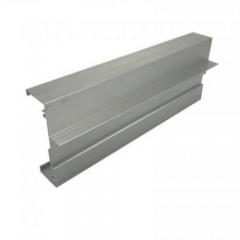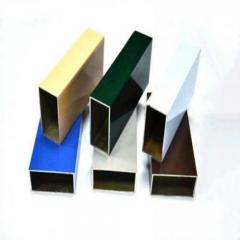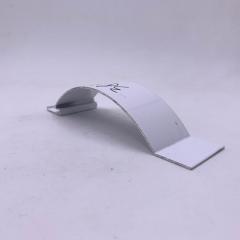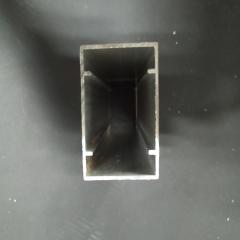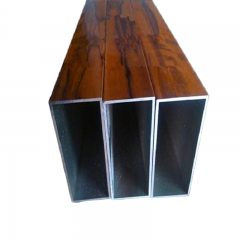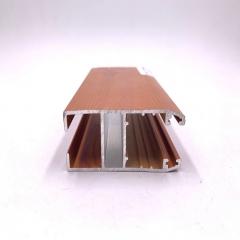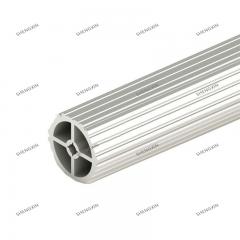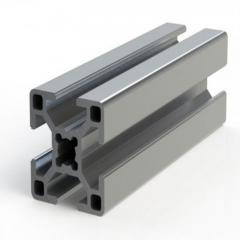
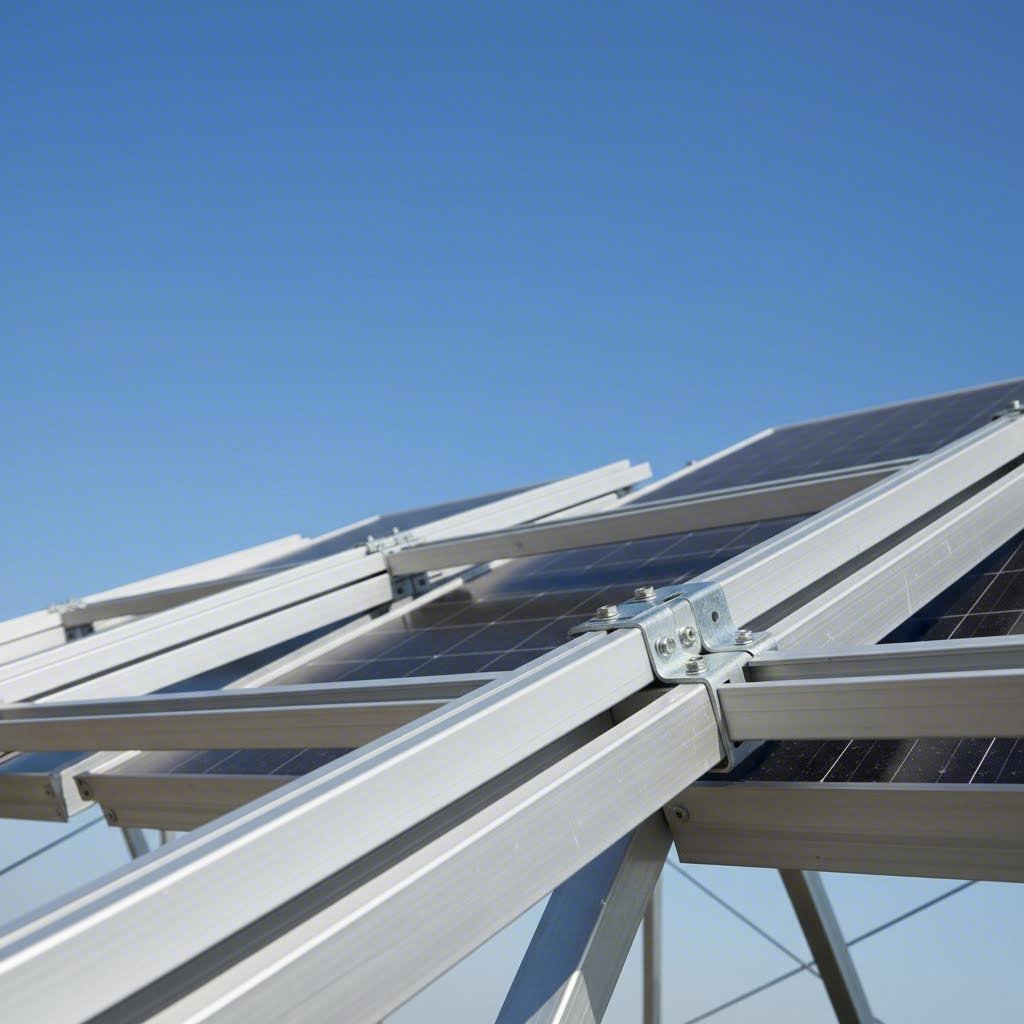
Ever wondered what keeps your solar panels securely mounted through decades of harsh weather? The answer lies in a manufacturing process that transforms raw aluminum into precisely engineered mounting components. Aluminum extrusion for solar panels has become the industry standard, and understanding why starts with grasping how these essential profiles are made.
Simply put, aluminum extrusion is a technique where aluminum alloy material is forced through a die with a specific cross-sectional shape. Imagine squeezing toothpaste from a tube—the paste emerges in the exact shape of the opening. The extrusion process works similarly, except manufacturers use a powerful hydraulic ram that can apply up to 15,000 tons of pressure to push heated aluminum through precision-engineered dies.
The journey from raw material to solar-ready mounting components involves several carefully controlled steps. First, a cylindrical aluminum billet is preheated in an oven to approximately 400-500°C. This temperature makes the metal malleable enough to shape without actually melting it. The die itself is also preheated to around 450-500°C to ensure even metal flow and maximize tooling life.
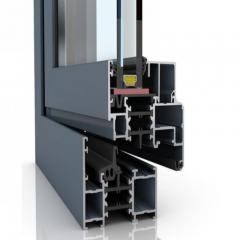
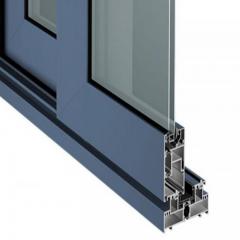
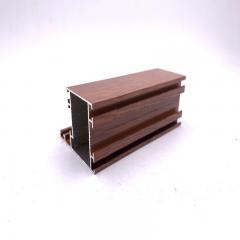
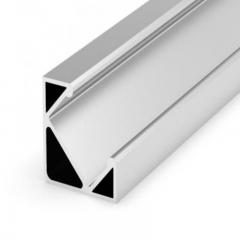
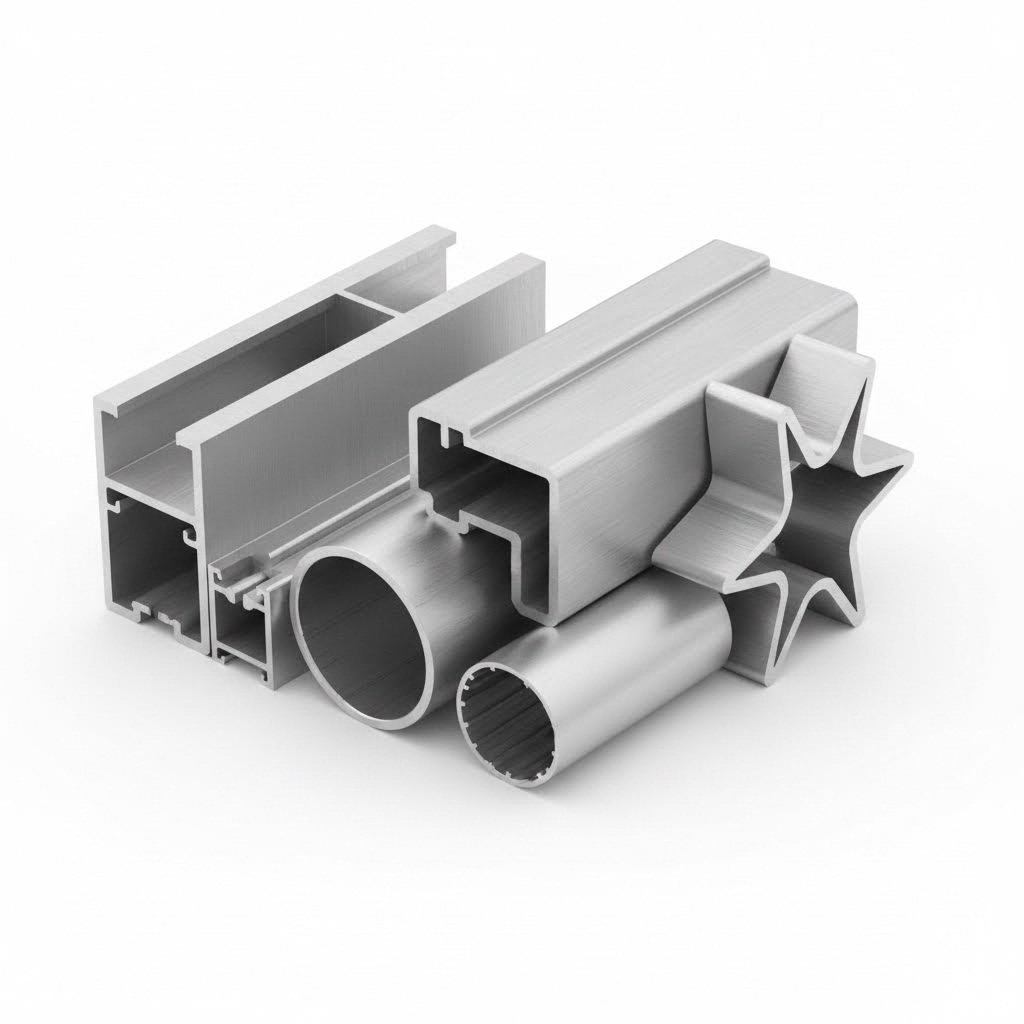
Once heated, the billet enters the extrusion press where immense pressure forces it through the die opening. As the aluminum emerges, it takes on the exact profile shape needed for solar mounting applications—whether that's a rail, clamp, or structural support. The extruded aluminum panels then undergo quenching, stretching for straightness, and cutting to specified lengths before any additional finishing treatments.
When you're evaluating what are aluminum extrusions used for in solar applications, the answer extends far beyond simple frames. These profiles serve as mounting rails, racking systems, and structural supports that must perform flawlessly for 25-30 years or more.
Two primary extrusion methods exist: direct and indirect. In direct extrusion, the most common approach, a moving ram forces heated aluminum through a stationary die. Indirect extrusion reverses this—the die moves against a stationary billet. While direct extrusion dominates solar applications due to its versatility, indirect extrusion produces more consistent mechanical properties because of reduced friction and better temperature control.
Why does extruded aluminum outperform alternatives like steel or plastic for solar mounting? Consider these key advantages:
According to a study by IBIS Associates, aluminum extrusion mounting systems proved economically superior to steel across all photovoltaic market segments when considering total costs of materials, shipping, and installation—even before factoring in reduced maintenance and end-of-life recycling value.
So you understand how aluminum extrusion works—but here's a question that can make or break your solar installation's longevity: which alloy should you actually use? Not all aluminum is created equal, and selecting the wrong grade for your solar module frame can lead to premature failure, costly replacements, and frustrated customers.
The 6000 series alloys dominate the solar mounting industry for good reason. Made primarily of magnesium and silicon, these alloys strike an exceptional balance between strength, corrosion resistance, and extrudability. But within this series, three grades stand out for solar panel frame material applications: 6061-T6, 6063-T5, and 6005-T5.
When comparing the two most popular aluminum panel extrusions for solar applications, you'll notice subtle but critical differences that affect real-world performance.
Alloy 6061, often called "structural aluminum," contains higher magnesium content (0.8-1.2%) and silicon content (0.4-0.8%). This composition delivers superior tensile strength—around 310 MPa in the T6 temper—making it the go-to choice for load-bearing structural members. Think primary supports in solar tracking systems, heavy-duty ground-mounted racking, and long-span carport structures where high strength is non-negotiable.
Alloy 6063, known as "architectural aluminum," has been specifically optimized for extrudability. With lower alloying elements (0.45-0.9% magnesium, 0.2-0.6% silicon), it produces exceptionally smooth surface finishes that anodize beautifully. While its tensile strength is slightly lower at around 240 MPa (T6 temper), it offers better corrosion resistance—a crucial advantage for outdoor solar installations exposed to weather year-round.
Here's the practical takeaway: 6061 wins when maximum strength matters most, while 6063 excels in applications where corrosion resistance and aesthetic finish take priority over raw structural capacity.
Your installation environment should heavily influence alloy selection. A rooftop system in Arizona faces vastly different challenges than a ground-mount array in coastal Florida or a commercial installation in Minnesota's freeze-thaw cycles.
Consider these environment-specific guidelines:
| Alloy Type | Tensile Strength | Corrosion Resistance | Weldability | Best Solar Application |
|---|---|---|---|---|
| 6061-T6 | ~310 MPa (High) | Good | Excellent | Heavy-duty ground mounts, tracking systems, carport structures |
| 6063-T5/T6 | ~240 MPa (Moderate) | Excellent | Good | Roof-mounted rails, clamps, residential frames, aesthetic applications |
| 6005-T5/T6 | ~270 MPa (Moderate-High) | Good | Good | Primary structural members, utility-scale farms, long-span supports |
| 6060-T5/T6 | ~230 MPa (Moderate) | Very Good | Very Good | Complex profiles, connectors, secondary framing, heat-sensitive applications |
One often-overlooked factor is weldability. If your mounting system requires field welding during installation, 6061-T6 offers the best performance. However, remember that welding affects the heat-treated properties of aluminum—the weld zone will have reduced strength compared to the base material unless post-weld heat treatment is applied.
The temper designation matters too. The "T5" temper indicates the aluminum was cooled from the extrusion process and artificially aged, while "T6" means it was solution heat-treated and artificially aged for maximum strength. For demanding solar applications with significant wind or snow loads, specifying T6 temper provides that extra margin of safety.
With the right alloy selected for your environment, the next critical consideration becomes how different mounting system types demand unique profile geometries and load capacities.
Imagine installing the same solar panel aluminium frame on a residential rooftop, a utility-scale ground array, and a dynamic tracking system. Sounds straightforward? It's not. Each mounting scenario demands fundamentally different aluminum extrusions for panels—different geometries, load capacities, and connection mechanisms designed to handle unique structural challenges.
Understanding these distinctions isn't just academic. Choosing the wrong profile for your application can result in structural failures, voided warranties, and costly retrofits. Let's break down what each system type requires from its solar panel frames aluminum components.
The fundamental difference between ground-mounted and rooftop systems comes down to structural independence versus integration. Ground-mount systems create their own self-supporting structure, while rooftop installations must work within the constraints—and limitations—of existing buildings.
Ground-mounted solar arrays bear their own weight plus all environmental loads directly to the earth through driven piles, concrete footings, or helical anchors. This independence allows for heavier, more robust aluminum profiles without worrying about roof load limits.
According to industry guidelines, ground-mount systems offer advantages in tilt optimization and accessibility for maintenance, but require engineering calculations specific to soil conditions and local wind exposure categories.
These systems anchor directly through the roof membrane into rafters or structural members. The aluminum profiles serve as the interface between building structure and solar array.
Non-penetrating ballasted systems use weight—typically concrete blocks—to hold arrays in place. This approach demands a fundamentally different extrusion philosophy.
As noted by structural engineering experts, a structural engineer should evaluate whether the roof can handle the combined weight of panels, racks, ballast, and environmental loads before specifying ballasted systems.
Solar carports represent a hybrid challenge—they're essentially ground-mounted systems that must also provide vehicle shelter and comply with building codes for occupied structures.
Here's where things get really interesting. Solar tracking systems—both single-axis and dual-axis—don't just sit there passively absorbing loads. They move, creating dynamic forces that static-mount calculations simply don't address.
Single-axis systems rotate around one axis (typically north-south orientation) to follow the sun's daily east-west path. This motion introduces several unique requirements for aluminum profiles:
Research on load capacity emphasizes that tracking systems introduce "dynamic load distribution challenges" requiring nuanced understanding of shifting forces throughout the day.
Dual-axis systems add a second degree of freedom—seasonal tilt adjustment—maximizing energy harvest but exponentially increasing mechanical complexity.
Every solar mounting system must be engineered to withstand site-specific environmental loads. Two factors dominate structural calculations: wind and snow.
The mounting system should be able to handle wind, snow, and seismic loads, as well as let air and water flow through. — California Building Code requirements for solar installations
Wind creates both downward pressure and dangerous uplift forces that can tear improperly designed systems from their mounts. Profile selection must account for:
In northern climates, accumulated snow can add tremendous weight to solar arrays—sometimes exceeding 50 lbs/sq ft in heavy snow regions.
Selecting the right profile cross-section depends on balancing structural requirements against material costs and installation efficiency. Here's practical guidance:
| Profile Size | Typical Application | Span Capability | Best Use Case |
|---|---|---|---|
| 25x25mm | Module frames, light-duty clamps | Up to 1.0m | Panel edge frames, residential accessories |
| 25x30mm | Residential roof rails | 1.0-1.5m | Standard residential rooftop installations |
| 35x35mm | Commercial roof rails | 1.2-1.8m | Larger panels, moderate wind zones |
| 40x40mm | Ground-mount rails, heavy commercial | 1.5-2.5m | Utility-scale ground mounts, high wind zones |
| 50x50mm+ | Primary structural members | 2.0-4.0m+ | Carport columns, tracker torque tubes, long spans |
Panel weight matters too. Modern high-efficiency panels can weigh 50+ pounds, requiring beefier profiles than older, lighter modules. When spans approach the upper limits for a given profile size, consider either upgrading to the next size or adding intermediate supports rather than pushing materials to their limits.
With mounting system types and structural requirements clarified, another often-overlooked factor demands attention: how temperature fluctuations affect these aluminum profiles over their decades-long service life.
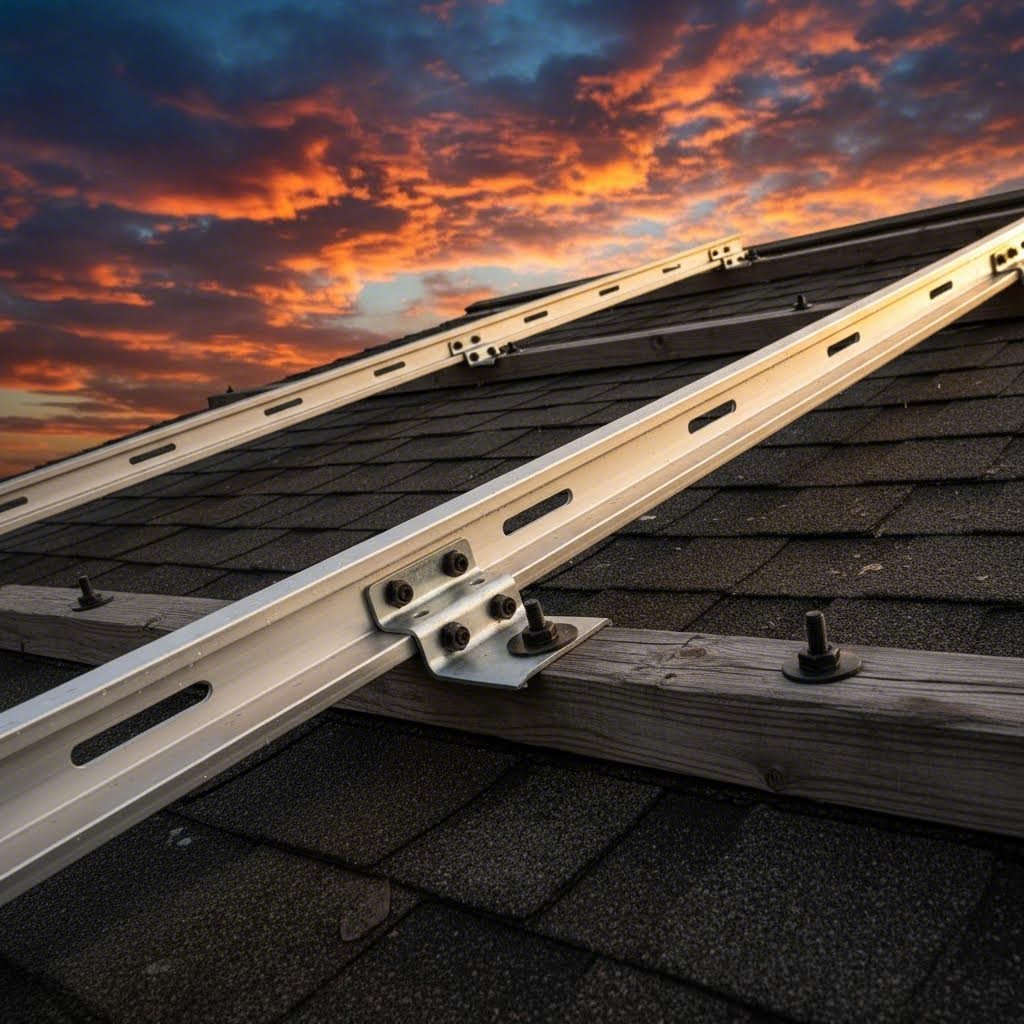
Here's something most solar installers learn the hard way: that perfectly aligned aluminum frame for solar panel you installed last summer? It's not the same length in January. Temperature swings cause aluminum to physically grow and shrink—and ignoring this reality leads to buckled rails, cracked fasteners, and callbacks that destroy your profit margins.
Understanding thermal expansion isn't optional for anyone specifying or installing aluminium frame solar panel systems. It's fundamental engineering that separates installations lasting 30 years from those failing in five.
Aluminum has a coefficient of thermal expansion of approximately 23.1 × 10⁻⁶ per °C—nearly twice that of steel. In practical terms, this means a 10-meter aluminum rail experiencing a 50°C temperature swing will change length by roughly 11.5mm. That might sound trivial until you realize it's happening at every connection point, every mounting bracket, and across every span of your array.
Consider a ground-mount installation in Arizona. Summer surface temperatures on aluminum extrusion panels can exceed 70°C under direct sun, while winter nights might drop below freezing. That's a potential temperature range of 80°C or more—translating to significant dimensional changes that rigid connections simply cannot accommodate.
The fractional change in length (ΔL/L) is proportional to the change in temperature: ΔL = α × L × ΔT. For aluminum mounting systems, this relationship determines whether your installation thrives or fails over its service life.
Smart designers address thermal movement through several proven strategies:
As mounting system experts note, "Metal roof panels expand and contract with temperature; attachments must accommodate that movement." The same principle applies with even greater force to solar mounting structures.
The longer your rail runs, the more critical thermal planning becomes. A residential installation with 3-meter rails faces modest challenges—perhaps 3-4mm of total movement. But utility-scale ground mounts with 20-meter continuous rail sections? You're looking at 20mm or more of expansion that must go somewhere.
Here's how to calculate required allowances for your specific installation:
For example, a 15-meter rail in a climate with 60°C annual temperature variation requires: 15 × 60 × 0.000023 × 1.2 = approximately 25mm of total expansion capacity. This should be distributed across 3-4 slotted connections along the rail length.
Thermal expansion is just one piece of the climate puzzle. Different environments attack aluminum extrusion panels in distinct ways that demand tailored responses.
Salt spray accelerates corrosion at an alarming rate, particularly at connection points where dissimilar metals may contact. Beyond standard anodizing, coastal installations often require:
Intense UV radiation degrades polymer components faster than many installers anticipate. While aluminum itself resists UV damage, gaskets, cable ties, and plastic components can become brittle within years rather than decades. Desert installations benefit from:
Repeated freezing and thawing cycles—sometimes multiple times per week during shoulder seasons—create cumulative fatigue stress. According to cold-climate installation research, frost heave can push ground-mounted foundations upward, while trapped moisture in connections expands during freezing.
Successful freeze-thaw installations require:
The interplay between thermal movement and environmental exposure makes proper surface treatment selection critical—which brings us to how different finishes protect aluminum throughout its service life.
You've selected the right alloy, engineered for thermal expansion, and matched your profiles to your mounting system. But here's the question that determines whether your aluminum solar panel frame lasts 15 years or 50: what's protecting it from the relentless assault of UV rays, salt spray, and humidity?
Surface treatment isn't just cosmetic—it's the frontline defense that separates premature failure from multi-decade performance. Yet most guides barely scratch the surface, leaving installers and specifiers to guess which finish actually delivers for their specific environment. Let's change that.
Before diving into specific finishes, you need to understand what each treatment actually does at a fundamental level. Solar panel aluminum rails and frames face constant environmental exposure, making surface protection non-negotiable.
Mill finish is essentially unfinished aluminum—the natural state after extrusion. While aluminum naturally forms a thin oxide layer that provides some corrosion resistance, this protection is minimal for outdoor solar applications. Mill finish might work for indoor components or temporary installations, but for permanent outdoor mounting? It's asking for trouble. Expect visible oxidation and surface degradation within 2-5 years in most climates.
Anodizing is an electrochemical process that thickens aluminum's natural oxide layer into a durable, integral coating. Unlike paint or powder coating that sits on top of the metal, anodizing actually becomes part of the aluminum surface. According to industry specialists, anodizing significantly enhances hardness and strength while providing exceptional corrosion resistance—making it ideal for harsh environments where scratch and abrasion resistance matter.
Powder coating applies dry powder particles to aluminum frames, then heats them to create a durable, paint-like finish. As coating experts explain, powder-coated frames exhibit superior resistance to chipping, peeling, fading, and wear—plus they offer virtually unlimited color options for aesthetic integration with building designs.
PVDF (polyvinylidene fluoride) represents the premium tier of solar mounting finishes. Originally developed by Pennwalt under the Kynar 500 trademark in 1965, PVDF coatings have proven themselves on buildings worldwide. Industry testing demonstrates that PVDF coatings offer 30-80% better stability and durability than standard powder coatings when exposed to harsh Florida sun and humid salt air for 12 years.
Not all anodizing is created equal. For anodized aluminum solar frames, the coating thickness and sealing quality determine real-world performance.
Three primary anodizing grades serve solar applications:
Color options—including bronze and black—involve dyeing the porous anodic layer before sealing. While aesthetically appealing, colored anodizing may show gradual fading over decades of UV exposure. For applications where color consistency matters long-term, powder coating often proves more stable.
The sealing step is critical. Properly sealed anodizing resists moisture penetration that leads to "white rust" corrosion. Specification-grade anodizing per AAMA 611 (Architectural Aluminum) or MIL-A-8625 (military standard) ensures consistent quality that bargain treatments may lack.
Here's something the anodizing industry won't tell you: for certain solar applications, powder coated solar mounting actually delivers superior performance.
Powder coating wins when you need:
However, powder coating has limitations. Standard polyester powder coatings can fade noticeably within 2-5 years under intense UV exposure—particularly the sunny versus shaded sides of panels show visible color differences. For maximum UV stability, specify "super durable" polyester formulations that meet AAMA 2604 standards (5-year Florida exposure warranty) rather than basic AAMA 2603 (1-year warranty).
When project specifications demand maximum longevity—or when coastal salt spray and intense UV combine to create brutal conditions—PVDF coating justifies its premium cost.
PVDF coatings meeting AAMA 2605 specifications must survive 10-year South Florida exposure with less than 5 Delta E color fade, maintain 50%+ gloss retention, and endure 4,000 hours of humidity testing. No standard powder coating achieves these benchmarks.
Available in 2-coat, 3-coat, and 4-coat systems, PVDF coatings provide:
| Treatment Type | Durability Rating | UV Resistance | Salt Spray Performance | Cost Level | Best Application |
|---|---|---|---|---|---|
| Mill Finish | Low (2-5 years) | Poor | Poor | Lowest | Indoor/temporary only |
| Clear Anodizing (15μm) | Moderate (15-20 years) | Good | Good | Low-Moderate | Mild climates, residential |
| Hardcoat Anodizing (25μm+) | High (25-30 years) | Good | Excellent | Moderate | Coastal, high-abrasion |
| Standard Powder Coating | Moderate (10-15 years) | Moderate | Good | Low-Moderate | Budget projects, color-matched |
| Super Durable Powder (AAMA 2604) | High (20-25 years) | Good | Very Good | Moderate | Commercial rooftop, moderate UV |
| PVDF Coating (AAMA 2605) | Excellent (30-40+ years) | Excellent | Excellent | High | Coastal, desert, utility-scale |
Manufacturers love claiming 30-50 year lifespans for aluminum solar mounting systems. But achieving that longevity depends on factors often glossed over in marketing materials.
Surface treatment quality sets the ceiling, but these factors determine whether you'll reach it:
The takeaway? Match your surface treatment to your environment, specify recognized standards rather than marketing claims, and budget for appropriate maintenance. A properly specified PVDF-coated system in a harsh environment will outperform a bargain anodized system in a mild one—and likely cost less over the installation's full lifecycle.
With surface protection sorted, the next logical comparison examines the broader material choice: how does aluminum stack up against steel when you consider total cost of ownership?
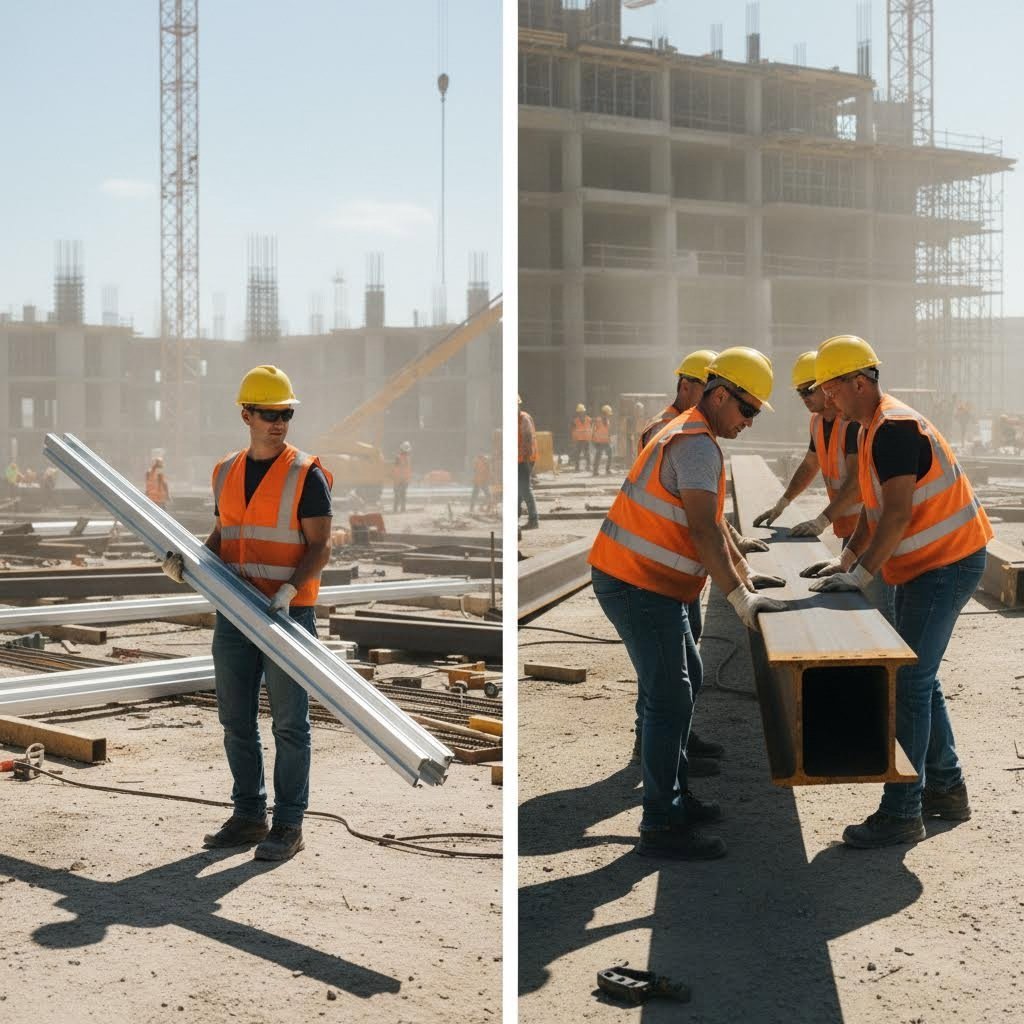
So you've done your homework on aluminum extrusion for solar panels—alloys, profiles, finishes. But here's the question that ultimately determines your project's financial success: should you even use aluminum at all? Steel proponents argue it's stronger and cheaper. Aluminum advocates counter with weight savings and corrosion resistance. Who's right?
The truth? Both materials have legitimate applications, but the decision requires honest numbers—not marketing claims. Let's break down the aluminum vs steel solar mounting debate with the quantitative analysis most comparisons conveniently skip.
When comparing lightweight solar panel frames to their steel counterparts, the weight difference isn't subtle—it's dramatic. Aluminum's density sits around 2.7 g/cm³ versus steel's 7.85 g/cm³. That means equivalent aluminum profiles weigh roughly one-third what steel versions do.
Why does this matter? Consider a commercial rooftop installation requiring 500 linear meters of mounting rail. Steel rails might weigh 2.5 kg/m while equivalent aluminum profiles come in around 0.9 kg/m. You're looking at 1,250 kg of steel versus 450 kg of aluminum—an 800 kg difference that affects everything downstream.
According to industry analysis, aluminum's significantly lighter weight makes it easier and faster to transport and install—especially on rooftops. Less weight means less stress on the roof and often lower labor costs. Here's how these advantages compound:
For rooftop installations on buildings with limited structural reserves, aluminum often represents the only viable option. Ballasted systems in particular benefit from aluminum's weight advantage—less frame weight means less ballast required, further compounding savings.
Raw material price tells only part of the story. Steel typically costs less per kilogram than aluminum—sometimes 30-40% less. But stopping the analysis there leads to costly mistakes.
As solar mounting specialists note, steel may win on material price, but aluminum can reduce overall project cost in the right scenario. The complete financial picture must include:
Here's where corrosion resistant solar mounts in aluminum really shine. Aluminum naturally forms a protective oxide layer that resists corrosion without additional treatment. Steel? It rusts aggressively unless protected by galvanization or specialized coatings like hot-dip galvanized or Zn-Al-Mg finishes.
In coastal or high-humidity environments, even galvanized steel may require recoating within 10-15 years. Aluminum mounting systems in the same conditions often reach 25+ years without intervention. Those maintenance cycles—scaffolding, labor, coatings, downtime—add substantially to steel's lifetime cost.
Solar panels now routinely carry 25-30 year performance warranties. Your mounting system should match or exceed that lifespan. Properly specified aluminum systems regularly achieve 30-40 year service lives without structural degradation. Steel systems may require component replacement or refurbishment within that timeframe, particularly in challenging environments.
The solar panel mounting materials comparison isn't one-size-fits-all. Industry guidance suggests clear application preferences:
| Property | Aluminum | Steel |
|---|---|---|
| Weight per Meter (typical rail) | 0.8-1.2 kg/m | 2.2-3.0 kg/m |
| Corrosion Resistance | Excellent (natural oxide layer) | Requires galvanization or coating |
| Expected Lifespan | 30-40+ years | 20-30 years (with proper coating) |
| Recyclability | 100% recyclable, retains value | Recyclable, lower scrap value |
| Installation Speed | Faster (lighter handling) | Slower (heavier, more labor) |
| Maintenance Needs | Minimal | Periodic inspection, possible recoating |
| Raw Material Cost | Higher per kg | Lower per kg |
| Best Application | Rooftop, coastal, weight-sensitive | Utility-scale, high-load, inland |
Environmental considerations increasingly influence material selection, and here aluminum presents a compelling case—with important nuances.
Primary aluminum production is energy-intensive. However, carbon footprint research reveals that recycled aluminum produces 92-95% fewer carbon emissions compared to primary aluminum production. Many solar mounting manufacturers now incorporate significant recycled content, dramatically improving the environmental profile of aluminum systems.
Steel recycling also offers substantial benefits. Studies show that recycled steel reduces CO2 emissions by 60-70% compared to virgin steel manufacturing. Electric Arc Furnace production using scrap steel cuts emissions by over 80% compared to traditional blast furnace methods.
The key difference? Aluminum retains higher scrap value at end-of-life. When your solar installation is eventually decommissioned 30+ years from now, aluminum frames command premium recycling prices. Steel frames, while recyclable, offer lower per-kilogram returns. This residual value partially offsets aluminum's higher initial cost.
From a circular economy perspective, both materials support sustainability goals—but aluminum's infinite recyclability without property degradation gives it a slight edge for organizations prioritizing end-of-life considerations.
The aluminum vs steel decision ultimately depends on your specific circumstances:
Many successful projects actually use both materials strategically—aluminum for rails and panel interfaces where corrosion resistance and light weight matter most, steel for primary structural members where raw strength justifies the weight penalty.
With the aluminum versus steel question resolved for your project, the next critical consideration becomes proper installation—where even the best materials fail if handling, torque specifications, and code requirements aren't correctly.
You've specified premium alloys, engineered for thermal expansion, and selected the perfect surface treatment. But here's the uncomfortable truth: none of that matters if your installation crew scratches the anodizing during handling or overtorques fasteners until they strip. The difference between a 30-year installation and a 10-year headache often comes down to what happens on installation day.
This solar panel frame installation guide covers the critical practices that protect your investment—from the moment materials arrive on site through final inspection and commissioning.
Aluminum mounting components arrive with carefully applied protective finishes. Scratching that anodizing or powder coating during installation creates entry points for corrosion that can't be easily repaired in the field.
Smart handling practices include:
Field repairs to damaged finishes rarely match factory quality. Touch-up paint may look acceptable initially but typically fails faster than the original coating, creating visible degradation patterns that undermine client confidence.
Remember that galvanic series table from your training? It's not theoretical—it predicts exactly where your aluminum mounting system installation will fail if you mix metals incorrectly.
According to the U.S. Department of Energy, galvanic corrosion occurs when two dissimilar metals are in electrical contact in the presence of an electrolyte (moisture and minerals). Solar PV systems often pair stainless steel fasteners with aluminum frames, making them particularly prone to this degradation mechanism.
The further apart two metals sit on the galvanic series, the faster corrosion proceeds. Aluminum sits toward the anodic (active) end, meaning it sacrifices itself to protect more cathodic metals like stainless steel or copper. In practical terms, your expensive aluminum frame corrodes to protect your cheap fasteners—exactly backwards from what you want.
Preventing galvanic corrosion requires:
As the DOE warns, improper grounding or fastener selection can degrade the safety and reliability of bonding systems, which must comply with UL 2703 standards and support 25 years of fault-current protection.
Here's a mistake even experienced installers make: treating aluminum fastener connections like steel. Aluminum's lower yield strength means overtorquing strips threads, crushes profiles, and creates stress concentrations that lead to fatigue cracking.
Unlike steel, aluminum doesn't "feel" the same resistance buildup as you approach proper torque. It goes from loose to stripped with little warning. Calibrated torque wrenches aren't optional—they're essential.
General torque guidelines for aluminum extrusion connections:
| Fastener Size | Aluminum-to-Aluminum | Stainless-to-Aluminum | Notes |
|---|---|---|---|
| M6 (1/4") | 5-7 Nm | 4-6 Nm | Common for clamps and accessories |
| M8 (5/16") | 12-15 Nm | 10-13 Nm | Standard rail splice connections |
| M10 (3/8") | 25-30 Nm | 20-25 Nm | Structural connections |
| M12 (1/2") | 45-55 Nm | 38-48 Nm | Heavy-duty ground mount applications |
Always verify manufacturer specifications—these general guidelines may differ from engineered system requirements. Use thread-locking compounds where specified, and never substitute lock washers for proper torque control.
Proper grounding protects both equipment and personnel. The DOE emphasizes that module fasteners used with stainless-steel bonding devices must pierce the aluminum anodizing to create a conductive pathway for fault current—this is a critical safety connection point that must be kept free of galvanic corrosion impacts.
Meeting solar panel grounding requirements involves:
Corrosion at grounding points increases electrical resistance, potentially preventing fault currents from tripping protective devices. Inspect grounding connections carefully during commissioning and include them in ongoing maintenance protocols.
Following a systematic approach prevents costly errors and ensures solar mounting code compliance. Use this checklist for every aluminum mounting system installation:
Solar mounting code compliance varies significantly by jurisdiction. What's acceptable in Arizona may violate requirements in Florida or Massachusetts. Understanding local requirements before installation prevents costly rework.
Key compliance considerations include:
UL 2703 certification has become the industry standard for solar mounting systems in North America. This certification ensures mounting equipment meets rigorous safety and performance standards including:
According to industry guidance, only UL 2703 certified components ensure code compliance and maintain system warranties. Using non-certified components—even if structurally adequate—may void panel warranties, complicate inspections, and create liability exposure.
Most jurisdictions require building permits for solar installations. Permit applications typically require:
Submit complete applications to avoid delays. Incomplete packages often cycle through multiple review rounds, pushing project timelines weeks beyond original estimates.
Learning from others' mistakes costs nothing. These frequent errors compromise system integrity and void warranties:
With proper installation practices established, the next consideration becomes procurement strategy—how to source quality aluminum extrusions efficiently while ensuring your supplier can meet project specifications and timelines.
You've engineered the perfect mounting system on paper—optimal alloy grade, appropriate profile dimensions, ideal surface treatment. But here's the challenge that trips up even experienced project managers: finding a solar extrusion manufacturer who can actually deliver what you've specified, when you need it, at a price that makes your project viable.
The gap between specification and reality is where projects succeed or fail. Understanding lead times, minimum order quantities, and how to communicate requirements effectively transforms procurement from a bottleneck into a competitive advantage.
When you need aluminum profile supplier selection for custom solar mounting components, clear communication prevents costly misunderstandings. According to industry best practices, suppliers accept various drawing formats including CAD files, STEP files, and PDF files—but format choice significantly affects quotation speed and accuracy.
For extrusions requiring additional machining, STEP files ensure precise 3D modeling for machining accuracy. While PDF files work, converting them into CAD drawings may result in detail loss requiring manual redrawing—adding days or weeks to your timeline. For fastest turnaround, provide both DWG/DXF files for profile geometry and STEP files for machined features.
Your specification package should include:
Tolerance specifications deserve special attention. Standard extrusion tolerances per EN 755 or ASTM B221 may not meet precision solar mounting requirements. If your design demands tighter tolerances—common for tracker systems with bearing interfaces—specify them explicitly and expect cost premiums for the additional quality control.
Custom aluminum extrusion suppliers operate differently than commodity distributors. Understanding their production model helps you plan realistic project timelines.
Typical lead time components include:
Total lead times for custom profiles typically range from 5-8 weeks from order to shipment. Planning bulk solar mounting orders around these timelines prevents project delays that cascade through construction schedules.
Minimum order quantities vary by profile size and complexity. Industry norms typically set MOQ at 500kg for smaller profiles and 2 tons for larger sections. If your order falls below MOQ thresholds, production remains possible but expect additional fees covering mold preheating and setup time.
Here's a procurement insight many buyers miss: mold fees are essential and non-negotiable because every custom extrusion requires uniquely designed tooling that cannot be reused for other products. However, many suppliers offer mold fee refunds or equivalent discounts once orders reach certain production volumes—negotiate these terms upfront.
Not all custom aluminum extrusion suppliers can deliver the quality, consistency, and service solar projects demand. According to manufacturing experts, the supplier's technology, innovations, and characteristics directly influence end product quality.
When evaluating potential suppliers, investigate these critical capabilities:
For example, Shengxin Aluminium's custom extrusion services demonstrate what comprehensive capabilities look like in practice—with 35 extrusion presses ranging from 600T to 5500T, state-of-the-art CNC machining centers, and end-to-end support from die development to mass production. This integrated approach eliminates the coordination headaches that plague projects relying on multiple specialized vendors.
Before committing to a supplier relationship, thorough vetting prevents costly surprises. Ask these essential questions:
Regarding stock availability—some suppliers maintain ready-made molds and existing inventory for commonly used solar specifications. Leveraging these existing resources can speed up production timelines and reduce costs, particularly for standard designs matching Chinese market specifications commonly used in frames, mounting rails, brackets, and structural components.
As solar procurement guidelines emphasize, the EPC service provider is ultimately responsible for ensuring the quality of components procured from external sources. This responsibility extends to aluminum extrusions—don't assume supplier quality control catches everything.
Recommended quality verification steps include:
Third-party technical assessments can add objectivity but vary significantly in thoroughness. Industry guidance suggests identifying credible third-party providers through accreditation according to ISO 17020, ISO 17025, or acceptance by IECRE.
One-off transactions rarely yield optimal outcomes. Suppliers prioritize repeat customers with predictable volume, offering better pricing, faster turnaround, and more responsive service.
Strategies for building productive supplier relationships include:
The right supplier relationship transforms procurement from a transactional headache into a strategic advantage—delivering quality aluminum extrusions on schedule while competitors scramble with unreliable sources.
With sourcing strategy established, the final consideration becomes maximizing the value of your investment over the system's full lifecycle—from ongoing maintenance through eventual decommissioning and recycling.
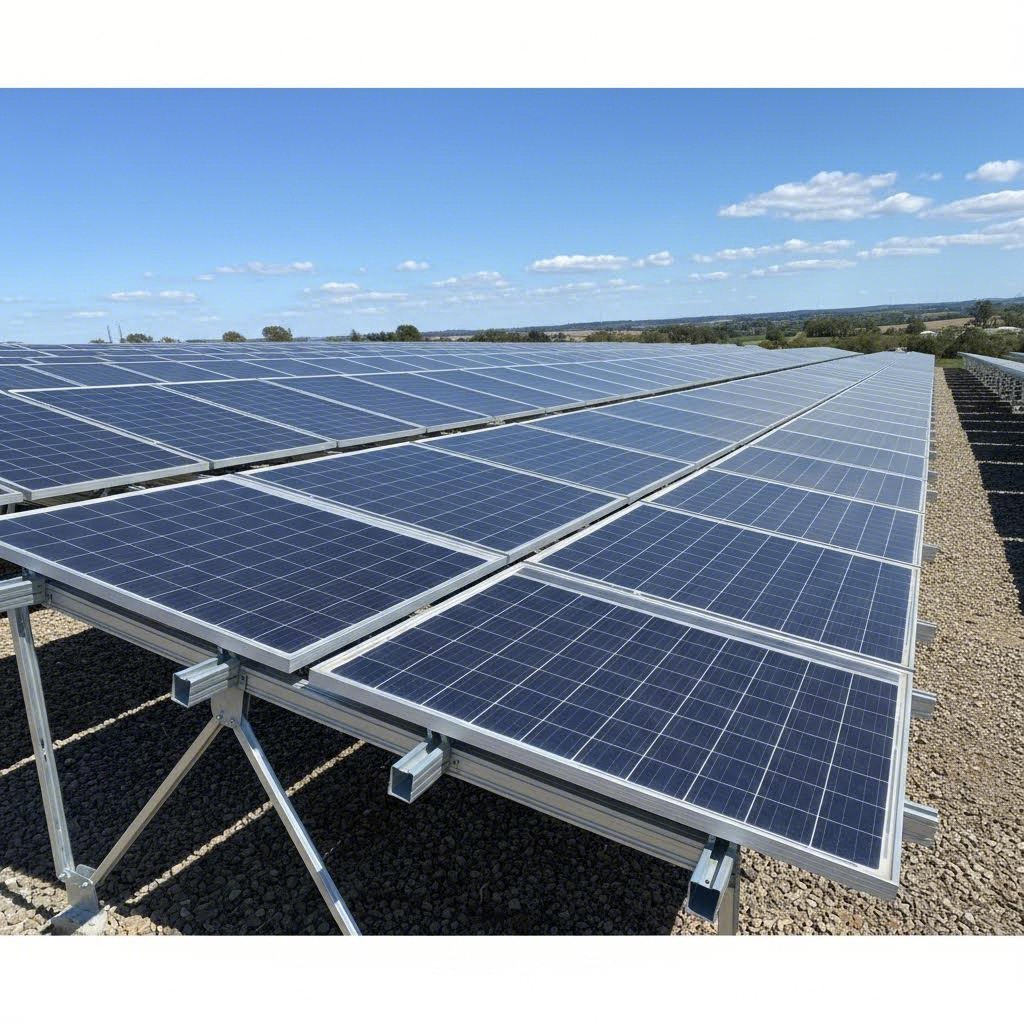
You've invested in premium aluminum extrusion for solar panels, specified the right alloys, and ensured proper installation. Now comes the question that determines your true return on investment: how do you protect that investment over the next 30+ years? The solar panel frame lifespan you achieve depends almost entirely on what happens after installation day.
Understanding lifecycle performance transforms solar mounting systems from depreciating assets into long-term value generators. Let's explore how proactive maintenance, smart monitoring, and end-of-life planning maximize your system's financial and environmental returns.
Here's good news: aluminum solar mounting maintenance demands far less attention than steel alternatives. But "less" doesn't mean "none." According to solar maintenance experts, proper maintenance not only preserves system efficiency but also prevents costly repairs and prolongs the lifespan of solar panels, inverters, and other components.
The key is establishing systematic inspection protocols rather than waiting for visible problems. Industry guidelines emphasize that regular solar system inspections are crucial for maintaining optimal performance, ensuring safety compliance, and safeguarding your investment.
Different components require different attention intervals. Use this framework as your baseline:
As maintenance specialists note, while regular maintenance can be performed by system owners, professional maintenance services are recommended for more complex tasks including electrical connections, inverters, and mounting systems.
Knowing what to look for during inspections prevents small issues from becoming expensive failures. Watch for these warning signs:
Inspection protocols emphasize examining panel frames for corrosion, particularly at mounting points where dissimilar metals may interact. Aluminum frames should exhibit minimal corrosion; however, any signs of deterioration require documentation and potential remediation planning.
Proper cleaning extends both panel efficiency and mounting system life. Cleaning guidelines recommend using a soft brush or sponge and mild detergent to gently clean surfaces. Avoid abrasive materials or harsh chemicals that could damage panels or protective coatings on aluminum frames.
Additional cleaning tips for sustainable solar mounting systems:
What happens when your solar installation eventually reaches decommissioning—perhaps 30-40 years from now? This is where aluminum's sustainability advantage truly shines.
According to solar recycling research, standard photovoltaic panels are about 95% recyclable, with aluminum frames and glass making up the bulk of recoverable materials. Unlike many building materials that degrade into waste, aluminum retains substantial value throughout its service life and beyond.
Here's what makes recyclable solar panel materials featuring aluminum exceptional: aluminum can be recycled indefinitely without losing its properties. The aluminum in your mounting system today could become part of a next-generation solar installation decades from now.
This circular economy advantage delivers multiple benefits:
As industry analysts note, materials recovered from current panels could become components in next-generation solar installations, reducing mining pressure and manufacturing costs for future solar adopters. This cycle reinforces the environmental benefits of your original investment while supporting continued solar industry growth.
Forward-thinking project managers consider end-of-life scenarios during initial planning. Documentation that supports future recycling includes:
The solar recycling infrastructure continues maturing rapidly. Emerging technologies can recover up to 99% of materials including rare earth elements, while machine learning algorithms optimize sorting and processing to reduce costs. By the time today's installations reach decommissioning, recycling will likely be routine—similar to aluminum can recycling today.
Achieving maximum solar panel frame lifespan starts with partnering with manufacturers who understand the full lifecycle challenge. Comprehensive surface treatment options—including anodizing, powder coating, PVDF, and advanced treatments like micro-arc oxidation—provide the durability foundation that makes 30+ year performance achievable.
Manufacturers offering end-to-end capabilities from die development through surface treatment ensure quality control at every stage. For readers seeking custom solar extrusion solutions with factory-direct pricing, Shengxin Aluminium's comprehensive deep processing and surface treatment services exemplify the integrated approach that delivers superior long-term value.
The solar industry's explosive growth shows no signs of slowing—and aluminum extrusion remains central to that expansion. As panel efficiencies increase and installation costs decrease, mounting systems represent an ever-larger share of project value. Getting this component right matters more than ever.
The decisions you make today about alloy selection, surface treatment, installation quality, and maintenance protocols determine whether your solar investment delivers returns for decades or becomes a maintenance headache within years. Armed with the knowledge from this guide, you're equipped to make choices that maximize both financial returns and environmental benefits.
Solar energy represents our most abundant renewable resource. Aluminum extrusion—lightweight, durable, infinitely recyclable—provides the foundation that makes harvesting that resource practical and profitable. Your mount choice truly does make or break ROI.
The 6000 series alloys dominate solar panel mounting applications. Aluminum 6063-T5 offers excellent corrosion resistance and smooth finishes ideal for residential frames and rails. Aluminum 6061-T6 delivers higher tensile strength (around 310 MPa) for heavy-duty ground mounts and tracking systems. Aluminum 6005-T5 provides a balanced option for utility-scale projects requiring both strength and extrudability. Selection depends on your installation environment—coastal areas benefit from 6063's superior corrosion resistance, while high-load applications demand 6061's structural capacity.
The numbers refer to profile dimensions and slot configurations in T-slot aluminum systems. 8020 extrusions offer the highest strength-to-weight ratio, making them suitable for applications requiring maximum structural integrity with minimal weight. 4040 profiles balance strength and weight effectively for medium-load solar mounting applications. For solar panel mounting specifically, custom profiles optimized for specific load requirements and connection mechanisms typically outperform generic T-slot systems in both performance and cost-effectiveness.
Properly specified aluminum solar mounting systems routinely achieve 30-40+ year service lives. Longevity depends on several factors: alloy grade selection matched to environmental conditions, appropriate surface treatments (anodizing, powder coating, or PVDF), correct installation practices preventing galvanic corrosion, and regular maintenance schedules. Coastal installations may require thicker anodizing (25+ microns) and stainless steel fasteners, while desert environments benefit from UV-stabilized coatings. With comprehensive surface treatment options and quality manufacturing, aluminum frames can match or exceed solar panel warranty periods.
The choice depends on your specific application. Aluminum excels for rooftop installations due to its lightweight nature (roughly one-third the weight of steel), superior corrosion resistance without additional coatings, and lower installation labor costs. Steel typically proves more cost-effective for large utility-scale ground mounts where raw structural strength matters most and weight is less critical. Many successful projects use both materials strategically—aluminum for rails and panel interfaces where corrosion resistance matters, steel for primary structural members where maximum strength justifies the weight penalty.
Surface treatment selection should match your installation environment. Clear anodizing (15-25 microns) provides cost-effective protection for mild climates. Hardcoat anodizing (25-50+ microns) suits coastal installations with high salt exposure. Standard powder coating offers unlimited color options at moderate cost but may fade under intense UV. Super durable polyester coatings meeting AAMA 2604 standards provide improved UV resistance. PVDF coatings meeting AAMA 2605 specifications deliver maximum durability with proven 30+ year performance in the harshest environments—ideal for coastal and desert utility-scale projects.



 บริการออนไลน์
 0086 136 3563 2360
 sales@sxalu.com
 +86 136 3563 2360
 ไทย
 English
 français
 Deutsch
 русский
 español
 português
 العربية
 Việt
 Українська