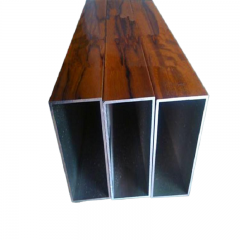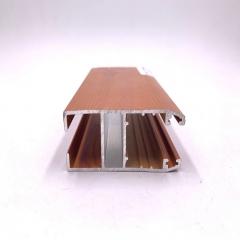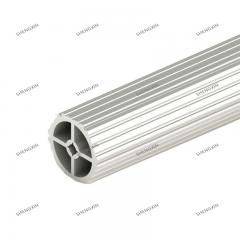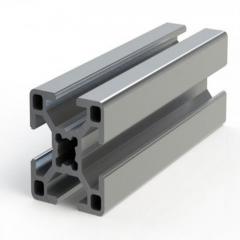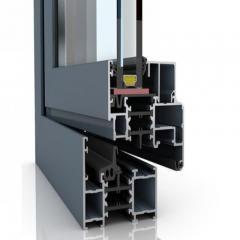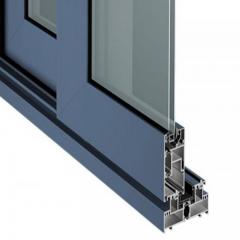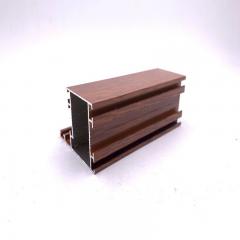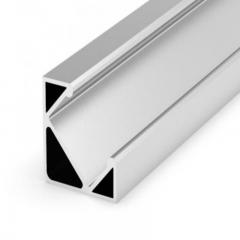
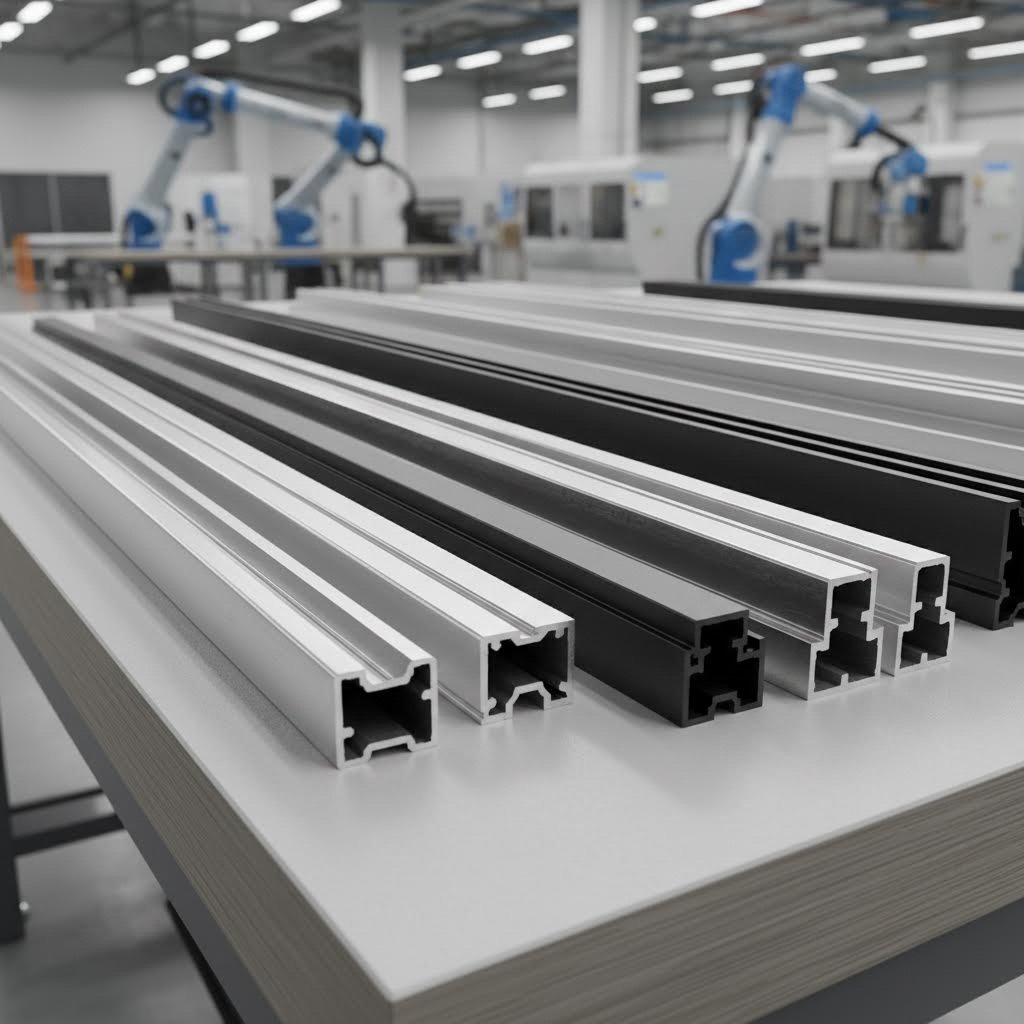
Ever ordered aluminum profiles for a project, only to spend hours cutting them down to size on-site? You're not alone. That's exactly why aluminum extrusion cut to length services exist—to deliver profiles that arrive ready to use, eliminating guesswork and saving valuable production time.
Aluminum extrusion cut to length is a manufacturing service where aluminum profiles are precision-cut to exact customer specifications before shipment, ensuring components arrive ready for immediate assembly without requiring secondary cutting operations.
Think of it this way: aluminum extrusion starts with heated aluminum billet forced through a shaped die—similar to squeezing dough through a cookie press. This creates long, uniform profiles that can stretch up to 288 inches or more. But most projects don't need profiles that long. That's where cut-to-length services bridge the gap between raw extrusion and your specific application needs.
When you order custom aluminum extrusions with cut-to-length specifications, the supplier uses precision equipment to cut profiles to your exact measurements. According to Profile Precision Extrusions, manufacturers can cut parts as short as 0.219 inches and as long as 288 inches, accommodating virtually any project requirement.
The process typically involves multiple stages. First, a press saw cuts freshly extruded aluminum at the cooling table, usually producing pieces between 60 and 288 inches. For shorter lengths, these preliminary cuts move to precision saws capable of holding tolerances as tight as ±0.005 inches. This staged approach ensures both efficiency and accuracy across different length requirements.
Custom extruded aluminum ordered with cut-to-length specifications arrives packaged and protected, ready for your production line. There's no need for additional equipment, dust collection systems, or skilled cutting operators at your facility.
Precision matters more than you might realize. When profiles arrive at inconsistent lengths, you'll notice problems immediately during assembly. Frames won't square up properly. Connections become misaligned. What should take minutes stretches into hours of adjustment and rework.
Here's what precision cut-to-length services deliver for your workflow:
The accuracy advantage compounds when you're working with custom extrusions for complex assemblies. Imagine building a machine frame requiring 47 identical pieces. With professional cut-to-length service, each component arrives within specification. Without it? You're measuring, marking, cutting, and deburring each piece individually—introducing human error at every step.
For manufacturers and builders serious about quality and efficiency, understanding these foundational concepts opens the door to smarter sourcing decisions. The following sections will explore exactly how to specify your requirements and select the right cutting approach for your application.
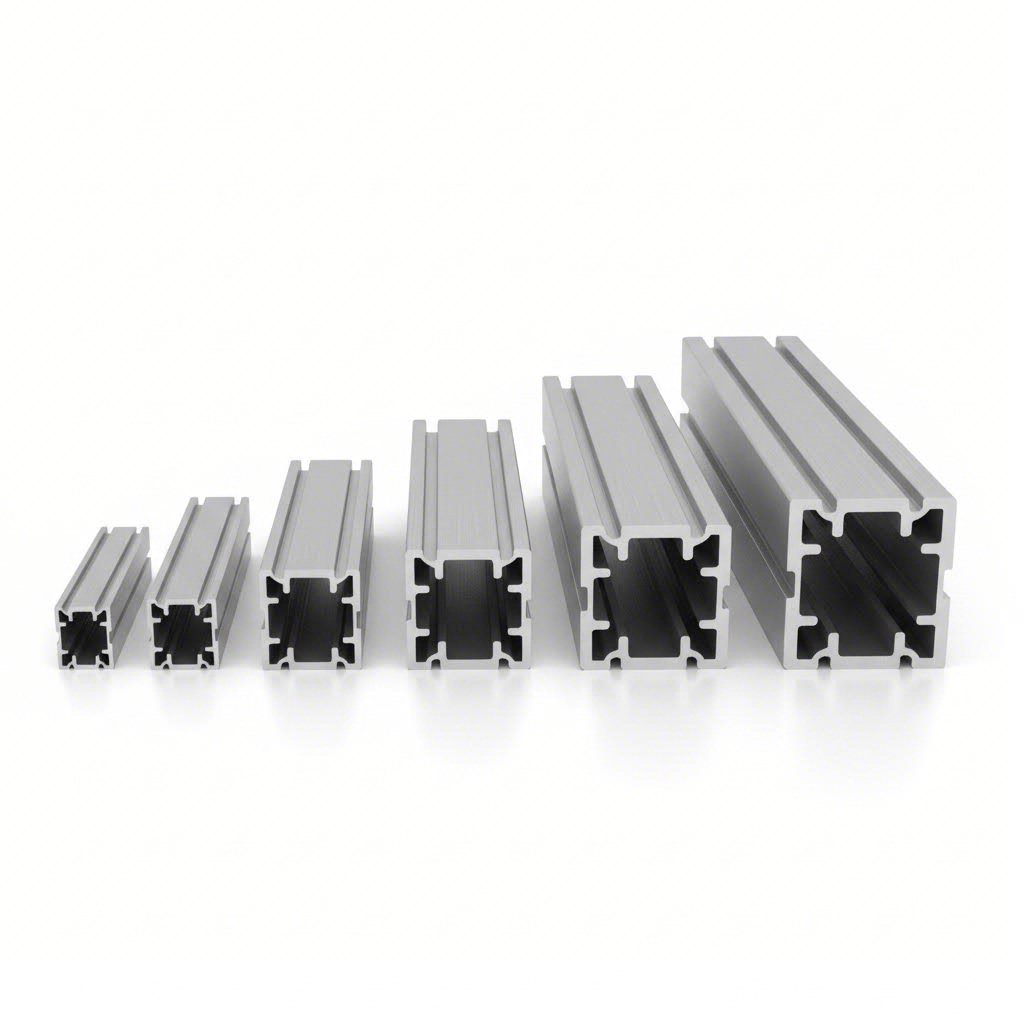
Ever browsed an aluminum extrusion catalog and felt overwhelmed by series numbers like 10, 15, 30, or 45? You're looking at the same confusion that trips up countless engineers and project managers. These numbers aren't arbitrary—they represent standardized profile systems that directly influence how you'll specify cut-to-length requirements.
The series number typically refers to the basic dimension of the profile's cross-section, measured in millimeters or fractions of an inch. According to 80/20's naming convention guide, the series number represents the broader category based on general profile size, with load capacity being profile-specific for various applications and structural requirements.
Here's how common series break down:
T-slot aluminum profiles dominate these series categories. The "T" refers to the shape of the groove running along each face, designed to accept T-nuts and specialized fasteners. This t slot aluminum profile design creates an incredibly versatile building system where components can mount anywhere along the extrusion length without pre-drilling.
Sounds complex? It doesn't have to be. When you understand how series selection connects to cut-to-length decisions, sourcing becomes straightforward.
Larger series profiles handle longer unsupported spans without excessive deflection. A 45 series aluminum t slot rail can span greater distances between supports while maintaining structural integrity—meaning fewer connection points and potentially longer individual cut lengths. Conversely, 10 series profiles may require shorter segments with more frequent supports to prevent sagging under load.
| Series | Typical Dimensions | Common Applications | Length Considerations |
|---|---|---|---|
| 10 Series | 1" x 1" (25.4mm) | Workstations, displays, light frames, machine guards | Shorter spans recommended; ideal for compact assemblies under 48" |
| 15 Series | 1.5" x 1.5" (38.1mm) | Enclosures, conveyors, automation frames | Moderate spans up to 72" with proper support; good balance of rigidity |
| 30 Series | 30mm x 30mm | Industrial framing, European-standard equipment | Suitable for medium-duty spans; metric compatibility simplifies calculations |
| 40 Series | 40mm x 40mm | Machine bases, safety guarding, heavy frames | Longer unsupported spans possible; reduces connection points needed |
| 45 Series | 45mm x 45mm or 45mm x 90mm | Robotic cells, heavy automation, structural frames | Maximum span capability; ideal for large-scale assemblies exceeding 96" |
The aluminum t rail you select also determines fastener compatibility and connection strength. Larger T-slots accept beefier hardware, which becomes critical when your cut lengths create longer lever arms between supports. This relationship between profile series and structural performance should guide your specification process from the start.
When ordering cut-to-length profiles, consider how your chosen series affects assembly. Lighter 10 series extrusions are easier to handle and ship but may require more pieces to complete a structure. Heavier 45 series profiles reduce piece count but increase individual part weight and potentially shipping complexity for very long cuts.
Understanding these series distinctions positions you to specify lengths that optimize both structural performance and practical handling. With profile selection established, the next critical factor becomes the cutting method itself—which directly determines the edge quality and dimensional accuracy of your finished pieces.
So you've selected your extrusion series and determined your length requirements. Now comes a question that significantly impacts your finished product: how will those cuts actually be made? The cutting method used for aluminum extrusion directly affects edge quality, dimensional accuracy, and whether you'll spend extra time deburring before assembly.
Here's the reality many suppliers don't explain: not all cutting aluminum extrusion methods deliver the same results. A cut that looks acceptable might create problems during assembly—burrs that interfere with connections, edges that don't sit flush, or dimensions that drift outside tolerance. Understanding your options helps you specify exactly what your project demands.
When evaluating how to cut aluminum extrusion professionally, three primary methods dominate the industry. Each offers distinct advantages depending on your accuracy requirements, volume needs, and budget considerations.
Cold saws represent the best way to cut aluminum extrusion when precision and edge quality matter most. These machines use toothed circular blades running at slower RPM than conventional saws, generating minimal heat during the cut. According to industry sources, cold saws leave burr-free edges that often eliminate the need for secondary finishing, achieving tolerances within fractions of a millimeter.
Miter saws equipped with non-ferrous carbide-tipped blades offer versatility for both straight and angled cuts. This method works well for cutting aluminium extrusion when you need 45-degree corners or other angled connections. The key to success lies in blade selection—high tooth-count carbide blades designed specifically for aluminum prevent clogging and overheating.
For high-volume production or when dimensional accuracy is absolutely critical, CNC automated saw systems deliver unmatched consistency. These systems combine precision saws with motorized feeds and programmable controls. Some advanced setups can cut 18 pieces simultaneously, making the process 6-8 times faster than manual methods while maintaining repeatable accuracy across every piece.
How to cut extruded aluminum effectively depends heavily on your specific profile characteristics. Thin-walled profiles react differently than solid bars. Complex hollow shapes demand different approaches than simple rectangular tubes.
Consider these factors when specifying your cutting requirements:
Proper clamping proves essential regardless of cutting method. According to cutting specialists, aluminum's lightweight and slippery nature means even slight movement during cutting causes the blade to drift. Securing both sides of the extrusion—not just one end—prevents twisting that leads to angled cuts or dimensional errors.
The best way to cut aluminum extrusion ultimately matches your method to your application. A machine frame requiring tight-fitting joints needs cold saw precision. Decorative trim with hidden ends might tolerate faster miter saw cuts. Understanding these trade-offs empowers you to specify appropriately—and recognize quality when you receive your order.
With cutting methods clarified, the next essential specification involves understanding exactly how precise those cuts need to be. Tolerance standards vary significantly across suppliers and applications, directly impacting whether your components will assemble correctly.
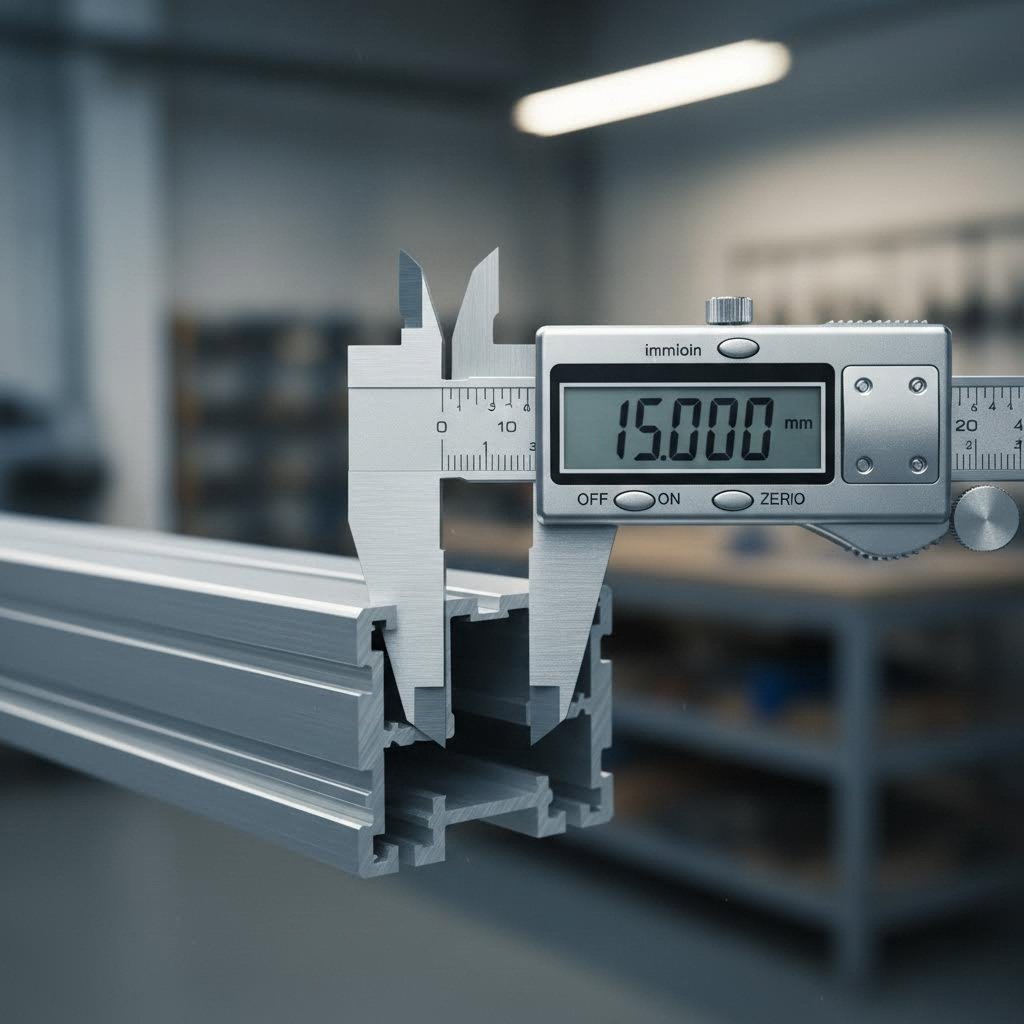
You've selected your profile series and specified your cutting method. But here's where many projects run into trouble: tolerances. Order profiles without specifying acceptable tolerance ranges, and you're gambling on whether components will actually fit together during assembly. Too loose, and gaps appear. Too tight, and you're paying premium prices for precision you don't need.
Tolerance specifications represent the allowable variation from your specified dimension. When you order a custom aluminum extrusion cut to 24 inches, the actual length might measure 23.995 or 24.005 inches depending on the tolerance grade. Understanding these ranges helps you communicate requirements clearly and avoid costly surprises.
According to The Aluminum Extrusion Council, tolerance tables establishing both industry standard and precision tolerances are published in Aluminum Standards & Data by The Aluminum Association. These standards cover Tables 11.5 through 11.14 and Tables 12.2 through 12.14, providing comprehensive guidance for dimensional accuracy across different profile types and applications.
Here's what typical tolerance grades look like in practice:
| Tolerance Grade | Accuracy Range | Typical Applications | Cost Impact |
|---|---|---|---|
| Coarse (ISO2768C) | ±0.5mm to ±2.0mm depending on length | Non-critical framing, decorative elements, rough structural supports | Lowest cost; standard pricing |
| Medium (ISO2768M) | ±0.1mm to ±0.8mm depending on length | General industrial frames, enclosures, conveyor systems | Moderate; slight premium |
| Fine (ISO2768F) | ±0.05mm to ±0.3mm depending on length | Precision assemblies, machine frames, automated equipment | Higher cost; requires precision equipment |
| Precision Cutting | ±0.005" (±0.127mm) or better | Critical fit components, aerospace, medical devices | Premium pricing; specialized processes |
The relationship between length and tolerance isn't linear. Longer pieces naturally accumulate more potential variation. For custom extrusion aluminum parts measuring over 400mm, even fine tolerances allow ±0.3mm deviation—acceptable for most applications but potentially problematic for precision machinery.
Beyond linear dimensions, dimensional tolerance standards also address six primary categories:
Not every application demands precision cutting. Specifying unnecessarily tight tolerances increases costs without delivering meaningful benefits. So when do tighter tolerances actually matter?
Consider your assembly method first. Profiles joined with T-slot connections and fasteners offer some adjustability—standard tolerances typically work fine. But profiles that butt directly against each other or slide into machined fixtures need tighter control. Any gap or interference becomes immediately visible and potentially problematic.
Custom extrusion projects requiring tight tolerances typically include:
When communicating tolerance requirements to suppliers, be specific. Simply requesting "precision cutting" leaves interpretation to the supplier. Instead, specify the tolerance grade or actual dimensional range acceptable for your application. Many extruders can achieve tighter tolerances than standard tables indicate—but only when you clearly communicate that requirement upfront.
Excessive deviations in straightness, twist, or dimensional accuracy can lead to serious problems. An aluminum beam with uneven slope may cause uneven weight distribution, increasing structural failure risk. Measuring these tolerances accurately using proper tools and strict quality control processes ensures extrusions meet design requirements and perform as intended.
Understanding tolerance specifications positions you to make informed decisions that balance cost and quality. The next step involves translating your project requirements into precise length specifications that account for fasteners, clearances, and real-world assembly conditions.
You've selected your profile series, understand cutting methods, and know what tolerances to expect. Now comes the practical challenge that derails countless projects: accurately determining the lengths you actually need. Sounds straightforward, right? Measure the space, order that length, done. But experienced fabricators know better—assembly clearances, fastener allowances, and cumulative tolerances can turn a seemingly perfect measurement into a headache.
Getting length specifications right the first time saves money, prevents delays, and eliminates frustrating rework. Whether you're building machine frames, architectural installations, or custom fixtures, the process below ensures your custom cut aluminum arrives ready to assemble without surprises.
Professional custom aluminum cutting starts with systematic measurement. Rushing this phase invites errors that compound during assembly. Follow this process to specify lengths that work:
For complex projects, consider ordering one or two pieces first as test cuts. This approach validates your calculations before committing to full production quantities—especially valuable when working with custom aluminium extrusions for the first time.
Even experienced fabricators fall into measurement traps. Recognizing these pitfalls before they cost you time and money makes the difference between smooth assembly and frustrating rework.
Measuring across open spaces instead of solid metal. According to the Australian Aluminium Council Extrusions Manual, dimensions measured across solid metal are easier to produce to closer tolerances than those measured across a gap or angle. Rely on metal dimensions as much as possible when designing close-fitted mating parts.
Forgetting thermal expansion. Aluminum expands approximately 0.024mm per meter per degree Celsius. A 2-meter profile measured in a cold shop will grow nearly 1mm when installed in a warm environment. For precision assemblies or outdoor installations with temperature swings, calculate expansion and design accordingly.
Ignoring end condition requirements. Will cut ends be visible? Need deburring? Require specific squareness for butt joints? According to industry standards, tolerance for squareness of cut ends is typically ±1 degree unless specified otherwise. If your application demands tighter squareness, specify this requirement explicitly.
Confusing inside and outside dimensions. This mistake haunts even veteran fabricators. When specifying frame openings, are you measuring the inside clear opening or the outside overall dimension? A 600mm inside opening requires different profile lengths than a 600mm overall frame, depending on your profile dimensions and connection method.
Neglecting finish thickness. Anodizing adds 0.01-0.03mm per surface. Powder coating adds 0.05-0.1mm or more. If profiles receive surface treatment after cutting, account for this additional material when fit tolerances are tight. Alternatively, specify cutting after finishing to maintain exact dimensions.
Clear communication prevents costly misunderstandings. When placing orders for custom cut aluminium sheet or extrusion profiles, provide suppliers with complete specifications:
Many suppliers, like Cut2Size Metals, welcome phone consultations when customers feel uncertain about specifications. Taking advantage of supplier expertise before ordering catches potential issues when they're still easy to fix.
For critical assemblies, request sample cuts or first-article inspection before full production. This verification step confirms that your specifications translate correctly into finished parts—particularly important when learning how to cut aluminium extrusion requirements work with a new supplier.
With length specifications properly calculated and clearly communicated, one more factor significantly impacts your finished assembly: surface treatment. The timing and type of finish application affects both appearance and dimensional accuracy at cut edges.
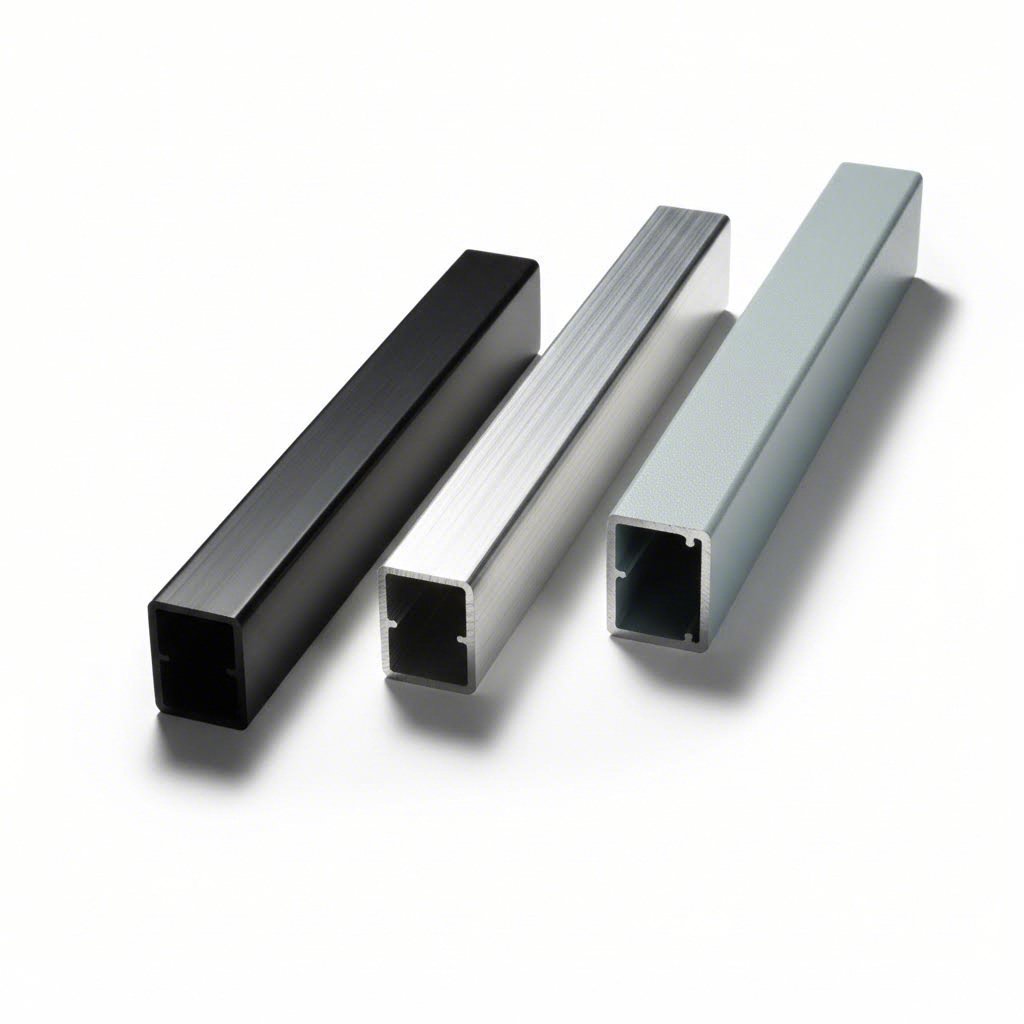
Your profiles are specified, tolerances defined, and lengths calculated. But here's a detail that catches many first-time buyers off guard: surface finish dramatically affects both the appearance and protection of your cut ends. When you order anodized aluminum extrusions cut to length, those freshly cut edges expose raw aluminum—creating potential weak points in corrosion resistance and aesthetic consistency.
Understanding how surface treatments interact with cutting operations helps you make smarter decisions about finish timing and edge protection. The relationship between black and aluminum finishes, in particular, requires careful consideration when precision cuts are involved.
Several surface treatment options exist for aluminum extrusions, each offering distinct advantages depending on your application requirements. According to Gabrian International, both anodizing and powder coating represent environmentally friendly options that protect aluminum while enhancing appearance.
Black aluminum extrusion remains particularly popular for modern industrial aesthetics and architectural applications. Whether achieved through black anodizing or powder coating, the finish choice affects how visible cut edges will appear against the surrounding surface.
Here's the critical question: should cutting happen before or after surface treatment? The answer depends on your priorities regarding edge appearance, dimensional accuracy, and corrosion protection.
Cutting before finishing means your cut edges receive the same protective treatment as profile faces. Anodized or powder-coated ends match the surrounding surface, providing complete corrosion protection and visual consistency. However, this sequence requires finishing smaller pieces individually—potentially increasing processing costs for complex orders with many unique lengths.
Cutting after finishing exposes raw aluminum at each cut edge. For anodized aluminum extrusions, this creates a visible contrast where bright aluminum meets the colored anodized surface. Black and aluminum color contrast becomes especially noticeable on dark-finished profiles. Exposed ends may require touch-up paint or edge caps for applications where appearance or corrosion resistance matters.
Consider these factors when deciding finish timing:
For projects using black extruded aluminum where edge appearance matters, discuss timing options with your supplier before ordering. Many providers offer touch-up solutions or can coordinate cutting and finishing sequences that balance cost with quality requirements.
Surface treatment decisions directly influence how your finished profiles perform and appear. With finish options understood, the next consideration becomes matching these specifications to your specific application—where real-world project requirements determine which combinations deliver optimal results.
You've mastered profile selection, cutting methods, tolerances, and finish options. Now comes the practical question: how do these specifications translate into real-world projects? Whether you're building industrial workstations, architectural frameworks, or custom automation equipment, understanding typical applications helps you make smarter length specifications from the start.
The beauty of aluminum extrusion cut to length lies in its adaptability across industries. According to BRT Extrusions, aluminum extrusions have become indispensable in a wide range of industries thanks to their versatility, durability, and design flexibility. Let's explore how different applications influence your length planning decisions.
Different project types demand different approaches to length specification. What works perfectly for a laboratory workstation fails completely for a conveyor system spanning a warehouse floor. Understanding these distinctions prevents costly ordering mistakes.
Successful project planning goes beyond calculating individual lengths. You need to consider how pieces work together as a system—and how your fastening method influences those specifications.
T extrusion framing systems offer remarkable flexibility because components connect anywhere along their length using T-nuts and specialized fasteners. This adaptability means small length variations rarely create assembly problems. However, that same flexibility requires thoughtful planning to ensure connections land where you need them.
Consider these project planning principles:
Fastening methods directly influence length requirements. Corner brackets typically require 20-40mm clearance from profile ends. Hidden connectors may need specific end-drilling that affects usable length. Through-bolted connections work anywhere but require access from both sides. Understanding your connection strategy before finalizing lengths prevents frustrating assembly surprises.
For complex builds, many fabricators create full-scale mockups using inexpensive materials before committing to final aluminum orders. This extra step validates length calculations, reveals access issues, and confirms that your custom aluminium extrusions will assemble as planned. The time investment pays dividends when your precision-cut profiles arrive and fit perfectly on the first attempt.
With applications understood and project planning principles established, one crucial factor remains: cost. Understanding what drives pricing for cut-to-length services helps you balance quality requirements against budget constraints.
You've specified profiles, tolerances, finishes, and lengths. Now comes the question that ultimately shapes every project decision: what will this actually cost? Unlike commodity products with fixed price tags, custom aluminum extrusion cost varies significantly based on multiple factors—many of which you directly control through smart specification choices.
Here's what most suppliers won't tell you upfront: understanding these pricing variables puts negotiating power in your hands. When you know where to buy aluminum extrusion services and what drives their pricing, you can optimize specifications to hit your budget without sacrificing quality where it matters most.
According to Gabrian International, the total price tag for manufacturing custom aluminum extrusions comes down to a combination of many factors—some predictable like production volumes and labor costs, while others prove harder to foresee like shipping costs and market price fluctuations.
Several primary factors influence your final cost:
Smart buyers balance cost against quality requirements rather than simply chasing the lowest price. Here's how to maximize value from your cutting investment:
Consolidate orders for volume pricing. Setup charges represent fixed costs that spread across your order quantity. A small order absorbs these costs across fewer pieces, raising per-unit pricing. Combining multiple project needs into single orders—even across different lengths—reduces overall costs substantially.
Specify tolerances appropriate to application. Don't request precision cutting for components that assemble with adjustable connections. Reserve tight tolerances for genuinely critical dimensions while accepting standard accuracy elsewhere. This targeted approach delivers precision where needed without premium pricing across every piece.
Consider vertically integrated suppliers. Facilities combining extrusion, cutting, and finishing under one roof eliminate logistics between separate vendors. According to Gabrian International, this integration minimizes coordination burden and reduces final costs compared with managing multiple suppliers.
Plan ahead to avoid rush charges. Standard lead times of 3-4 weeks for tooling plus production scheduling allow manufacturers to optimize workflows. Emergency orders requiring expedited processing invariably cost more—sometimes significantly.
Lock in material pricing when possible. For ongoing production needs, some suppliers offer programs where they purchase aluminum in advance at current rates, using it for your orders over time. This approach makes costs more predictable during volatile market periods.
Minimum order requirements vary by supplier but typically exist to cover fixed setup costs. Many tnutz extrusion suppliers and similar distributors stock standard profiles ready for quick cutting, reducing minimums for common sizes. Custom profiles requiring new dies face higher minimums to justify tooling investments—typically $400 to $1,000 for standard dies, potentially $2,000 or more for large-press applications.
When budgeting for custom aluminum extrusion cost, request detailed quotes breaking down material, cutting, finishing, and shipping components separately. This transparency reveals where your money goes and identifies potential optimization opportunities. A supplier unwilling to itemize costs may be hiding unfavorable pricing structures.
With cost factors understood, one final consideration determines whether your project succeeds: selecting a supplier capable of delivering quality consistently. The right partner brings equipment capabilities, technical expertise, and service commitment that justify their pricing.
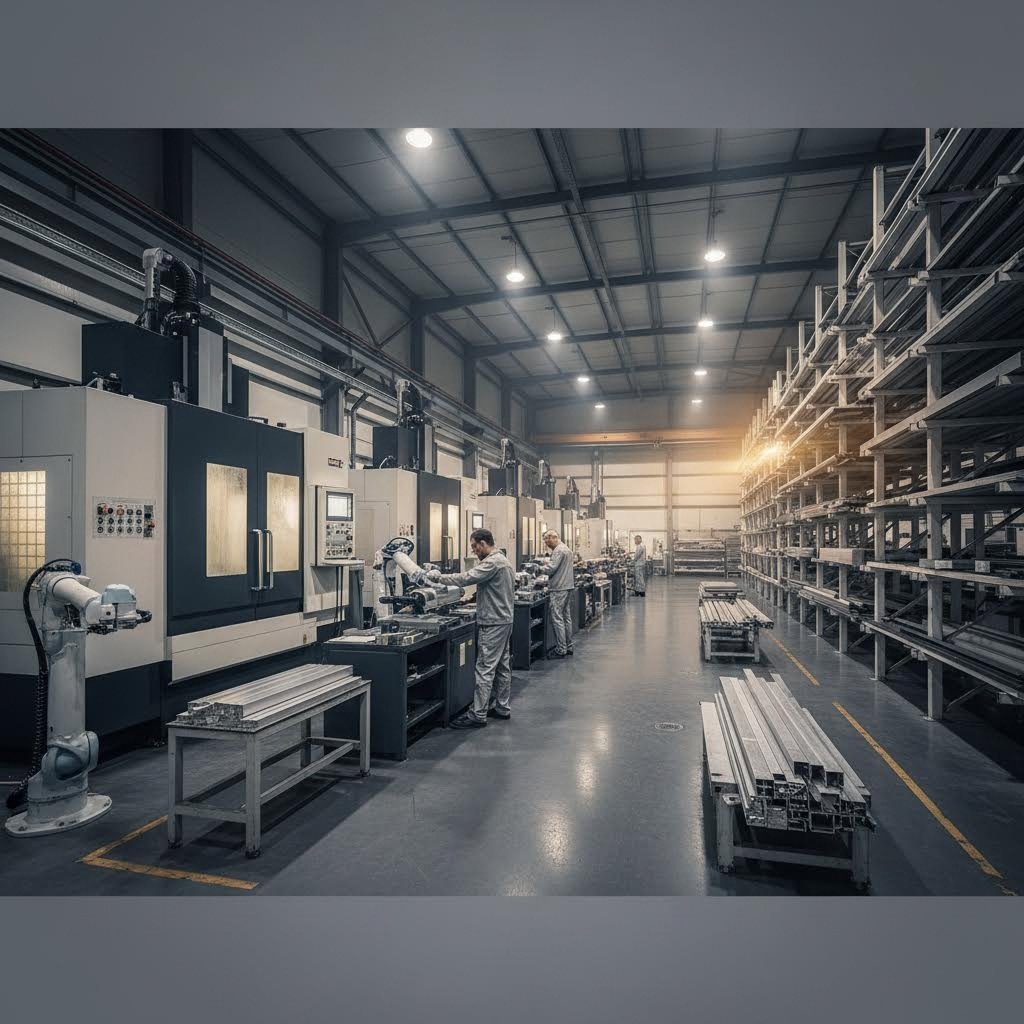
You've calculated lengths, specified tolerances, and determined finish requirements. Now comes the decision that ties everything together: choosing the right supplier to execute your specifications. The difference between a smooth project and a frustrating experience often comes down to partner selection—not just their pricing, but their actual capability to deliver what you need consistently.
According to Inquivix Technologies, choosing the right supplier for your business is crucial—it will affect your product design, manufacturing process, product quality, and cost. Whether you're building complex architectural structures, manufacturing automotive components, or developing precision-engineered products, your supplier plays a vital role in ensuring consistency.
Not all cut-to-length providers offer the same capabilities. Some excel at high-volume production but struggle with custom requirements. Others handle specialty finishes beautifully but lack precision cutting equipment. Evaluating suppliers against comprehensive criteria prevents costly mismatches between your needs and their capabilities.
Here's what separates exceptional providers from adequate ones:
Sounds complex? It doesn't have to be. A systematic evaluation process reveals which suppliers match your specific requirements—and which fall short despite impressive marketing.
Start with experience verification. According to RPM Industries, you should research the history and customer satisfaction of any manufacturers and aluminum extrusion suppliers that make your short list. Learn about each one's philosophy and their approach to achieve customer satisfaction. Providers with decades of industry presence—like operations with 30 years of experience—have encountered and solved countless production challenges that newer facilities haven't faced.
Consider these evaluation criteria when comparing potential partners:
For projects involving aluminum t-slot extrusion systems, verify that suppliers understand the specific requirements of modular framing applications. T-slot profiles demand precise dimensional accuracy for proper fastener engagement and system compatibility across multiple profile series.
Experience teaches what warning signs indicate potential problems. According to industry sources, be cautious of suppliers who are reluctant to share references or case studies, offer unusually low quotes that seem too good to be true, or lack clear answers about quality control or certifications. These may indicate future issues with reliability or service.
Additional warning signs include:
Conversely, suppliers who proactively offer design-for-manufacturability input, provide detailed inspection documentation, and maintain transparent communication throughout the quoting process typically deliver superior results during production.
The right supplier combines technical capability with service commitment. For comprehensive aluminum extrusion and cutting services, Shengxin Aluminium's deep processing services exemplify what to look for: extensive equipment capacity, precision CNC machining, comprehensive surface treatment options, and technical support spanning the entire production process from initial die development through mass production.
Before committing to large orders, request sample cuts demonstrating their tolerance capabilities. Evaluate edge quality, dimensional accuracy, and finish consistency against your specifications. This validation step—particularly important when working with a new supplier—confirms that their capabilities match their claims.
Remember that the lowest quote rarely represents the best value. According to cost evaluation guidance, always consider the total cost of ownership, not just the unit cost. A supplier with slightly higher pricing may offer advantages that save money and stress in the long run through consistent quality, reliable delivery, and responsive support when issues arise.
Your aluminum extrusion cut to length specifications only matter if your supplier can execute them accurately. Investing time in thorough partner evaluation pays dividends across every project—transforming specifications on paper into precision components that assemble exactly as planned.
The best place depends on your project requirements. For high-volume precision orders, manufacturers like Shengxin Aluminium offer factory-direct pricing with 35 extrusion presses and CNC machining centers. For smaller quantities, distributors like TNUTZ, 80/20, and ZYLtech stock standard profiles ready for quick cutting. Consider factors like tolerance requirements, surface finish options, lead times, and whether you need technical support for complex specifications.
Professional cut-to-length services use cold saws for burr-free edges with tolerances as tight as ±0.005 inches, miter saws with carbide blades for angled cuts, or CNC automated systems for high-volume consistency. Key accuracy factors include proper clamping on both sides of the extrusion, using blades designed specifically for non-ferrous metals, and maintaining consistent reference points during measurement. Avoid abrasive cutting methods that generate heat and distort thin-walled profiles.
Standard tolerances range from ±0.5mm to ±2.0mm for coarse cuts, ±0.1mm to ±0.8mm for medium precision, and ±0.05mm to ±0.3mm for fine tolerances depending on length. Precision cutting services can achieve ±0.005 inches or better for critical assemblies. Longer pieces naturally accumulate more variation. Specify your tolerance requirements explicitly when ordering—don't assume 'standard' means the same thing to all suppliers.
Cutting before finishing ensures cut edges receive the same protective anodized or powder-coated treatment as profile faces, providing complete corrosion protection and visual consistency. Cutting after finishing exposes raw aluminum at edges, creating visible contrast especially on black finishes. Choose pre-cut finishing for visible ends or outdoor applications; post-finish cutting works for hidden ends or when exact dimensions are critical since anodizing adds 0.01-0.03mm per surface.
Primary cost factors include raw material pricing (aluminum market volatility), order quantity (volume discounts reduce setup cost per piece), tolerance requirements (precision cutting costs more), profile complexity (intricate shapes require slower processing), surface finish specifications (anodizing and powder coating add $800-$1,400 per metric ton), and secondary operations like drilling or deburring. Consolidating orders, specifying appropriate tolerances, and choosing integrated suppliers who handle extrusion through finishing can optimize costs.



 บริการออนไลน์
 0086 136 3563 2360
 sales@sxalu.com
 +86 136 3563 2360
 ไทย
ไทย English
 français
 Deutsch
 русский
 español
 português
 العربية
 Việt
Việt Українська